3 MIN READ
By XIAN PATRICIO
www.nordis.net
BAGUIO CITY — A farmers’ group in the Cordillera said the president’s April 17 visit came too late and that relief measures for vegetable producers and traders remain insufficient to help them cope with rising production and logistics costs amid the ongoing energy crisis.
President Ferdinand R. Marcos Jr. visited the Benguet Agri-Pinoy Trading Center (BAPTC) on Friday. The center handles about 165,000 metric tons of vegetables, valued at an estimated P6.4 billion annually.
The Aliansa dagiti Pesante iti Kordiliera (Peasant Alliance in the Cordillera or APIT TAKO) said the assistance came only about a month after fuel prices began their steep rise in mid-March.
“Kasisimula pa lang ng krisis, marami na sa mga gardinero ang hindi nag-aani ng kanilang mga tanim dahil sa sobrang mataas na gastos mula sa pagtatanim hanggang sa pag-ani,” the group stated.
(As the crisis has just begun, many vegetable farmers have already stopped harvesting their crops due to the extremely high costs from planting to harvest.)
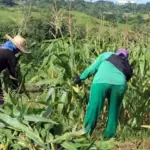
Rising farm expenses, reduced buying by traders, and cabbage prices dropping to as low as P5 per kilo have forced several farmers to turn to social media to ask consumers to harvest crops directly from farms.
Relief meaures
During the visit, Marcos committed to providing a P10-per-liter subsidy for transport trucks and waiving certain local government charges.
He promised to temporarily suspend toll fees for trucks hauling vegetables to Metro Manila, noting that truckers paid up to P3,000 in toll fees for 10-wheel trucks and about P1,000 for smaller vehicles.
The government also distributed seeds and fertilizer to help farmers cope with rising oil prices. The P15.79 million aid, given to 45 cooperatives, included over P8.5 million for farm equipment and inputs and more than P7.2 million for the Kadiwa Cash Grant.
Affected drivers have also been included in the Tulong Panghanapbuhay sa Ating Disadvantaged/Displaced Workers program. Affected farmers may also access assistance for land preparation, canal cleaning, and the establishment of small water impounding systems.
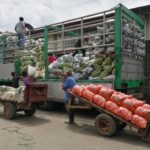
According to reports, the Department of Agriculture (DA) has deployed 38 trucks to Benguet since late March to mid-April to help transport vegetables that were being wasted due to the oil crisis.
Agriculture Secretary Francisco Tiu Laurel Jr. admitted that the disruptions are affecting farmer incomes and vegetable supply. He added that up to 30% of agricultural output, particularly vegetables, is lost due to weak logistics.
Earlier, its regional field office announced the ongoing construction of seven modular cold storages, costing P77 million, in different sites in the region.
Long-term solutions
Instead of stopgap measures, APIT TAKO urged the government to consider long-term solutions.
“Sa dami ng gardinero at mga manggagawang bukid, kulang na kulang pa ang P15 million pesos na halaga ng agricultural equipment,” the group stated, noting that the P7.2 million in Kadiwa cash grants is not enough to provide sufficient relief for farmers.
“Kung gustong bigyan ng tulong ang mga magsasaka ngayon, hindi sasapat ang ayuda. Kagyat na pagharap sa krisis sa enerhiya, market absorption at public transport ng mga ani ang aming panawagan,” the group stated.
(If the government wants to provide help to farmers now, aid will not be enough. We call for urgent action on the energy crisis, market absorption, and public transport for agricultural produce.)
DA said the cash assistance, along with the farm equipment, is part of the P859.6 million allocation for the Cordillera Administrative Region in 2026. This covers seeds, fertilizers, irrigation support, post-harvest equipment, and training services. More than 1,300 groups and 3,700 individuals are expected to benefit from the fund.
However, this is only a portion of the estimated number of those engaged in crop farming. Based on the government’s 2022 Census of Agriculture & Fisheries, there are 44,593 crop operators in Benguet, and 121,886 in the entire Cordillera.
APIT TAKO said authorities should find ways to “transport and absorb” at least half of the daily volume of vegetables delivered at the trading posts. The group estimates that about 1 million kilos of vegetables are traded every day at the La Trinidad Vegetable Trading Center. A 2023 report notes a higher volume figure—an average of 1.7 million daily.
“Hindi limos, ayuda, o simpleng kamustahan ang kailangan ng magsasaka. Pangmatagalang solusyon sa agrikultura, hindi pampapogi lang!” the group said.
(Farmers do not need alms, aid, or simple check-ins. They need long-term solutions in agriculture, not publicity. # nordis.net/with reports from Artemio Dumlao