BAGUIO CITY — Fear and anxiety were the first emotions Deo Montesclaros felt when he learned of the court ruling. Even months later, he still feels unsettled.
“The Philippine government is brutal toward its critics,” he told Asia Democracy Chronicles (ADC). “Nowhere feels safe anymore.”
A multimedia reporter for Pinoy Weekly and a contributor to the Germany-based photo agencies IMAGO Images and Alto Press, Montesclaros is facing terrorism-financing charges. Specifically, he is accused of providing aid to communist rebels in Cagayan Valley in the Philippine north. He was a correspondent for Northern Dispatch there until 2021, reporting on farmers, environment, and human-rights issues.
Montesclaros’s case has yet to have a ruling, but he had been following those of fellow journalist Frenchie Mae Cumpio and lay worker Marielle Domequil. Arrested in February 2020 in the central Philippine city of Tacloban, both had been charged with illegal possession of firearms and explosives, as well as – like Montesclaros later – terrorism financing.
At the time, Cumpio served as executive director of the alternative media outlet Eastern Vista and hosted the program Lingganayhan Kamatuoran (Bells of Truth) on AksyonRadyo Tacloban, while Domequil worked with the Rural Missionaries of the Philippines.
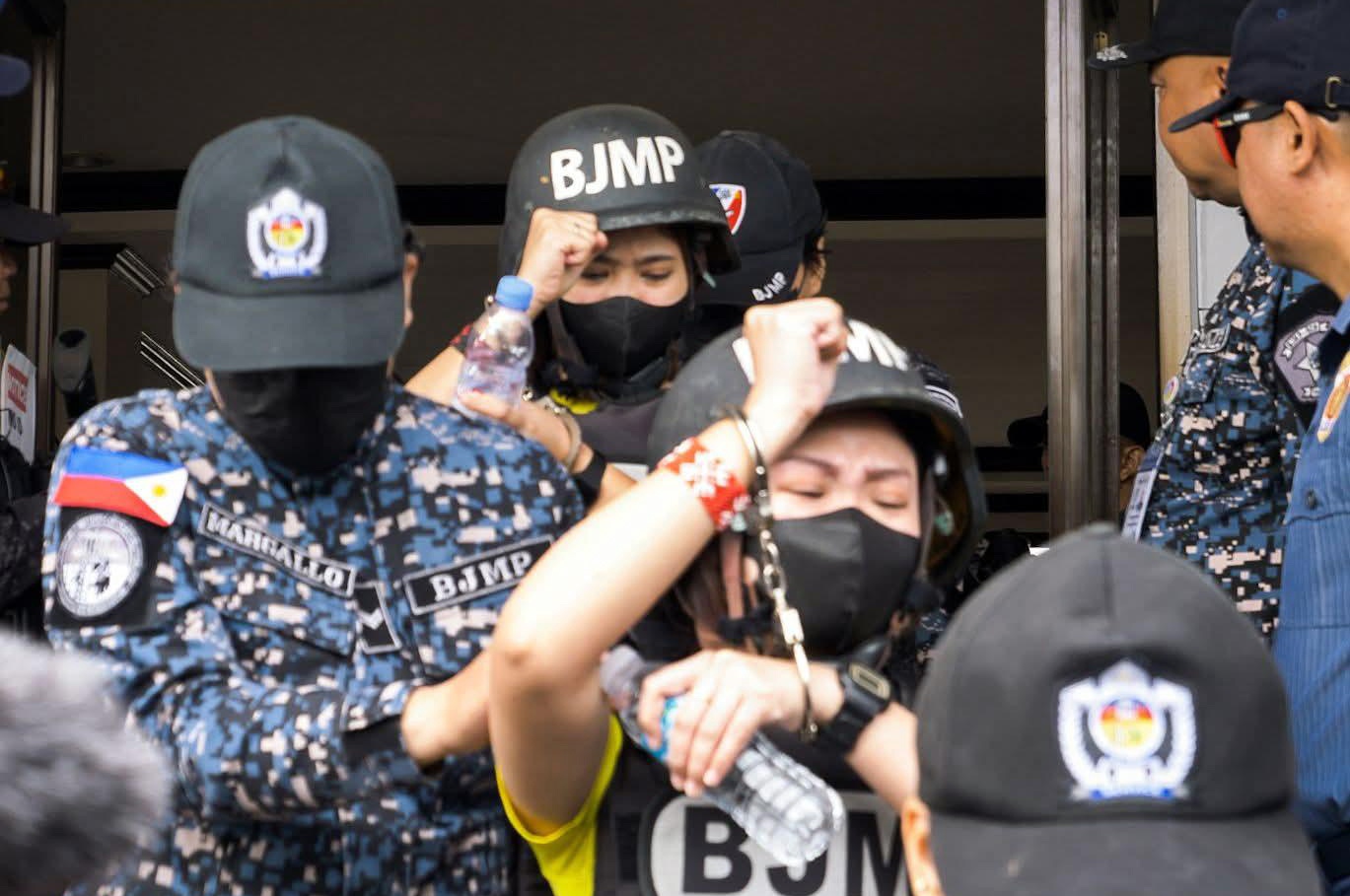
Last January, a Regional Trial Court acquitted both Cumpio and Domequil on the charges of illegal possession of firearms and explosives. Both young women, however, were found guilty of terrorism financing. Each now faces up to 18 years in prison. The court was scheduled on March 23 to rule on motions for reconsideration filed by their lawyers, but this has been moved to an undisclosed date.
Filipino journalist Frenchie Mae Cumpio (in the back) and lay worker Marielle Domequil (foreground) raise their fist in protest as they exit the regional trial court in Tacloban City, in the Eastern Visayas region of the Philippines, on Jan. 22, 2026, after being sentenced to up to 14 years in prison for terrorism-financing charges. (Altermidya Network)
Like Montesclaros, veteran development worker Petronila Guzman felt dread when she heard the news of the pair’s conviction. Currently with the Katinnulong Daguiti Umili ti Amianan, Inc., or KADUAMI, which means “partner” in Ilokano, Guzman had been slapped with a terrorism complaint in late 2024.
Since then, she says, she has had “difficulty concentrating at work.” With the recent ruling on Cumpio and Domequil’s cases, Guzman says, “I can’t eat well. What if I got indicted and went to jail? That’s all I can think of.”
Five United Nations experts have described the ruling as a “deeply troubling” development, noting that the long pre-trial detention formed part of “a fraught legal process with a string of charges that have been widely criticized as baseless and in retaliation for their human rights work.”
Legal observers and rights advocates meanwhile say that the decision has raised the possibility that journalism and humanitarian work themselves could become grounds for prosecution.
As it is, over 200 individuals have been documented by the local rights group Karapatan as already having been charged the Philippines’ twin terror laws: the Terrorism Financing Prevention and Suppression Act (TFPSA) of 2012 and the Anti-Terrorism Act (ATA) of 2020.
From Duterte to Marcos Jr.
After both Cumpio and Domequil were denied bail in February, Mamamayang Liberal Party-list Representative Leila de Lima filed House resolutions seeking an inquiry into the implementation of the ATA and the TFPSA.
De Lima was the justice secretary when TFPSA was passed into law. She called the denial of bail to Cumpio and Domequil “a serious setback in the fight for press freedom, a major blow to civil liberties in our country.”
Explaining why she filed her resolutions, de Lima said, “Our objective is clear: to ensure that our laws protect our people instead of suppressing dissent. Counterterrorism measures erode their core purpose if they are weaponized by the State to promote a climate of fear, harassment, and intimidation among human rights defenders, activists, youth leaders, humanitarian workers, and civil-society organizations.”
For Windel Bolinget, chairperson of the Cordillera Peoples Alliance (CPA), it’s no longer an “if.” He says that the previous administration led by Rodrigo Duterte laid the groundwork for President Ferdinand Marcos Jr.’s “full-scale weaponization of counter-terrorism laws.”
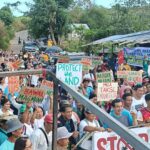
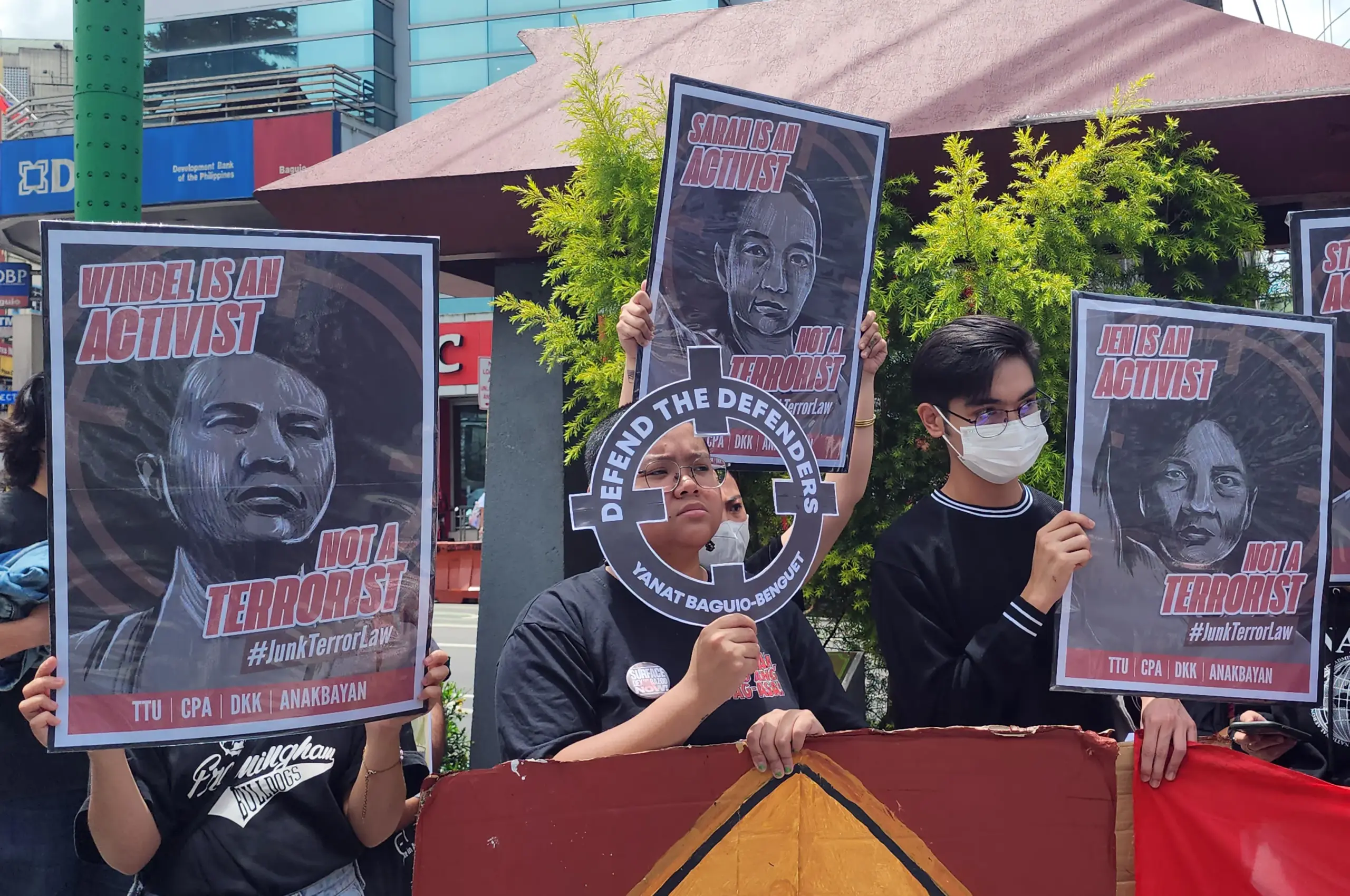
Protesters gather in Baguio City, north of the capital Manila, during President Marcos Jr.’s second State of the Nation Address in July 2023, to condemn the Anti-Terrorism Council’s designation of four Cordillera Peoples Alliance leaders as terrorists a month earlier. (Sherwin De Vera)
Duterte “institutionalized red-tagging through the NTF-ELCAC and then passed the ATA,” he says. These, adds Bolinget, “provided unrestrained power of vilifying groups and individuals and eventually designating them as terrorists.”
NTF-ELCAC is the National Task Force to End Local Communist Armed Conflict, created in 2018 during the Duterte administration. It quickly became notorious for “red-tagging,” accusing individuals and organizations of being supporters or members of the Communist People’s Party (CPP) and its affiliate organizations.
Observers say that the ATA, which the Supreme Court has declared as constitutional save for two particular provisions, facilitates the escalation from red-tagging to terrorist-labeling, especially after the designation of groups such as the CPP as terrorist organizations.
Bolinget, for instance, was first relentlessly red-tagged. The vilification soon escalated into murder, then rebellion charges. When these failed to prosper, the Anti-Terrorism Council designated him a terrorist, along with three other CPA leaders.
Bolinget shares the view of other rights advocates that under Marcos Jr., the government used its campaign to exit the Financial Action Task Force (FATF) ‘grey list’ to go after non-profits and activists. An intergovernmental organization, FATF sets global standards to combat money laundering, terrorist financing, and the proliferation of weapons of mass destruction. It issues 40 recommendations to improve financial systems and maintains ‘gray’ or ‘black’ lists for nations with strategic deficiencies.
FATF deleted the Philippines from its grey list on February 21, 2025. In a Human Rights Watch (HRW) article uploaded days before this was announced, HRW Asia deputy director Bryony Lau said, “Philippine authorities appear to be stepping up terrorism financing prosecutions to get off of FATF’s ‘grey list’ and its potential financial cost. This seems to be the government’s latest bad reason to bring baseless charges against civil society groups and activists in violation of their rights.”
The FATF factor
According to the study “Playbook of Repression” by the National Union of People’s Lawyers (NUPL) and the Council for People’s Development and Governance (CPDG), TFPSA cases soared by 371 percent from 2023 to 2024, largely through a “state-backed industry” of professional witnesses—coerced or paid “rebel returnees”—who provided recycled, template-style testimonies to implicate development workers and human rights defenders.
U.N. Special Rapporteur on Human Rights Defenders Mary Lawlor, in her foreword to the study, said that it “provides clear evidence of the weaponization of legal frameworks…to suppress legitimate dissent. What emerges is not a collection of isolated abuses, but a systematic blueprint for repression.”
A collaborative two-part report by the Philippine Center for Investigative Journalism and Northern Dispatch, released two days after the Philippines’ grey-list exit, meanwhile showed not only common patterns in TFPSA cases, but also a clear link of at least one of these to state policy.
Like the NUPL-CPDG study, the report described the targeted efforts mainly on individuals or groups previously red-tagged and the use of alleged former-rebel testimonies to file terror-financing charges. But it also connected a case to a confidential police memo, targeting someone under the government’s ‘Project Exit Greylist.’
The ‘FATF rationale’ is not unique to the Philippines, however. A June 2024 report by the London-based think tank Royal United Services Institute noted the weaponization of FATF recommendations, leading to “authoritarian abuses” targeting civil-society organizations. These abuses often involve terrorist-financing charges and can undermine due process and procedural rights.
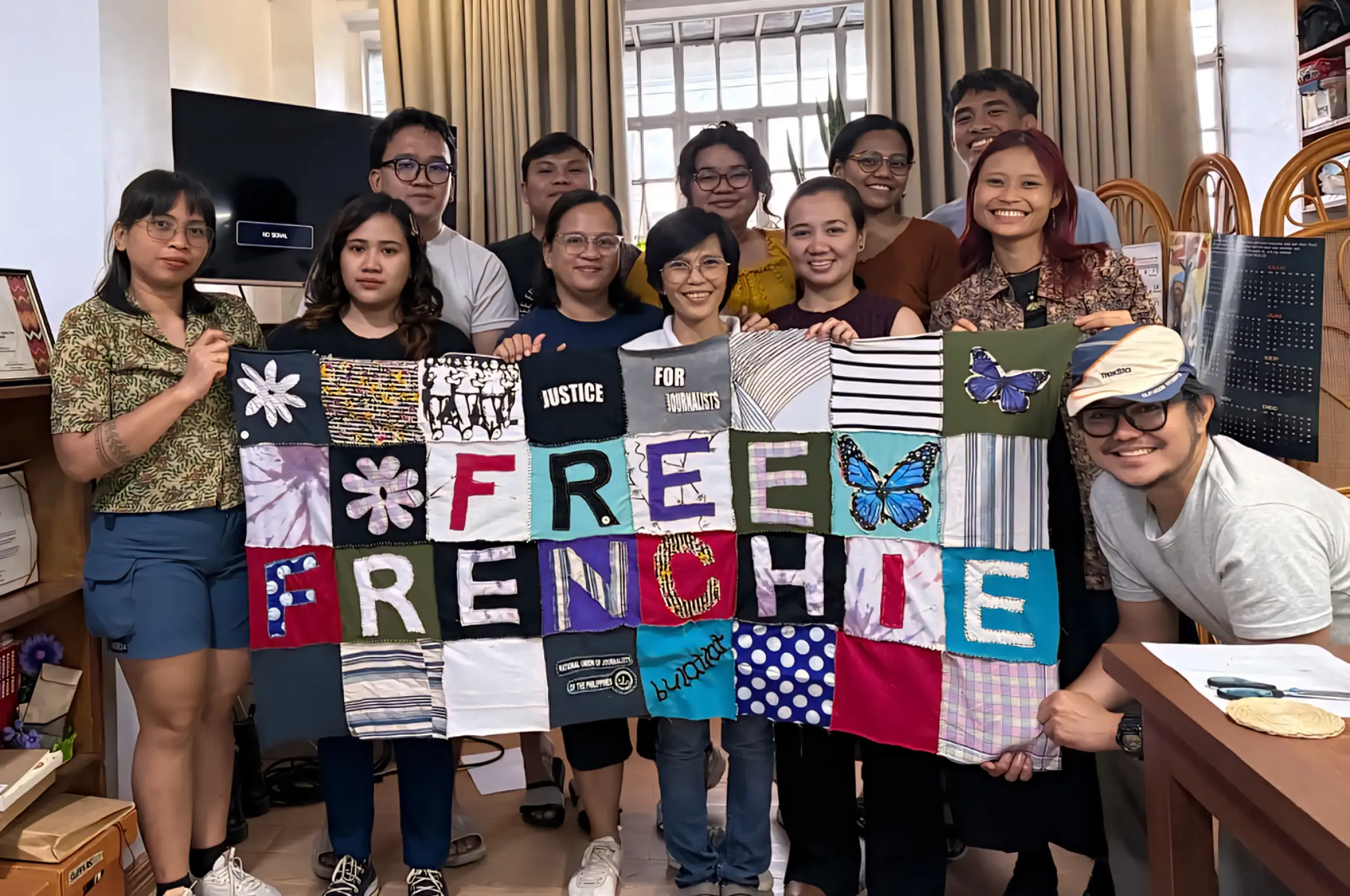
Fellow journalist and supporters of Filipino journalist Frenchie Mae Cumpio-who was found guilty of terrorism financing and has been languishing in prison for six years-sew together an outsize silver anniversary quilt for alternative publication Bulatlat and in support of Cumpio. (Bulatlat)
In Asia, Amnesty International has cited the Philippines and India as among the countries that use terrorism financing against non-profits providing development and humanitarian aid. The Global NPO Coalition on FATF, for its part, cited countries like Cambodia, Sri Lanka, and Bangladesh for instituting counter-terror financing measures that lead to the suppression and overregulation of non-profit organizations.
Despite the Philippines’ exit from the FATF grey list, though, arrests for alleged terrorism financing have continued. Montesclaros, for instance, was among the six rights advocates charged in April last year for allegedly violating the TFPSA.
Last December, two more were added to the list of supposed TFPSA violators and arrested in separate instances: Carmilo Tabada, a former staff member of the Central Visayas Farmers’ Development Center, and labor leader and cultural worker Michael Cabangon.
Karapatan has also pointed out that at least “17 non-profits, most of them in development work, have had their bank accounts frozen via the ATA.”
The only sliver of light in all these is that those who were arrested last year were granted bail — unlike Cumpio and Domequil, who have now spent six years in detention.
Reeking of lawfare
Lawyers, media organizations, and human rights advocates say the pair’s conviction now stands as a symbol of authorities wielding terror laws against dissent.
NUPL President Ephraim Cortez describes it as “unjust” and lacking both legal and factual merit.
He says that during the period of the alleged violation, March 2019, the CPP and its armed wing, the New People’s Army (NPA), were not validly designated or proscribed terrorist organizations under Philippine law. He also questions the court’s reliance on the testimonies of “professional witnesses,” presented by authorities as former rebels.
“They used the same discredited script used in many other cases where military assets testified that they saw the accused in the mountain in the company of NPA rebels,” Cortez says.
He is confident, he says, that the decision will be reversed on appeal. But Avon Ang, People’s Alternative Media Network (Altermidya) national coordinator, worries that in the meantime, the conviction will intensify “the risks that now range from public vilification to outright criminalization under the guise of national security.”
Ang sees the conviction of Cumpio and Domequil as an escalation that “foreshadows a media landscape where truth-telling invites imprisonment, reinforcing authoritarian hold.”
For Defend NGO Alliance, the ruling was “meant to exhaust organizations, break solidarity, and force silence through punishment.”
“It is meant to tell NGOs that documenting abuses, serving marginalized communities, and speaking truth to power will cost them their freedom,” the alliance’s spokesperson Jazmin Jerusalem said in a press release. “It is meant to normalize use of counterterrorism laws as tools of political persecution.”
Jerusalem herself had been charged with terrorism financing in 2024 and had her assets frozen. The charges against her were dismissed just recently.
In a Just Security Op-Ed, academic and security expert Tom Smith said that the Cumpio-Domequil case serves as a critical warning to the global community. Labeling individuals or organizations as terrorists, he wrote, erodes the presumption of innocence and frames support as complicity.
According to Smith, terror-financing allegations, because they appear technical and compliance-based, as well as involve regulations and global standards, create a facade of administrative routine that tempers public scrutiny.
“This is why the Cumpio case cannot be treated as an isolated press freedom scandal,” he argued. “It should be read as a warning about how the language and machinery of countering terrorism financing can be repurposed – domestically, and in any country — as lawfare.” ◉
On March 27, 2026, the Regional Trial Court Branch 45 in Tacloban City denied the appeal of Frenchie Mae Cumpio and Marielle Domequil, thus upholding their earlier conviction.
Photo of Filipino journalist Frenchie Mae Cumpio used in the banner courtesy of RSF.