By KAITHLEEN DE VERA, SAMANTHA GUTIERREZ, TIANA MANAO & SETH SANCHEZ www.nordis.net
BAGUIO CITY — For decades, street or ambulant vendors have been part of Baguio’s streets, selling vegetables and fruits at lower prices along high-traffic areas in the city.
However, since Mayor Benjamin Magalong assumed office in 2019, many street vendors have struggled to sustain their livelihoods as the city ramps up its campaign against illegal vending.
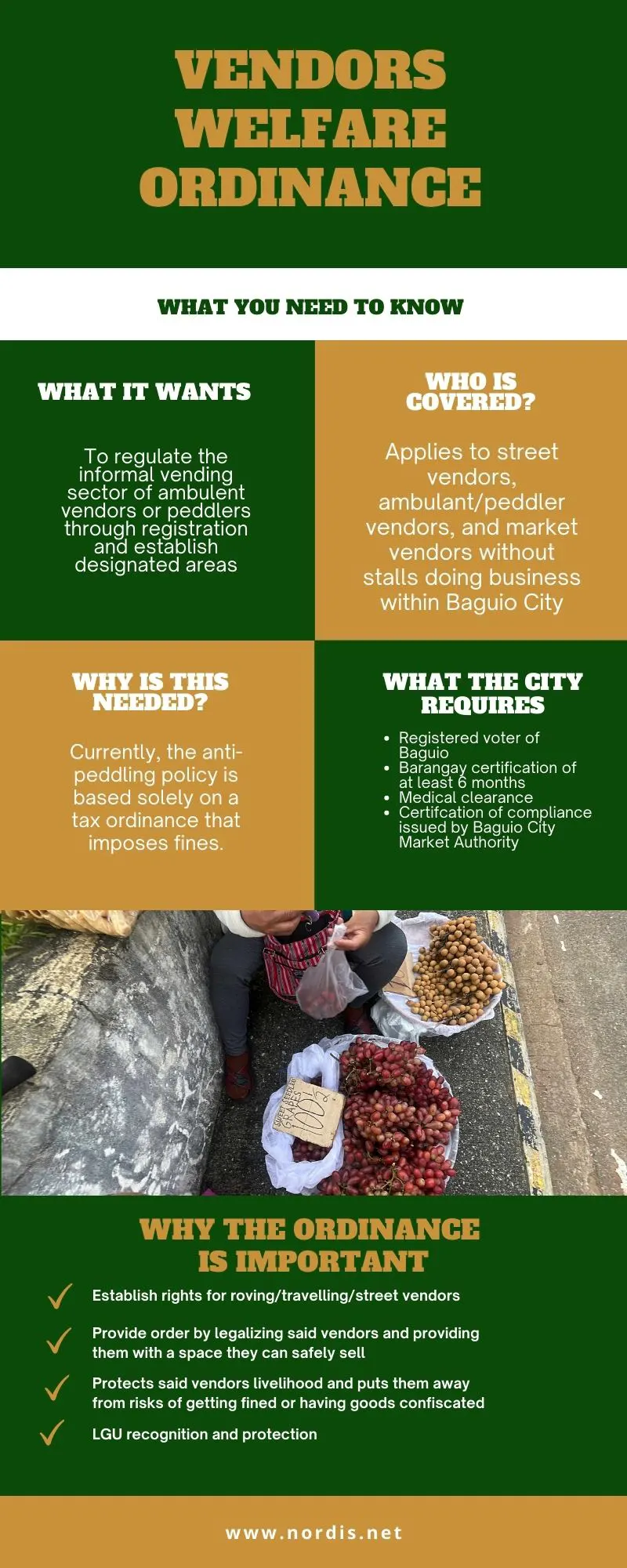
Their supposed lifeline, the proposed Vendors Welfare Ordinance by Councilor Leandro Yangot Jr., which aims to regulate peddlers or roving vendors, remains pending before the City Council.
Proposed in early 2024, the measure seeks to establish a formal vending system that allows vendors to sell goods without a stall and to designate specific selling areas.
However, the ordinance has stalled beyond first reading due to opposition and differing priorities of the market committee, including a focus on licensed vendors.
Locals and authorities also cite traffic congestion, safety, and fairness to licensed market vendors as key concerns.
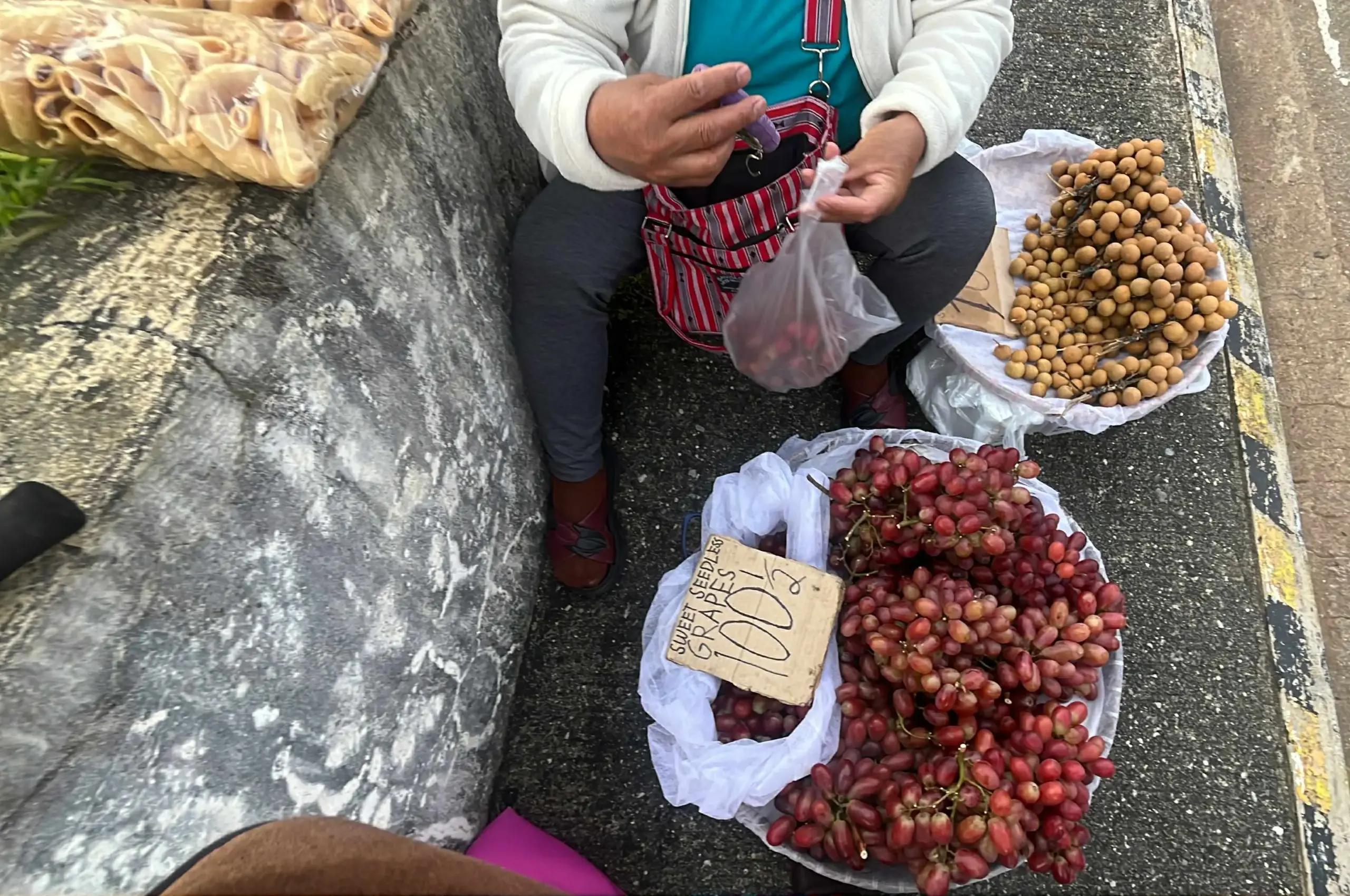
PENDING PROTECTION. Fruits are laid out on sidewalks by ambulant vendors in Baguio City, whose livelihoods remain uncertain without permits or a law that directly governs and protects street vending. (Samantha Gutierrez)
Livelihoods at risk
According to street vendors Viviania Gamis, 38, and Eva Kidag, 42, they were able to sell within the Baguio Mansion area under the administration of former Mayor Mauricio Domogan. At the time, they paid under a permit system at ₱1,700 per month.
The initial quarterly permit fee for ambulant vendors was ₱1,052, comprising ₱702 for business tax, ₱200 for the mayor’s permit, and ₱150 for the garbage fee. Rappler reported that the city also previously required them to pay for fire safety inspections, the exact amount of which was not disclosed.
It began in 2013, when Baguio implemented a zero-vending policy on streets and sidewalks, with designated relocation areas for vendors that met city requirements.
“Dati meron kaming permit, pero nung nanalo si Magalong, simula nung lockdown, hindi na kami pina-renew,” Gamis said in an interview on Dec 9.
(Before, we had a permit [to sell as ambulant vendors], but ever since Magalong won, at the start of lockdown, we were no longer renewed.)
Kidag said they were willing to continue paying permit fees and sell within a designated area if only the ordinance had been passed.
“Handa naman kami [magbayad] basta para lang hindi mahuli,” Kidag said in an interview.
(We are ready [to pay] as long as we won’t get apprehended.)
Gamis claimed that there were times when authorities would physically drag her to jail for alleged obstruction.
She added that even during her pregnancy, her products were still taken away.
For now, they sell outside a fastfood outlet whose owners allowed them to stay after seeing them get apprehended by authorities.
Without permits, ambulant vendors now risk having their goods confiscated and being fined during clearing operations by the Public Order and Safety Division (POSD).
The POSD reported that its anti-illegal peddling campaign led to a significant decrease in cases. From 14,206 recorded apprehensions in 2022 to 4,270 in 2023, a 69.9 percent decrease.
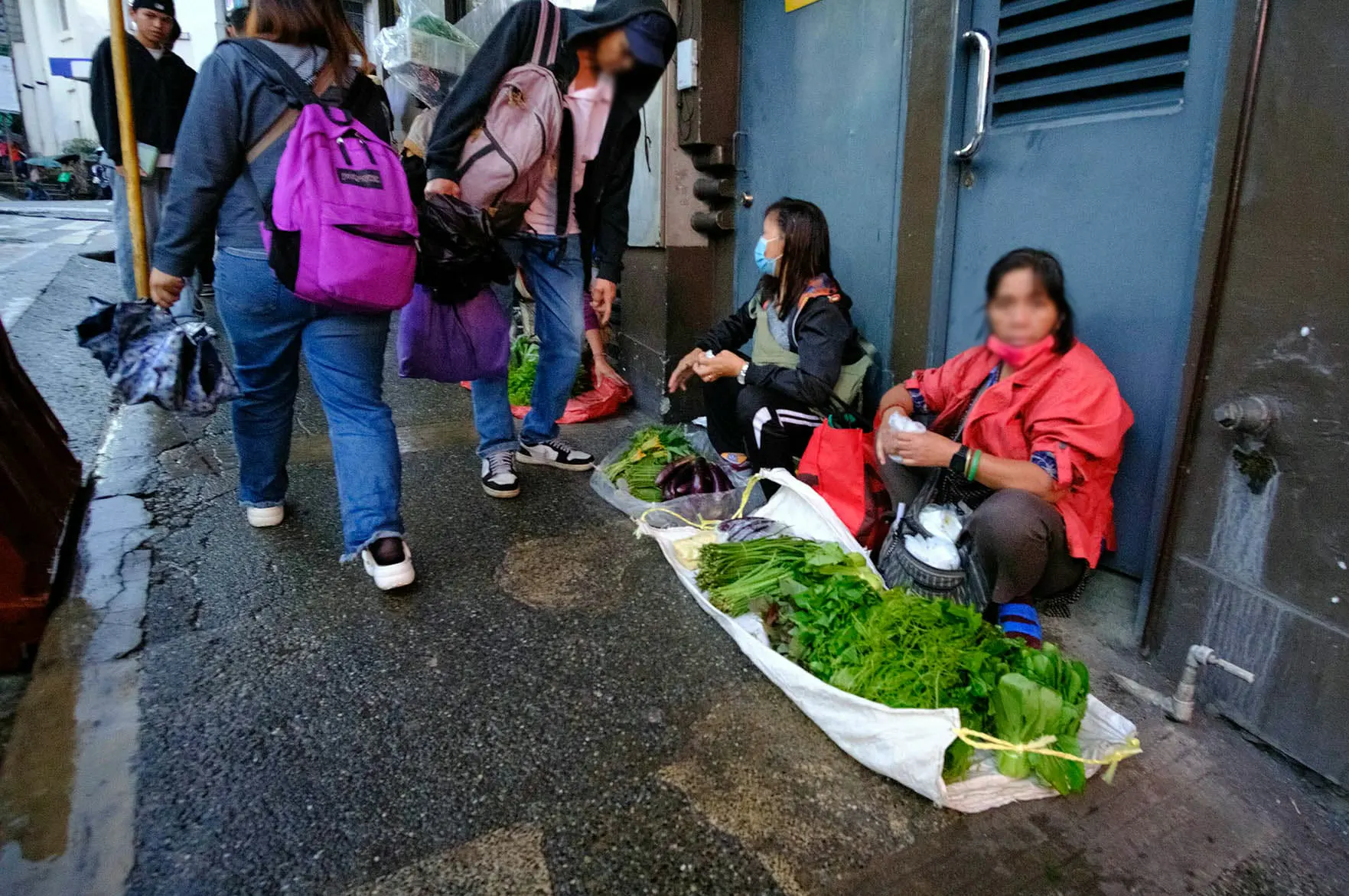
STREET LIVELIHOOD. Vendors sell vegetables along a busy road in Baguio City’s central business district, where ambulant vending remains prohibited as the proposed Vendors Welfare Ordinance stalls at the City Council. (Neil Ongchangco/Baguio PIO)
Order and fairness above all
POSD Chief Darryl Kim Longid said it is their mandate to implement the city’s anti-peddling policy under City Ordinance No. 01-2000, which prohibits ambulant vending in alleyways or passages with high foot traffic for buyers and vendors alike. It also prohibits the sale of merchandise intended solely for markets in other places.
The POSD confiscates goods from ambulant vendors daily that weigh at least 20-30 kg. These vendors must pay a ₱1,500 fee to reclaim their goods.
“We actually receive different complaints about them occupying walkways. Nilalatag kasi nila, hindi puwede ‘yun,” Longid said in an interview.
(We actually receive different complaints about them occupying walkways. They spread [their goods] out in these passages, and that’s not allowed.)
However, residents hold different views. Margie Capito, a Lower Brookside resident, said that while vendors may not always block walkways, the influx of buyers they attract often causes congestion in already busy areas.
She said this is especially true at gas stations such as the one on Engineer’s Hill. She argued that the influx of buyers the vendors attract aggravates the already busy area due to the nearby bus station.
“Medyo nakakaabala rin sila lalo na pag marami sasakyan [sa daan],” she said in an interview.
(They’re quite a nuisance, especially during times when roads are congested with cars.)
In contrast, Faith Santos, a resident of Engineer’s Hill, said street vendors do not significantly obstruct public pathways.
“Hindi naman, bumili pa nga ako ng fruits dun [sa terminal] nung umuwi ako last Thursday eh,” Santos said in a chat interview.
(Not really, I even bought some fruits there when I went home last Thursday.)
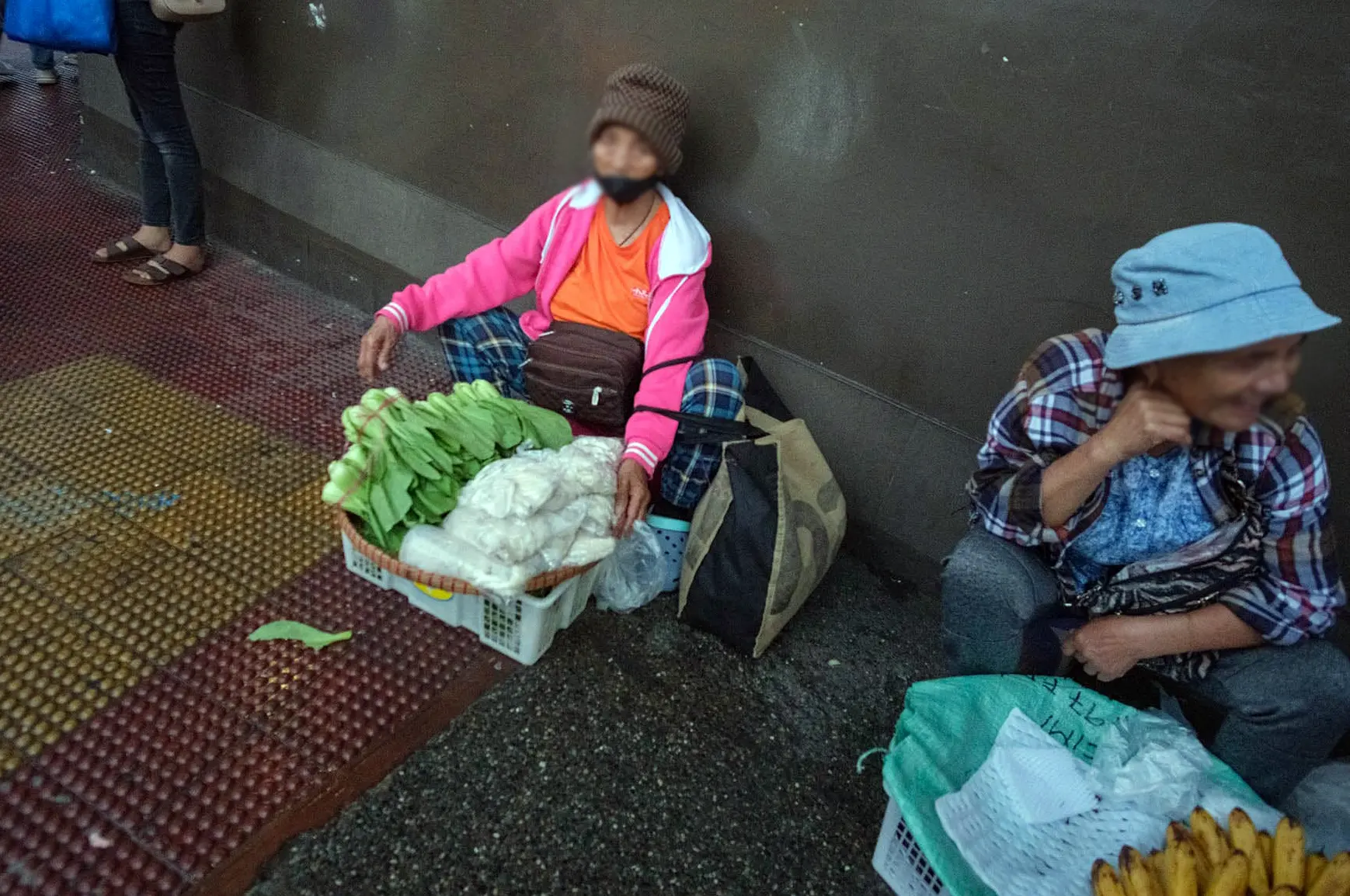
POLICY DEADLOCK. Street vendors watch passersby while selling low-cost produce, as debates over order, fairness, and livelihoods continue in the absence of a vending ordinance. (Neil Ongchangco/Baguio PIO)
No law for street vendors
The city’s anti-peddling policy is currently based only on a tax ordinance under “Business Taxes, Fees and Other Charges.” No separate law directly regulates ambulant vending, which POSD Chief Longid said may explain why Councilor Yangot sought to legislate one.
Efforts to accommodate ambulant vendors are evident in the establishment of the night market, which caters to approximately 1,000 vendors. Yet such efforts have their own limits.
Longid says Baguio City has no more free space that ambulant vendors could occupy. “We just reached our carrying capacity over two decades ago,” he added.
Without a law to protect and regulate ambulant vendors, the city instinctively prioritizes the protection of permitted market vendors. Permit holders are regulated and monitored to ensure consumer safety and accountability for the goods they sell.
Longid further reiterates that parts of the public market are dying due to intense competition among market vendors and ambulant vendors.
“Hindi na umaabot dito ang mga prospective clients nila kasi nahaharang na sa labas. It is unfair… There’s a reason why you have a public market,” he added.
(Potential buyers don’t reach certain parts of the market because they’re already buying from people outside. That’s unfair because that’s the reason why you have the public market.)
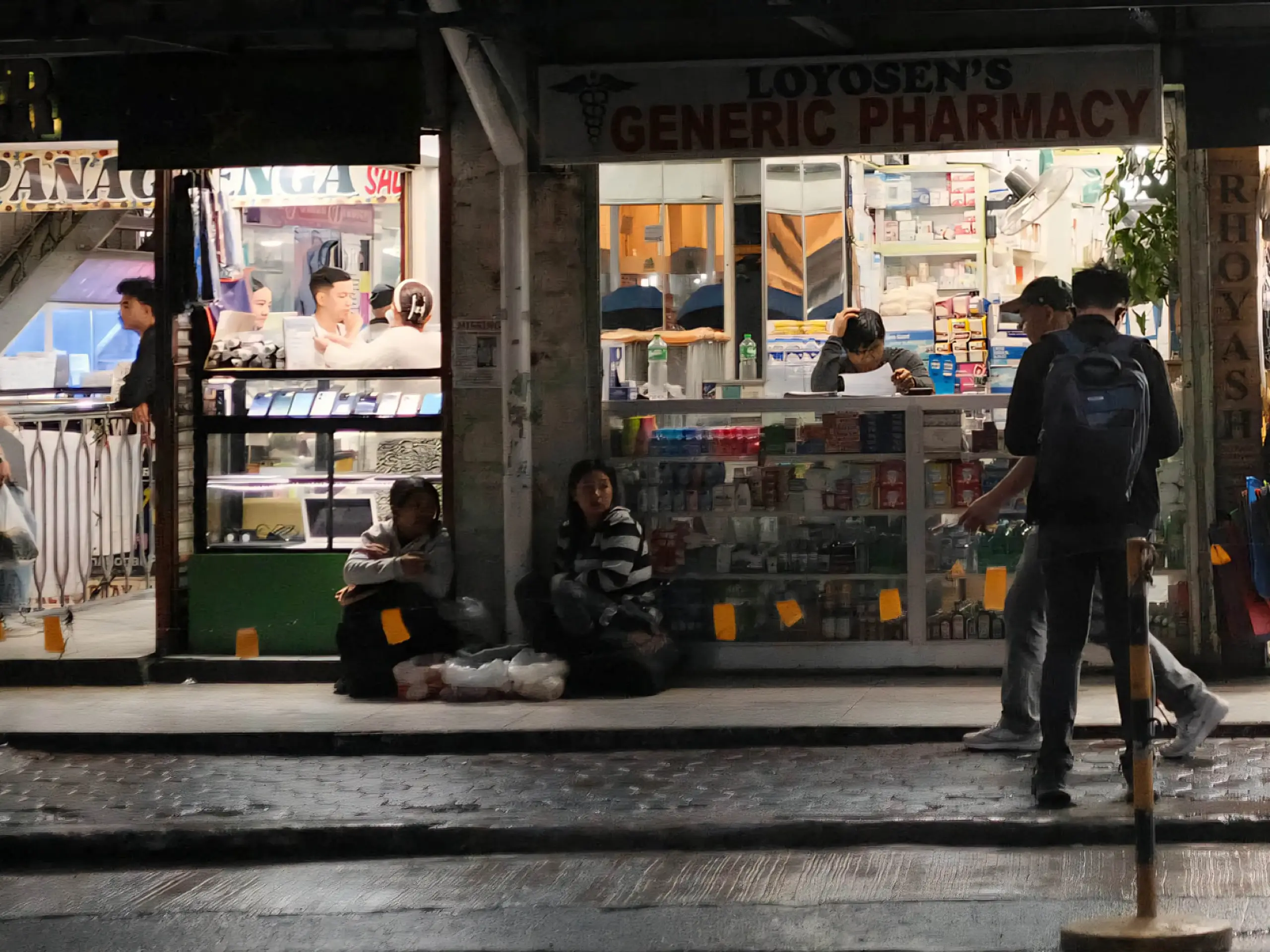
INFORMAL ECONOMY. Street vendors wait for customers outside a commercial establishment that allows them to stay and earn a living. (Neil Ongchangco/Baguio PIO)
Market vendors’ perspective
50-year-old Dilo Damaso, who has also been in the public market for 25 years, expressed the same view regarding ambulant vendors.
“Parang sila na ang starring hindi kaming legit na may business permit tapos kami nagbabayad,” he said in Ilokano, during an interview.
(It feels like they are getting the spotlight now, not us, who have legitimate business permits and actually pay the fees.)
On the other hand, Letty, also a vendor in the public market for 25 years, noted that the local government unit (LGU) has consistently supported vendors and maintained their designated areas.
“₱141 monthly [ang bayad namin] tapos yearly may business permit. Dun sa mga inaalagaan ng LGU, sinusubmit nila dun kasi nga monthly sila nagbabayad. Fully paid naman sila sa business permit yearly,” she said in Ilokano.
([We pay] ₱141 monthly, then there’s a yearly business permit. Those under the care of LGU submit it there because they pay monthly. They are fully paid for the business permit yearly.)
When asked about her opinion on ambulant vendors, she expressed her support and emphasized that everyone is trying to make a living.
“Dun sa Session Road sabagay once a week lang naman sila. Ok lang kasi naghahanap buhay rin naman sila, mga kapatid dun,” she stated.
(At Session Road, they are only there once a week anyway. It’s fine because they are just trying to make a living too.)
Stalled ordinance
According to a staff member of Councilor Yangot’s office, the delay of the ordinance is possibly due to the different priorities of councilors holding the market committee.
“Different people have chaired the committee on market, and we can assume that each one of them has different priorities or priority legislations that they wanted to focus on,” she said.
Councilor Van Dicang currently chairs the market committee. As of press time, updates on the legislation are unavailable.
Councilor Yangot’s office said that although there are conflicts between Baguio residents and ambulant vendors, the government is still responsible for all its constituents.
“The resistance from some residents is a common conflict in urban governance, but the proposal is a way to balance the need for social order and the need for social justice and economic development of residents,” the staff member said.
While the ordinance has been dormant for more than a year, Councilor Yangot’s office said it is still possible to revisit and revive the proposal to address the current needs of Baguio and its residents.
The local government is responsible for addressing the needs of all its constituents, including registered and unregistered vendors. However, until a clear law for Baguio’s informal vending sector is passed, the cycle continues: ambulant vendors continue to sell without permits, authorities confiscate goods and impose fines, and no real progress is made. #nordis.net