2 MIN READ
By SHERWIN DE VERA
www.nordis.net
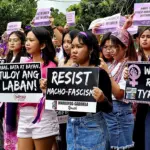
BAGUIO CITY—Labor group Kilusang Mayo Uno (KMU) urged President Ferdinand Marcos Jr. to immediately sign the proposed ₱200 daily minimum wage hike, rejecting Malacañang’s claim that the measure needs further economic study.
“What else is there to look into?” KMU Secretary-General Jerome Adonis said in a mix of English and Filipino, responding to Marcos’ statement that the bill’s economic impact must first be examined. “Since you took office, workers have been demanding a living wage. What more do you need to see?”
KMU criticized Marcos’ hesitance, blaming decades of inaction by regional wage boards. “If you truly want to help workers, don’t block the wage hike bill. Sign it and stop making excuses,” Adonis said.
“We will look at the economic implications of this and how to resolve this with the opinion of the wage boards, since the wage boards are also the creations of Congress,” the President said in a June 5 statement read by Presidential Communications Undersecretary and Palace Press Officer Claire Castro.
Both chambers of Congress have approved separate bills increasing the minimum wage. The House of Representatives passed House Bill No. 11376, granting a ₱200 daily wage hike in the private sector, with 171 votes in favor, none against, and one abstention. The Senate earlier passed Senate Bill No. 2534, proposing a ₱100 increase.
The bicameral conference committee must reconcile the two versions before June 13, the final day of the session. If Congress fails to ratify the consolidated version before adjournment, the measure will need to be refiled in the next Congress.
If enacted, this will mark the first legislated nationwide wage increase since the Wage Rationalization Act in 1989.
Important but insufficient
The research group IBON Foundation described the passage of both House and Senate bills as an essential step toward achieving a family living wage. It said the proposed hikes offer immediate relief to minimum wage earners, but are still insufficient.
KMU-led unions are calling for a ₱1,200 daily minimum wage for private sector workers nationwide. Meanwhile, government employees are urging a ₱33,000 monthly salary for entry-level positions (Salary Grade 1). Currently, the daily minimum wage for non-agricultural workers in Metro Manila stands at ₱645, while SG 1 employees earn ₱13,000 per month.
IBON pointed out that a ₱100 increase would leave real wages in 9 out of 17 regions below their 1989 levels, when wage-setting was regionalized. In 15 regions, minimum wages would remain below the official poverty line for a family of five. Only the National Capital Region and Region XI would exceed that threshold.
A ₱200 increase would enable 15 regions to match or exceed their 1989 wage levels. Only Region V and the Bangsamoro Autonomous Region in Muslim Mindanao (BARMM) would still fall short.
According to IBON, most regional minimum wages would also rise above the poverty line with a ₱200 hike, except in Regions V, IX, and BARMM.
The group also stated that such an increase would only slightly impact company profits: 11.1% for large firms, 9.1% for medium firms, 12.9% for small firms, and 15% for micro enterprises. IBON suggested that the government could help smaller firms manage the increase.
The think tank said raising wages would boost workers’ purchasing power and stimulate the informal economy and broader economic growth.IBON added that a legislated wage hike is essential and could be the first phase toward a nationwide family living wage. It called the measure a step toward a more equitable and domestic-oriented development strategy.# nordis.net