CenPEG: Foreign missile deployment in PH threaten security
NEWS | May 22, 2025
2MIN READ
By SHERWIN DE VERA www.nordis.net
BAGUIO CITY—A Philippine policy research group has cautioned that the country’s growing missile arsenal and deepening military ties with foreign powers could endanger national sovereignty and draw it into regional conflicts.
The Center for People Empowerment in Governance (CenPEG) issued the warning after recent joint exercises between Philippine and U.S. forces highlighted the country’s expanding missile capabilities.
The Marcos Jr. administration has overseen the largest US-Philippines Balikatan exercises in 2024, reaching 17,000 troops. The annual drill involves over 14,000 soldiers from the US, Philippines, Australia, Japan, and 16 observer nations this year. These include exercises in Northern Luzon, such as a live-fire drill in Aparri, Cagayan. During these exercises, the Philippine Navy tested Korean C-Star anti-ship missiles, French Mistral 3 surface-to-air missiles, and Israeli-made Spike missiles.
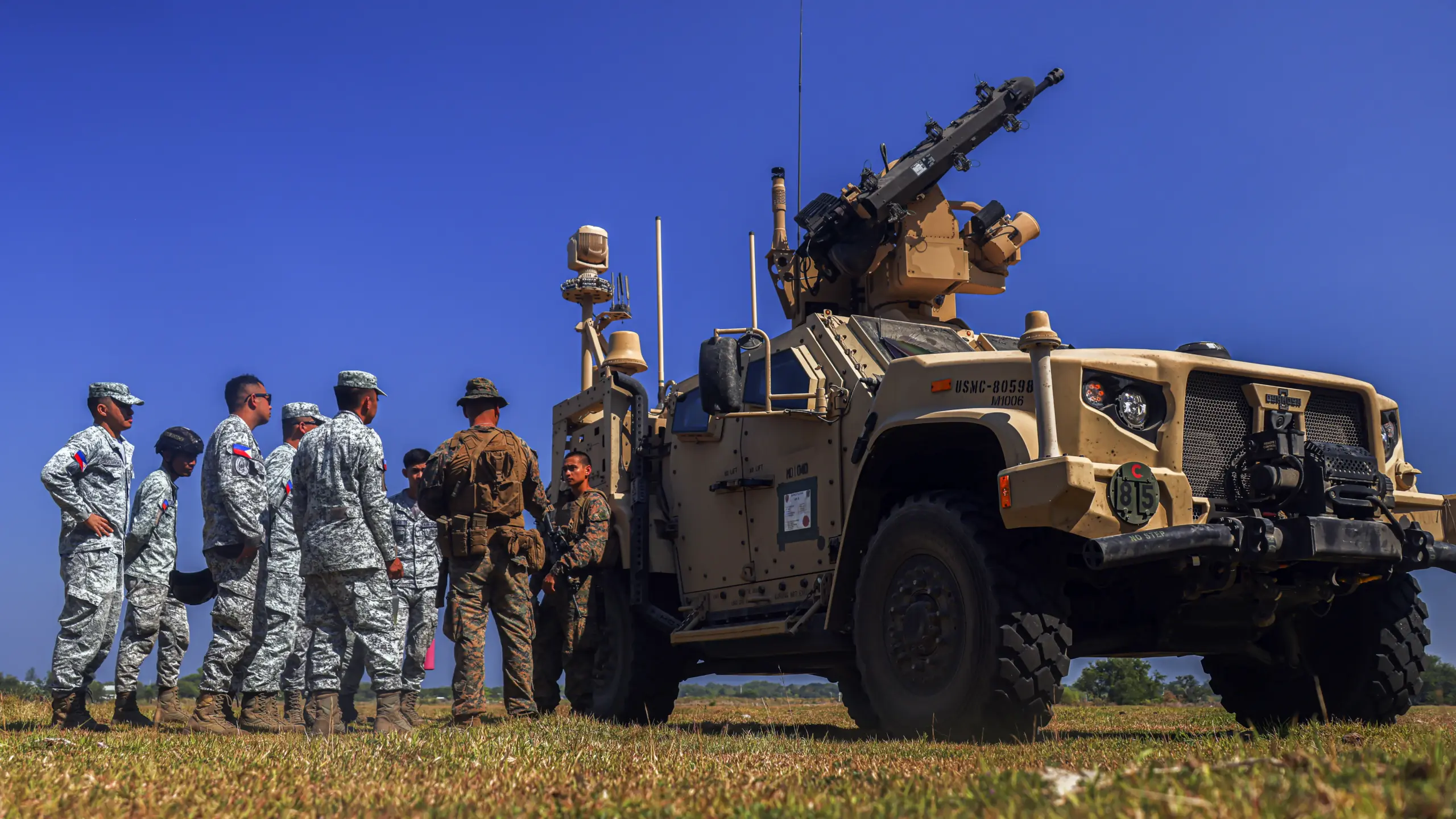
U.S. Marines trained Philippine Airmen on the Marine Air Defense Integrated System during Balikatan 25 at Naval Station Gantioqui, April 24. The drill featured live-fire demos of U.S. and Philippine air defense systems. (US Marine Corps photo by Cpl. Iyer Ramakrishna. This image is used under non-commercial terms. The DoD does not endorse this publication.)
In April 2024, the U.S. deployed its Mid-Range Capability (MRC) Typhon missile system, capable of striking targets within China’s range, in northern Luzon. Initially, this deployment was for exercises, but National Security Adviser Eduardo Ano confirmed in January that it had remained in the Philippines.
The U.S. has since announced plans to send more units, a move that the Armed Forces of the Philippines have publicly supported. The Philippine government also intends to acquire the system, which CenPEG says could further raise tensions in the Asia-Pacific region.
“We are bristling with U.S. and other foreign missiles surrounding and aimed at China, Russia or North Korea — countries which have countermeasure capabilities to destroy our island. It is a nerve-breaking situation,” said CenPEG Chair Professor Roland Simbulan.
Simbulan argued that missile deployment increases the likelihood of the Philippines becoming a target and undermines regional stability. He urged the government to shift its defense strategy toward diplomacy and regional engagement.
CenPEG urged the government to reassess military alliances that compromise national independence or involve the Philippines in rivalries with global powers. The group called for renewed diplomatic efforts to resolve disputes and regional cooperation, especially in the West Philippine Sea. It also asserted that an independent foreign policy avoiding alignment with major powers would better safeguard the country’s interests and promote regional peace.
China, through its Foreign Ministry Spokesperson Guo Jiakun, cautioned the Philippines in February against deploying Typhoon missiles. The Chinese official stated that China would respond to security threats from such a deployment.
This came after Philippine President Ferdinand Marcos Jr. indicated a willingness to withdraw the missiles if China ceases its aggressive activities in the South China Sea, which include the harassment of Filipino fishermen and the violation of Philippine territory.# nordis.net