3 MIN READ
By SHERWIN DE VERA
www.nordis.net
BAGUIO CITY — New York-based rights watchdog Human Rights Watch (HRW) joined the call for authorities in the Cordillera Administrative Region to withdraw the Regional Law Enforcement Coordinating Committee (RLECC) resolution encouraging Tokhang-style operations against “known members of communist front organizations (CFO).”
In an email, HRW Asia Senior Researcher Carlos Conde said applying the same “drug war” tactic to suspected rebel supporters is a “potentially catastrophic move.”
“The RLECC should immediately rescind Resolution No. 6-2021. Using the same ‘drug war’ methods to go after suspected rebels is a potentially catastrophic move that will be no different from the rights abuses we’ve seen in the ‘war against drugs’ by the Duterte administration,” he said.
“What’s to stop the authorities from using the same ‘nanlaban’ [fought back] narrative to justify the extrajudicial killing of activists or anybody they deem to be a threat to the nation?” Conde added.
Last July, RLECC passed Resolution No. 6, which outlines the “Dumanon Makitungtong” (Visit and Talk) strategy. The measure urges law enforcers with local officials and civil society groups to visit the homes of members of organizations the government tagged as communist fronts. The aim is to convince them to renounce their membership and cease supporting the organization.
The new RLECC resolution rehashed an earlier agency initiative known as the Tokhang resolution, which pushed for the same method. The Police Regional Office Cordillera said they were eyeing at least 300 left-leaning individuals for the Tokhang resolution.
On August 19, the Regional Peace and Order Council (RPOC) adopted the resolution and encouraged local governments to support its implementation. Baguio City Mayor and retired PNP general Benjamin Magalong currently chairs the RPOC.
Oplan Tokhang is part of the government’s “drug war” strategy. Police visit the houses of known drug personalities and convince them to surrender and stop using or selling illegal drugs.
Tokhang came from the Visayan words, ‘katok’ and ‘hangyo,’ which means “to knock and talk.” The term gained notoriety after thousands turned up dead from police operations for allegedly “fighting back” against the arresting officers.
Institutionalized persecution
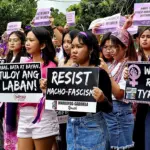
The Cordillera Human Rights Alliance called RPOC’s adoption of the RLECC resolution “institutionalized red-tagging and political vilification.”
“The RLECC and RPOC resolutions are part of the government’s lawfare against legitimate dissent as they arbitrarily further the unjust red-tagging of activist organizations, community leaders, church people and members of the media,” the group said.
Cordillera Peoples Alliance chair Windel Bolinget pointed out that the resolution already concluded that activist groups in the region are fronts for the CPP-NPA. He also stressed the lack of due process to allow those tagged by the government as CFOs to dispute the allegation.
In its 2020 Annual Report, the Commission on Human Rights (CHR) identified red-tagging as a critical concern, especially among indigenous peoples. The office noted the heightened attack against individuals accused of being members or supporters of the Communist Party of the Philippines-New People’s Army (CPP-NPA).
“Desist from red-tagging and labelling [human rights defenders] as terrorists or enemies of the State, and other similar acts, based solely on the fact that such individuals and organizations are [human rights defenders],” CHR recommended in its report.
In June 2020, the United Nations Office of the High Commissioner on Human Rights also expressed concern on the arbitrary and blanket labeling of activists and human rights defenders as “communist terrorists.”
“The phenomenon of ‘red-tagging’–labelling individuals or groups (including human rights defenders and NGOs) as communists or terrorists–has posed a serious threat to civil society and freedom of expression,” the UN agency said.
HRW has also called out several officials of the Philippine military and members of the bureaucracy for red-tagging journalists, human rights defenders, and government critics.
Need for accountability
Conde said that much like the “drug war,” the RPOC-endorsed measure “violates international human rights law in that it operationalizes the targeting of Filipinos without due process of law.”
He stressed that measures like “Dumanon Makitungtong” put the lives of individuals in danger on mere suspicions of having links with communist rebels.
“Measures like this will definitely constrict even more the democratic space in the Philippines because it makes civil society actors, among them human rights defenders, targets for violence,” he added.
Conde underscored the urgent need for accountability for human rights violations in the Philippines, including those committed even before Duterte’s presidency.
“Instead of violating the rights and civil liberties of Filipinos, the government–particularly the police–should work genuinely and harder to ensure that police officers implicated in abuses are held to account,” he said. # nordis.net