2 MIN READwww.nordis.net
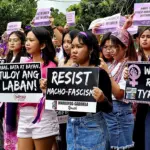
The month of October has, for almost three decades now, become the time for the traditional organized peasant groups’ long march or Lakbayan from the provinces to the national capital to ventilate their issues against the anti-peasant/farmer policies and programs of government. Most government administrations, especially in the martial law period, unashamedly responded to this civilian, peoples’ mobilizations with punitive and often very violent military actions to suppress the peoples’ voice. All they were asking for include: genuine land reform, government subsidy for sustainable agriculture, livelihood, sustainable protection of the environment.
The Lakbayan was their way of drawing the state to really listen to their common issues and their push for common proposals for the betterment of their sector as well as for the Filipinos in general. Instead they fell victims to armed state military violence that deprived them of livelihood and took lives in massacres, police surveillance, vilification, extra judicial killings, illegal arrests, illegal detentions, etc..
Contrary to the state expectations of silencing or hiding the people’s organized protests and their support for a progressive, democratic and nationalist government the fascist state actions has instigated even further encouraged the citizens’ support for the growing ranks of organized actions people have resorted to to get their complaints to the different government administrations.
October has also been declared the “National Indigenous Peoples Month” by government in 2009 while the protestant (1978) and the catholic churches (1978) have consistently celebrated the tribal Filipino Sundays in the month. This week the progressive groups of indigenous peoples, and muslims from North to South or all over the country spearheaded the First “Lakbayan ng Pambansang Minorya para sa Sariling Pagpapasya at Makatarungang Kapayapaan” (Journey of the National Minorities for Self-Determination and Just Peace), a journey from their homes and villages to the national capital to “demonstrate the unity of the country’s national minorities (NMs) to assert their right to self-determination and their aspiration for just peace.
In their ranks, most of them are peasants, workers in: the mines, commercial farms, manufacturing and service companies, in government, OFWs, women, children, youth and students. Like the rest of the Filipinos, they face the same three basic problems of Philippine society, -the foreign control and domination of capital and the country’s economy; the ownership and management of landlords and big bureaucrats of government, of the commerce and trade, of wide tracts of productive land and natural resources for private profit; And on top of these, the distinct problem of National Oppression (NO).
Most of them descend from ancestors who have fought against foreign colonization and domination, even recent oppressive state administrations. So that they have become a minority discriminated culturally and economically against by the wider Christianized, miseducated, and western influenced Filipino majority, even in terms of government services and development. Many of them are impoverished despite their regions being very rich in natural resources.
Yet they persist to assert as “the right to fully control their land and resources, implement their own form of self-governance, and practice their culture, traditions and religion – and their aspiration for just peace. But this time also to relay that it has never been only for them as NMs but in solidarity with the greater majority of Filipinos, especially with the enlightened progressive nationalist sectors in the pursuit of Just peace. Putting our support for them is the least we can do for all of us and our future as a nation. # nordis.net