FEATURE| December 7, 2014
3 MIN READBy ARTHUR L. ALLAD-IW
www.nordis.net
On December 18, 2007, the United Nations adopted General Assembly Resolution 62/127 which set December 3 and the date every year after as the International Day of Persons with Disabilities. On May 3, 2008, the United Nations Convention on the Rights of Persons with Disabilities and its Optional Protocol took into force. These instruments mandated legal obligations to member states of the UN to promote and protect the rights of persons with disabilities in their civil, cultural, economic, political and social life.
These instruments were welcomed. It gave hope that the issues of the approximately 10 percent of the world’s population living with disabilities would be answered. But still, the situations of these PWDs worldwide are far from what are to be realized through these instruments. In reality however, PWDs continuously experience discrimination and denial of their basic rights, like equality before the law and discrimination within the society where they live.
In the Philippine setting, a concerned government claimed that 1.23 percent of the country’s population live with disabilities. According to local offices of the DSWD in 2012, there are 6,781 PWDs in the Cordillera and 1,375 in Baguio City. They suffer from double marginalization: from their particular issues as PWDs and, like other Filipinos, the consequences of being poor and marginalized.
It is true that the government had adopted various laws pertaining to PWDs. It included Batasang Pambansa 344 which mandates that buildings, institutions, establishments and other public utilities must have facilities and other devices for PWDs. But look at government and other buildings which offer services to the public, there are no utilities and facilities that consider the situation of PWDs. Even government projects, like sidewalks usually have none or if there are any, not enough for PWDs access. Baguio City alone has not enough safe crossings for PWDs; they are forced to utilize roads not designated for crossings in order to reach their destination despite the mandate of BP 344.
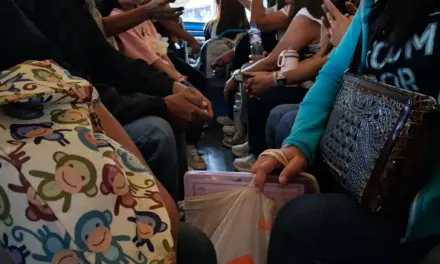
BP 344 also mandates designated seats for PWDs on public land transportation vehicles. But these are not realized in most areas in the country.
Another law is RA 7229 also known as the Magna Carta on Rights of PWDs. The law mandates for the rehabilitation, self-development, and self-reliance of PWDs. While the law has noble aims, rehabilitation, self-development and self-reliance of PWDs are usually shouldered by their families as there are none or less government institutions that should cater to the needs of the PWDs. The services that the government should deliver are now left to private rehabilitation institutions which are expensive, unlike supposedly if these were government-owned.
Special educations for children with disabilities should be established too but biggest slice of the pie of the government budget is channeled to debt payment and the military. Baguio alone, which has a population of more than 300,000, has only one Special Education Center which cannot accommodate more children with disabilities. As a consequence, these children are forced to enter regular schools because the income of their parents is not enough to send their children to privately-owned Special Education institutions.
While RA 9442 mandates for 20 percent discounts for PWDs, identification from concerned government agency or agencies is necessary to avail this privilege, as if their disabilities, which can be seen by the naked eyes, was not enough.
These issues and concerns being faced by PWDs can be addressed if the PDAO or Persons with Disabilities Affairs Office is established to help local government units on the matter. RA 10070 mandates the institutionalization of mechanisms to ensure programs and services and the creation of PDAO offices in the provinces, cities and municipalities.
In the celebration of the International Day of Persons with Disabilities, it must be pointed out that the government must act on its obligation to implement the Convention on the Rights of Persons with Disabilities, its optional protocol, and local laws. These people in our society suffer from the common problems faced by the poor and the oppressed, and from their distinct condition as PWDs. They must enjoy their human rights and encouraged to participate in nation building. We, PWDs are human beings too!# nordis.net