











Mining critics are pro-mining
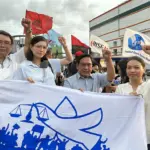
5 MIN READ This was presented and detailed in a public forum an hour before they trooped to the Supreme Court grounds here to urge the magistrates en banc to junk the Philippine Mining Act (PMA) of 1995.
By KIMBERLIE NGABIT-QUITASOL
www.nordis.net
BAGUIO CITY — Various groups labeled as anti-mining for being very vocal critics of large scale mining operations declared that they are not against mining per se, but have long been vocal that they want a mining industry that benefit the Filipino people as a nation and not largely foreign interests, in a forum at the University of the Philippines Baguio.
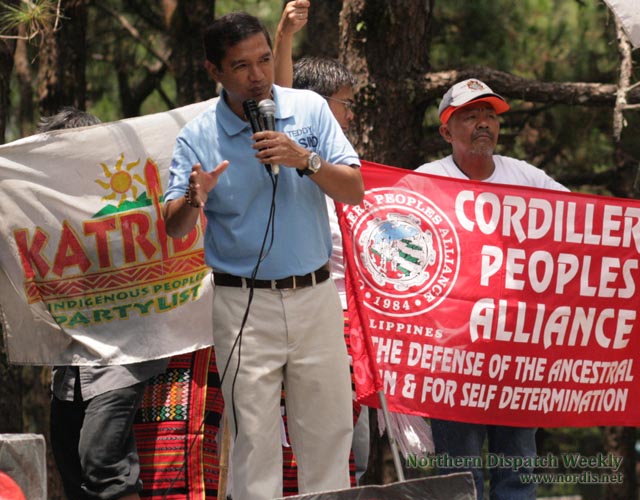
“Mining is an issue that has ecological, social justice, industrial, moral and generational dimensions that should not be ignored by the current and future government officials. The Filipino people should have fullest participation on decision-making and control over our natural resources in all our laws,” Casiño said. Photo by Noel Godinez
“We are not against mining. We recognize the need for mining. Pero ibang usapan kung magmimina para sa ibang bansa…” Sister Nilda Balaba head of the Social Action Center-Justice and Peace of the Diocese of Marbel in South Cotabato stressed during the said forum.
Mining they oppose
Balaba shared the plight of the B’laan, the indigenous people adversely affected by the operations of SMI-Xstrata in the south. She described how Philippine Army troopers staffed a house and killed a pregnant woman and her sons just because they suspected her husband to be an enemy of the state. She was referring to Juvy Capion and her sons.
“Where is the military’s rules of engagement? Mga tao sila hindi hayop. May dangal, may dignidad at may karapatan. Sino ang magpoprotekta sa kanila?” Balaba reiterated.
She also pointed out that military detachments are all over the area and that soldiers encamp even in schools disrupting classes and endangering school children. She further disclosed that the military deployed in the area are not there to protect the IPs but to protect the mining company to facilitate its operations.
She stressed that the government should give primacy to the common good and the interest of the Filipino people and not foreign capitalists.
Judy A. Pasimio of SOS Yamang Bayan (SOS-YB) shared that SMI-Xstrata was able to operate the Tampakan Gold-Copper project that is said to be the largest gold mine in Southeast Asia affecting Sarangani, Davao del Sur, Sultan Kudarat and Cotabato after the company was granted a Financial and Technical Assistance Agreement (FTAA). She added that the said mine project is the size of 17,000 basketball courts with open pit mines as deep as a 160-storey building spread over watershed and prime agricultural lands in the said provinces.
Pasimio also mentioned how the mine operations of Climax Arimco Mining Company now Oceana Gold Philippines Inc. has devastated Didipio, Kasibu, Nueva Vizcaya. She said Didipio used to among the fruit bowls and rice granary of the province but now mine constructions are over rice fields.
She further described how the Provincial Water Regulatory Board (PWRB) of Ifugao ruled in favor of Oceana granting the company water rights that resulted to conflict among affected barangays. She added that the PWRB cited provisions of the Mining Act particularly the FTAA provisions that include water rights.
According to Pasimio there also are the “hidden costs” of mining. She said mining operations and applications breeds division and disunity in communities that used to value close family ties and community harmony. She also pointed out that due adverse impacts of mining to the environment, women who used to be food growers are now left with limited choices of odd jobs that include washing clothes and cooking for mine workers and cleaning for mine offices.
More disturbingly, she said that due to the influx of migrant men mine workers, entertainment like videoke houses and brothels has become a lucrative business resulting to increase in prostitution.
Santos Mero, deputy secretary general of the Cordillera Peoples Alliance (CPA) reiterated the over 100 years of hosting large mining companies, Benguet has remained to be among the poorest provinces in the country. He added that until today, agriculture remains to be the leading source of income for the province.
Mero also pointed out that over 100 years of large scale mining operations resulted to dead rivers, deforestation and continuing mining disasters the latest being the breach in Philex Mining Corporation’s tailings pond 3 (TP3). He also mentioned the decades lone operation of the Lepanto Consolidated Mining Company resulted to the continuing sinking in Mankayan and the death of the Abra River from mine wastes.
The Philex TP3 breach discharged 20 million metric tons of mine wastes into the Balog Creek and Agno River and is now deemed to be the worst disaster after the Marcopper spill in Marinduque that killed the Boac River. The Marinduque spill discharged over 1 million metric tons of mine tailings and was considered the worst in 1996.
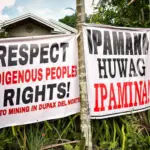
The CPA leaders also pointed out that mining applications and operations have violated the Cordillera IP’s right over their ancestral lands and resources. He explained that large scale mining contradicts IP communities’ resource management traditions that takes into consideration the environment and the right of the future generations. He stressed that IPs view the land as their source of life and that they are just care takers for the future generations. He added that nearly 70% of the total land area of the Cordillera is covered with mining applications.
Makabayan senatorial bet Representative Teddy Casiño during the same forum underscored the unjust sharing of profit from mining, and the present mining laws allows very minimal share for host communities and even for the government.
He explained that the Department of Environment and Natural Resources (DENR even issued an administrative order interpreting the provisions of the PMA that the government’s share from the mineral resources will be limited to the usual taxes, duties and fees.
The progressive lawmaker further pointed out that present mining industry is what it is today because the present mining laws were crafted to serve the interest of large foreign transnational companies as it allows whole sale sell out of national patrimony. “If we want mining to be truly beneficial to the country and the Filipino people on the long term, we need to do away with the current unconstitutional mining policy that leaves us with miniscule revenue, permanently destroyed environments and no agricultural and industrial advancement,” he said.
The mining they propose
Casiño, however, stressed that money is not the only benefit from mining. “We want a mining industry that benefits the community and the country. When we speak of benefits, we do not just refer to monetary revenue. The real value of our mineral resources is being a catalyst for economic growth and national development,” he stressed.
He reiterated the need to craft a new mining law that will reorient the present mining industry. “Mining should be part of a National Industrialization Policy that will ensure the sustainable utilization of our resources while taking care to minimize the industry’s ecological and socio-economic impacts,” he said.
The progressive solon, who authored the People’s Mining Bill in the current Congress, believes that the government should prioritize biodiversity protection and the wise utilization of natural resources as a prerequisite in an all-round national development roadmap.
“The 1987 Constitution clearly mandates that the State must receive its just share in the utilization of our mineral resources aside from taxes and duties normally paid by taxpayers. Mining is an issue that has ecological, social justice, industrial, moral and generational dimensions that should not be ignored by the current and future government officials. The Filipino people should have fullest participation on decision-making and control over our natural resources in all our laws,” Casiño said.
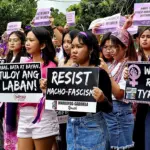
Peoples organizations, environmentalists and religious groups rallied behind Casiño and called on the magistrates to junk PMA of 1995 as they urged the passage of an alternative mining law that is pro-people and pro-environment. # nordis.net