8 MIN READ
By MOLAIZA BASARTE & ESTELLE DOROSAN
www.nordis.net
BAGUIO CITY — She has been called many things — an activist, a teacher, a journalist, even a detainee. Labels that sound heavy, almost definitive. But sit with Vertudez “Daisy” Macapanpan long enough, and something else rises to the surface.
Something softer, yet stubborn and deeply alive.
She will turn 73 soon, yet she does not speak like someone winding down, but rather like someone still in the middle of things, still trying to bridge a gap.
“Basta tuwing gigising ako, lagi kong iniisip, ‘Go on lang, go on.’ May magawa; kailangan may magawa,” Daisy said in a hopeful tone. “Uunahin yung iba, bago ‘yung sarili,” Ides, Daisy’s firstborn, said of her mother.
(Every time I wake up, I always think, ‘I have to go on, go on.’ Something needs to happen; it has to be done. Putting other people first before herself.)
One “Daisy” blooms in a thousand ways, touching lives through her own.
Yet after all this, she remains unmistakably human.
Where Daisy sprouted
Before she was called an activist, and before “rebel” was written beside her name, Daisy was a child of Pakil, Laguna, where the Sierra Madre leans close enough to feel like kin. Mountains with names like Ping-as and Inubog became part of her memory.
She remembers sunsets split in two — lightning flashing in the west while the mountains stood still in the east. From the lakeshore, she could see Mount Banahaw and Mount Makiling if she knew where to look. As a child, she did.
Life moved slowly then.
Transport meant riding a motorized boat, or bangka de motor, to the next barrio. Summers meant Flores de Mayo and strict Roman Catholic traditions. And swimming — especially swimming — was expected.
There were also niyog, langka, santol, and the lansones trees that outlived the people who planted them.
Always the lansones.
Sweet, she insists. Sweeter than anywhere else.
A lansones tree takes 25 years to mature. A lifetime, if you think about it. That was how her town understood time.
Slow. Rooted. Patient.
Years later, when she began asking why people suffered in a place so rich, the question did not come from nowhere. It had lived with her since childhood.
Where Daisy grew
College changed everything.
A promdi arriving at the University of the Philippines Diliman for the first time encountered something far larger than city life: politics.
Awakened by a growing political upheaval during the period, Daisy immersed herself in activism. Hers was a generation shaped by the First Quarter Storm, a wave of protests against the late dictator Ferdinand Marcos.
Back then, even a three-centavo increase in oil prices could spark demonstrations. Tuition hikes drew students to the streets. So did other issues people believed deserved scrutiny.
She recalled a time when student leaders wielded real influence over councils, congresses, and the student body itself.
That was where Daisy learned that systems could be questioned—and sometimes resisted.
“Tapos nag-palaot na. Nagturo, nag-iba-iba na ‘yung gawain ko,” Daisy said.
(Then, everything happened. I taught in schools, everything changed.)
She says it casually. In truth, she dove in.
Where Daisy bloomed
Daisy never stayed in one lane long enough to be boxed in.
She taught at UP Baguio, but teaching did not stop in the classroom. She helped build cultural organizations and staged performances that carried political weight, turning art into a form of expression during difficult times.
Outside the university, she followed issues on the ground — including the Chico Dam struggle, Indigenous resistance, and conflicts over land and state power.
She went to communities not only as an observer, but as someone who shared in their experiences.
Later, she worked in both print and broadcast media while organizing communities across Southern Tagalog.
“’Yun ang isa sa mga pinakamagandang bahagi ng buhay ko. Ang saya!” Daisy said while recalling those years.
(That was one of the best parts of my life. It was joyful!)
She remembered how her station manager at UP Los Baños often replayed her programs because of the stories she gathered.
“Siyempre, kasama na yung pag naglalakad ako, may makakakwentuhan ako, ‘yan… Kaya kapag may nakakasabay ako, nag-iinterview ako,” she shared.
(Of course, that includes when I’m walking, and I get to chat with someone, things like that… So whenever I meet someone along the way, I interview them.)
Her reports came from farmers, fisherfolk, and workers — people living with the consequences of policies others only debated.
“Kaya kaiba ‘yung mga balita. Nagugulat talaga ‘yung station manager,” Daisy added.
(That’s why the news was different. The station manager was often shocked.)
All this unfolded while she raised children, sometimes while recording programs or chasing stories.
“O kaya, biglang magpapatugtog ako dahil kailangan kong ibanyo ‘yung anak ko,” Daisy recalled.
(Or sometimes I would suddenly play music because I needed to take my child to the bathroom.)
In every role — teacher, organizer, broadcaster, activist — there was always more work to do. But that life came with sacrifices.
“Lumalaki kami nang hindi siya kasama dahil nga full time community organizer siya e. So naiiwan kami sa mga tito, tita,” Ides said.
(We grew up without her since she’s a full-time community organizer. So, we’re left behind with our uncles and aunties.)
Ides and her younger sibling spent much of their childhood in their grandparents’ house in Laguna. Life was modest, but enough.
Even while working in communities, Daisy remained present in her children’s lives whenever she could. She visited, shared stories from the field, and sometimes brought them along.
Understanding came slowly for Ides.
“Unti-unti nakikita ko sa mga community kung saan si Nanay nag-oorganisa — nakikita ko kung gaano kamahal si Nanay at kung gaano niya kamahal ‘yung ginagawa niya. At nakikita ko rin na mas marami pa palang pamilya ang mas hirap pa samin,” Ides said.
(Little by little, I saw in the communities where Mother was organizing just how loved she was, and how much she loved what she was doing. And I also realized that there were actually many more families struggling even more than ours.)
“Dun ko nakita na mahalaga ‘yung trabaho ni Nanay, na hindi lang simpleng tinitiis niyang maiwan kami. Hindi e, masakit ‘yun sa kanya e,” she added.
(That’s when I understood that Mother’s work was important, that she wasn’t simply enduring being away from us. No, it was painful for her too.)
That is the part many people miss.
Daisy was not absent because she loved her children less. She was absent because her commitments stretched beyond her own household. For Ides, understanding her mother also meant learning to live with the fact that she was missing.
“Integrated,” Daisy said of that life.
Not perfect. Not compartmentalized. Just lived all at once.
Where Daisy formed
For years, Daisy told other people’s stories, then the story turned toward her.
In November 2021, she returned to Pakil and heard neighbors discussing a proposed dam project. The project involved a 1,400-megawatt pump-storage hydropower facility with an upper basin carved into the mountain.
On paper, the project sounded technical. On the ground, residents feared losing land, trees, and livelihoods.
Daisy described coconut and lansones trees marked with white paint for cutting. Some of the trees had stood for decades.
She listened first. Then she explained the project to neighbors unfamiliar with pump-storage systems, translating technical language into simpler terms during meetings in homes and chapels.
Soon, opposition to the project widened.
Farmers spoke of pressure to sell land. Some said they were warned that expropriation could follow if they refused.
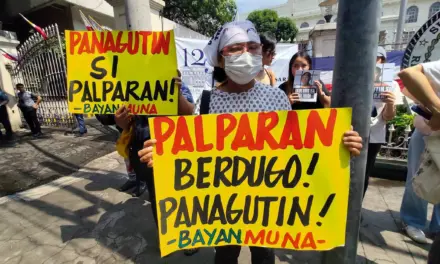
The discussions eventually led to the formation of Mamamayang Nagmamahal sa Pakil (MANAPAK), a group opposing the project.
“Huwag ibenta ang lupa,” Daisy repeatedly urged residents.
(Do not sell the land.)
Where Daisy weathered
Then came an afternoon that changed her life.
Daisy had just woken from a nap after a long day. Coffee was brewing, and snacks were being prepared for carpenter friends, when armed men entered the house.
“Nanay, ‘wag kayong gagalaw ah,” Daisy recalled hearing during her arrest.
(Old lady, don’t move, okay?)
She resisted.
“Nagwawala ako e, kaladkad ako. E ayoko sumama e. Ang liit ko, ang lalaki nila,” Daisy recounted.
(I resisted; I was being dragged along. But I didn’t want to go. I was so small, and they were so tall.)
The journalist who once interviewed detainees suddenly became one herself.
“(Hindi) ko maimagine ‘yung itsura niya sa bilangguan. Matanda na kaya napakahirap na sitwasyon, hindi mo gugustuhin na maranasan ‘to ng ibang pamilya,” Ides said as she remembered her mother’s detention at age 68 on June 11, 2022.
(I couldn’t imagine her life in prison. She’s old, and that situation is far harder for her; you wouldn’t want it to happen to other families.)
Daisy later described the experience as traumatic.
“Naghahanda ako sa worse pero hindi ko talaga matanggap. T*ngina, ‘di pwede ‘to. Hindi talaga pwede ‘to,” Ides recalled thinking. “Noong nakita kong buhay, ah okay, okay na ‘to. Basta buhay, ‘di siya desaparecido, isang bagay yun.”
(I was preparing for the worst, but I couldn’t bring myself to accept it. No, this can’t happen. This really can’t happen. ,”When I saw her alive, okay, this is okay. As long as she’s alive, she’s not been disappeared, that’s one thing.”]
Daisy was released on bail on August 9 that same year after spending 60 days in detention on rebellion charges. Friends, colleagues, and supporters helped raise the P200,000 bail.
Smaller perhaps. Thinner maybe. But unbent.
What Daisy produced
Returning to Pakil after detention, Daisy continued campaigning against the dam project.
“Wala nang lansones ang Pakil ngayon, pinutol na ang mga puno. Kung meron mang natira, ‘di sapat dahil binibili na nga,” Daisy said. “’Yung kasalukuyang henerasyon na lang iniisip nila. ‘Di na yung mga susunod kaya binebenta na rin ng iba…”
(Pakil has no more lanzones now; the trees have already been cut down. And if there are any left, they’re not enough because people are already buying them. They’re only thinking about the generation now, not the ones that will come after, which is why others are selling them too.)
She kept going. “May gagawin, may dapat gawin kahit ano pang paraan na sa balangkas siyempre ng constitution ng Pilipinas.”
(Something has to be done, something must be done, whatever way possible, of course, within the framework of the Philippine Constitution.)
There are still farmers seeking help understanding documents. Young activists asking for context. Meetings that require someone who remembers the 1970s.
“Sayang naman naging iskolar ka ng bayan kung hindi ka magiging aware,” she reflected.
(It would be such a waste if you become a scholar of the people yet never become aware.)
Daisy knows she cannot stop a megaproject alone. She has seen movements win and lose.
But she also believes silence allows decisions to move faster.
“Kaya ‘yung edad kong ito… pero wala akong pinagsisihan na pumalaot ako sa buhay ng paglilingkod para alamin ang mga karapatan, mga tunay na praktika na nangyayari sa paligid, anong p’wedeng magawa, ‘di lang para sa sarili,” she said.
(So at my age now… I have no regrets about venturing into a life of service to understand people’s rights, the realities of what is happening around us, and what can be done—not just for oneself.)
It is tempting to reduce her to a symbol. But she resists easy definitions.
“Para sa kapakanan ng marami… kailangan maglingkod tayo sa kapakanan ng kapwa,” Daisy said.
(For the welfare of many…we need to serve for the good of others.)
She is a grandmother who laughs loudly. A mother who once played music mid-broadcast to care for her child. A woman who curses quietly when angry.
A citizen who still believes enough in the Constitution to quote it. A journalist who continues to uncover stories. And an environmental advocate who measures each step against the pulse of the land.
“Mas lalo akong proud sa nanay ko,” Ides said. “Siguro hanggang huling hininga niya, ilalaban niya talaga kung ano ang para sa interes ng mamamayan.”
(I became even prouder of my mother. Maybe until her very last breath, she will truly keep fighting for what is in the people’s best interest.)
She blooms everywhere — in Pakil, in the hearts of her children, and in rivers she refuses to let fall silent. And among the thousands of “Daisies” that bloom, she remains distinct and entirely herself.
Because she is not finished. Not with speaking. Not with remembering. Not with fighting.
“Serve the people,” she reiterated. “Mahirap, pero kaya. Pwede.”
(It’s difficult, but it’s possible.)Most of all, Daisy is not finished being human.#nordis.net