3 MIN READ
By ENNAIRA MACUTAY
www.nordis.net
‘‘Blockaded,’ published in the Philippine Star and written by Alex Magno, argues that old forms of corruption were perpetuated by the anti-mining residents of Dupax Del Norte, who barricaded a pathway to a mining exploration site.
The author claims that their protests were “instigated by local politicians who lost in the previous elections.” He dismissed the residents’ concerns in favor of the corporation and its supposed financial losses, calling on the national government to protect mining investors.
For residents of Nueva Vizcaya, an agriculture- and mineral-rich province in Northern Luzon, the government’s protection of corporate mining interests is nothing new. It is begrudgingly home to two foreign mining corporations that do not take no for an answer.
The latest of these age-old struggles now centers on the town of Dupax Del Norte, where the FCF Minerals affiliate Woggle Corporation was issued a mining exploration permit by the Department of Environment and Natural Resources-Mines and Geosciences Bureau (DENR-MGB). The government has allowed the company to explore over 3,100 hectares, straddling the five barangays of Bitnong, Munguia, Oyao, Inaban, and Parai.
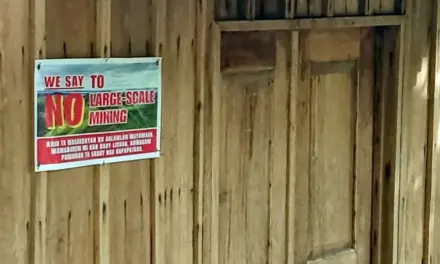
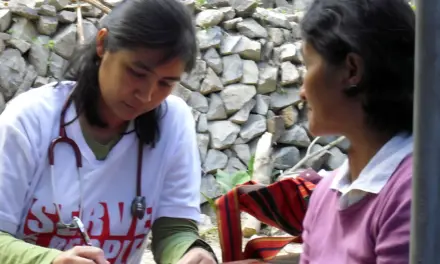
Residents, backed by several local officials, the church, and advocacy groups, are now challenging the permit, which was issued without consulting the affected communities. The communities have set up barricades to prevent Woggle personnel and mining equipment from entering, including one at the primary exploration site in Sitio Keon, Brgy. Bitnong.
Framing the incident as if Woggle had the shorter end of the stick seems like a dodgy tactic to wiggle out of accountability.
The residents were well within their rights to set up a blockade in a right-of-way that has been proven to be private property, not a public road. Indeed, the community “interrupted” the exploration and imposed a financial burden on the investors, but only because the mining exploration threatens the livelihoods of this farming community and will inevitably have environmental repercussions.
Only after the permit was issued did Woggle attempt to gain community approval, scheduling consultations that both the local government and the community repeatedly denied. For the corporation, it is a matter of inconvenience—these are financial costs they can recoup. But for the community, there is no guarantee that their land will be left unscathed by mining. More concerning are the people it would leave displaced, because even if Woggle claims that the current activities are only for exploration, who are they trying to fool that the mining operations will not push through afterwards?
Despite the Philippine Mining Act of 1995, which is supposed to safeguard watersheds like Dupax Del Norte, an exception was once again made for corporations whose money outweighed the clean water supplied to the entire Cagayan Valley. Dupax Del Norte is a critical headwater area that supplies water for drinking and domestic use throughout Region 2.
Now, Representative Tim Cayton has proposed the ‘Nueva Vizcaya as Watershed Haven Enhanced Protection Act.’ But if this bill could truly address the province’s mining issues, it would show that existing mining laws are ineffective and that other communities remain at risk of mining exploitation.
Indeed, local politicians who lost the recent election are riding on this opportunity for their personal agendas, but the community protested because they had substantial reason to. Because to them, it is a matter of life or death—the loss of their land to mining would mean the loss of their livelihoods and home. For Novo Vizcayanos who benefit from the Magat Dam, it could mean losing water and electricity and facing a greater risk of landslides and water contamination.
If there’s anyone “perpetuating old forms of corruption,” it’s the DENR-MGB, which granted the permit without proper consultation with the residents. When the land is left barren, and profit is repeatedly prioritized over the people, no amount of gold and copper will feed the nation.
While fairy tales of economic growth from protecting these investors sound alluring, who will benefit from this growth if the ones bearing the costs are marginalized communities? Indeed, a reasonable budget is measured by how many lives are uplifted. Rather than relying on foreign investors and mining in the province, the focus must be on what can be done with the budget Nueva Vizcaya already has to support the farmers who need it most.
Instead of strengthening the mining industry, it should strengthen the province’s rich agricultural sector. Nueva Vizcaya is known as the citrus capital of the Philippines, and everywhere you look, rice fields stretch for miles. Local communities like Sitio Keon also grow various fruits and vegetables that feed even the mouths of those campaigning against them. If there’s anything worth more than the minerals that corporations like Woggle could drain from the province’s rich land, it’s the grain and greens that could thrive on it instead.
Until mining firms like Woggle and concerned government agencies finally listen to the people’s calls, the barricades—community resistance will continue. Hand the land to future generations, not to mining corporations!#nordis.net
Editor’s note: The opinions expressed do not reflect the views or positions of Nordis. They are published to encourage open dialogue and diverse perspectives. Nordis reserves the right to edit for clarity and length, but the opinions remain solely those of the author.