Inaction Deepens Fuel Crisis
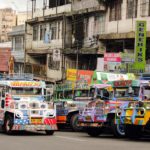
3 MIN READDelaying decisive action, especially when viable options are on the table, such as removing fuel taxes and regulating the industry, risks deepening a crisis already evident in daily life.





COLUMN | WEEKLY REFLECTIONS
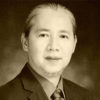
The author is a professor and former President at the Union Theological Seminary-Philippines. He holds a doctor’s degree in Theology and Religious Studies from the University of Leeds, England.
Last Sunday’s worship reminded me of the commencement of “Kingdomtide” in the liturgical calendar of some mainline Protestant churches (Traditionally, “Ordinary Time” in most). This prompted me to revisit this piece I wrote for Northern Dispatch Weekly, “Of Kings and Kins.”
In my writings, I had been using “Kin-dom of God” or simply “Kindom” for “Kingdom of God” a lot. Most of the readers may say it is misspelled. Autocorrects do pester me. But this was intentional. Those who are familiar with theological literature in the last sixty years or more may have an understanding of why “Kindom” reads more theologically and politically correct than “Kingdom.”
Kingdom may be the biblical word but the bible and the church that produced it belong to the world and age of kings and kingdoms. These kings and kingdoms were imperial and colonizing political entities. They were constructs of feudal dispensations that rigidly stratified people into lords and vassals, into the haves and the have-nots, the powerful and the powerless. In the Christian bible, these kings and kingdoms created class societies that were abominable in the eyes of prophets and the Kristos of the Hebrew masses. Kings and kingdoms divided the human household, separated the human from the earth community, and authored the most destructive epoch in the history of the planet, the Anthropocene.
Kings and kingdoms have so effectively colonized the hearts and minds of their subjects that not even the masses of colonized, in their resistive kaloob-looban and fantasies of alternative worlds, could imagine beyond what feminists name as the “kyriarchal” assumptions of our predominantly patriarchal societies. They can only imagine God or the sum of their hopes as an almighty King, and “His”(?) reign – a kingdom (!) This is how deformed and dehumanized humanity is by their kings and kingdoms. Not even the civilizations and “benevolent empires” built by kings and kingdoms can compensate for this “Cainic” disfiguration of the human and all creation.
Smaller egalitarian communes live in harmony with their non-human environment. Kingdoms, in contrast, thrive on the trampling of the earth. Today these egalitarian ways are still alive in most indigenous communities, albeit gasping for breath. The ways of kings and kingdoms still reign to this day, and they continue to pillage what is left of the non-human environment, enslave the mass of humanity, and are now looking forward to colonizing space and celestial bodies.
In this piece, the use of “Kindom,” an alternative word popularized by Christian feminists, intends to:
Help promote a language for the gospel that is closer to the original Yahwistic-to-Christic ideal. To be kin and not to be king or kingly to one another was what Jesus and the prophets before him taught, or what the Torah envisions for God’s creation.
Remind us of a basic biblical affirmation that God revealed Godself not in kingly pharaonic braggadocio but in the rising of the subjugated; not in kingly Herodian bluster but in the solidarity of kins in Jesus’ all-inclusive household.
Remind us that our historical redemption as a people resides not in the kingdom and kingly rule of “fatherly”/ “Tatay” powers but in our participation in the work [of the people] of God to restore kinship among God’s children and creation.
Call our attention to what is wrong and what is dreadful about the Establishment Church and its noxious indifference to social injustice, fascist repression, extra-judicial killings, the plight of indigenous peoples, authoritarian rule, and the desecration of God’s earth.
Call our attention to the damage done by the kingly and kingdom consciousness of the church; and how this “royal” consciousness transformed the Christian movement into an empire church (Christendom), into a clerico-fascist institution and a bastion of reaction; and other perversions of the original king-less band of kins in the Jesus Movement.
My use of “kindom” instead of Kingdom intends to:
Call our attention to the issue of human rights violations in the country – against a kingly “fatherly” government that represses dissent, and assumes god-like possession of, and absolute power over a people. “Owning,” subjugating, and violating a people is anathema to kinship – a defilement of what it means to call God, Abba-Father.
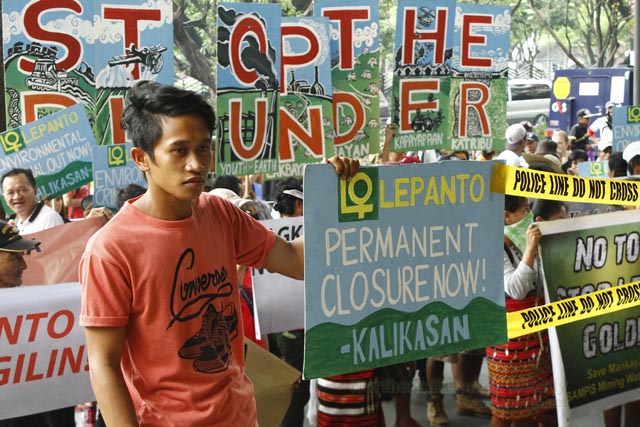
Call our attention to the struggles of indigenous peoples for their rights to their ancestral lands, self-determination, and their rights to harness and enhance their indigenous cultures and knowledge systems with adequate support from the state. If there are human communes that affirm kinship with the earth and all that dwell therein, it is the “first nations” of the world.
Call our attention to the issue of the marginalization of women and LGBTQI+ in domestic and public life. Mostly in history, the marginalization and oppression of women have their roots in religious communities that teach kingly exclusion of “othered” kins. In Western societies and their former colonies in the global south, it was the Christian church that taught the other-ing of women and LGBTQI+. Following the “kyriarchal” logic of kings and kingdoms, the Christian gospel was re-interpreted against itself.
Call our attention to the groaning of creation. The kings and kingdoms of the present continue to terrorize creation. At the twilight of his reign, a fatherly power in the “Tatay” president lifted the ban on large-scale and open pit mining and called on the quarrying of an island mountain for imperial Manila’s beautification. How [for the life of us] can we in the churches celebrate “Kindomtide” “in spirit and truth” when an open assault of the earth continues without let-up right on our doorsteps?
Using “kindom” instead of Kingdom intends to remind us that Mary Daly (1928-2010), one of the earlier Feminist theorists in theological circles, was not exaggerating when she kind of said that kings and kingdoms were diseases! It is here, in the kingdoms of kings, where sexism, classism, racism, anthropocentrism, androcentrism, ableism, ageism, capitalism, fascism, and all the other social diseases and idolatries intersect.
Using the word kindom calls us to revisit the prayer Jesus taught us and say it in a genuinely Christic fashion,
“Our God in heaven,
hallowed be your name.
Your Kindom come,
your will be done
on earth as it is in heaven …” # nordis.net
3 MIN READDelaying decisive action, especially when viable options are on the table, such as removing fuel taxes and regulating the industry, risks deepening a crisis already evident in daily life.
2 MIN READThe culture of bardagulan and bangayan is now very prominent on social media. But it is a reflection of deeper social and political fractures in the offline realm.
3 MIN READThe first national West Philippine Sea (WPS) Mural Festival was conceived as a nationwide competition among Filipino artists to create public artworks that promote patriotism and support efforts to protect the WPS.
2 MIN READItigil ang pagsisisi sa maliliit na mananaya at kubrador. Sila ang madaling hulihin at ipakita, pero hindi sila ang utak. Wala sa kanila ang pondo, proteksyon, at koneksyon.
