

An interview with the IP Ed Coordinator of Ifugao
6 MIN READ
By BRANDON LEE
www.nordis.net
This is the interview with Herminia Hoggang, the Indigenous Peoples Education (IPED) Coordinator in Ifugao on September 1, 2016.
Brandon Lee (BL): What is IPED and how did it get started?
Herminia Hoggang (HH): IPED is Indigenous Peoples Education. IP education started long time ago in Ifugao, even when there was no formalization yet. No DEPED order to establish IPED was issued. It started even before the publication of the DEPED order [in Ifugao]. If you have heard, of Cudog elementary school that was an advocate for culture as far as the National Center for Culture and the Arts (NCCA) is concerned. Here we really presented our cultural practices and taught some good values that we gathered from our traditional practices.
BL: Was this implemented outside of Cudog?
HH: Yes, in other municipalities, like in Kiangan, Lagawe, Hingyon… although, we just didn’t have the name IPED. IPED was just started in 2013. And this IPED addressed the need of our indigenous children who lack access to educational services is one objective. Another purpose, in IPED since 2013, when we made the curriculum, is it is culturally responsive to our Ifugao children. We tried to make the curriculum fitted to our children. So that is why one of our activities today is contextualization. Meaning, We tried to get the traditional practices and values that are good and put it into our lesson plans for teachers to teach in the classrooms.
BL: In all subject areas?
HH: In all subject areas. But for today, for this year, we concentrated on kinder to grade 3 and grade 7. We are advanced because we already have grade 7. I just came from our congress, We now concentrate on the contextualization lesson plan on the curriculum. We tried to inject the culture in the curriculum for the young children to use.
BL: You say we are advance here in Ifugao and that is in comparison to other indigenous communities…Are there other advance provinces like Ifugao?
HH: Yes, there is Apayao who are also contextualizing their lesson plans responsive to their children. When I say it is advance, at least We already tried it with grade 7 students. We are trying to contextualize the different subject areas in the lessons for grade 7.
BL: What are the different phases of IPED? What is the phase prior to the contextualization phase?
For the last 3 years, they concentrated on advocating for IP education. It is there where we tried, The government tried to advocate IPED and organizing the council of elders. This council of elders, does not necessarily mean old, as long as they are knowledgeable of our culture they can be considered in the council of elders. But for Ifugao they are usually old folks.
Yesterday, the IPED council of elders was here, they were the ones performing the ritual to show our teachers how to do it correctly. The council of elder are not Deped personnel they come from different cultural communities.
In Ifugao we have 3 tribes. Three Indigenous Cultural communities (ICCs): the Tuwali, Ayangan Tribe, and Kalanguya. Our council of elders come from the different tribes. When we conduct activities, we have to validate the culture that is put into the lesson plan. So that it is correct, that it is true, the council of elder has to correct it. If it is not true, they have to say no, we can not implement it.
BL: IS the Tuwali learning only about the Tuwali culture? Or do they learn about the other cultures?
HH: They learn all. It is also high time for us to learn Ayangans should learn Tuwali and Tuwalis should learn Ayangan. Just like in the context, we have Tagalog but we are not Tagalogs. Advocate the IPED to the communities to the stake holders and of course organizing the IPED council of elders.
BL: And for them, is there a written history on how you formed IPED before the national gov’t funded it? You said Ifugao started teaching about the culture before IPED.
HH: There is proof before the IPED, we already have some books on Ifugao.
BL: Published by the Deped?
HH: Yes, for our children. We made lesson plans in some subject areas putting in our good values, our rituals in our lesson plans. We are trying to submit it to add to those made because of the competencies we used before, because competencies are always being changed. We have to look back to review what we made to suit it to the competencies of the K to 12 activities. This was made by the Cudog elementary school teachers, my chief said you look at it and try to suit it to the K to 12 competencies. That’s why we are ahead in terms of IPED education. We are ahead because our children and pupils perform the cultural arts even during weddings, the children participate in the beating of the gongs.
BL: Are there changes in the culture through IPED? Are you teaching the girls how to beat the gongs?
HH: Yes that is why we have the school of living traditions. We organize and teach the Hudhud to our young children so it will not be forgotten.
BL: And the Ifugao history is also taught? As early as what grade are they learning Ifugao history?
We are starting already with kinder and up to grade 7.
BL: What are some of the challenges you face today in IP Education?
HH: We have many challenges such as the luke warm attitude of our colleagues especially when they are not sold to the culture especially when they do not understand what culture really is. They are influenced by their Christianity. They see culture as something very bad. They see our culture as something that is very backward. Why do we go back to those days again? Just like the Baki. We really perform the baki (mombaki), it’s a prayer. But some of us Christians, I do not know, understand it as going back to the primitive ways. That’s why our theme is sustaining our cultural identity through IP Education.
BL: Is there a way you are measuring the erosion of culture?
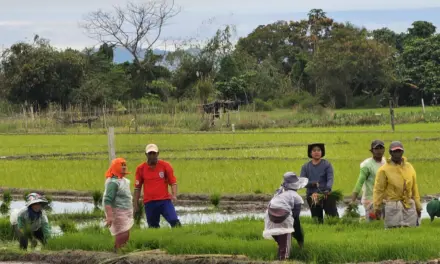
HH: The rice terraces for example are diminishing because children should not go back to the fields. They should go do something that will improve their lives. Sometimes that is also a question, because sometimes you see, in the field, the tinawon rice takes a year to produce it. But if you go to (Nueva) Vizcaya you can plant 3 times a year. So it is more for economic purposes. That’s one way of measuring it, they do not till their land, they go out and find other income generating activities.
But in Ifugao, I believe, many of us really still advocate for our culture. In Ifugao, even our school officials, the superintendent down, we try to have activities to promote our culture just like the IPEd congress where on the 1st day, August 8, we had a lecture on the history of Ifugao. We had lecture on the culture, like the dos and dont’s in cultural practices like during weddings, birth of a baby, a wake, etc. There were so many reactions and we learned from that. The superintendent even asked questions, like in marriage, before you even get married there is a process to be followed. One of course, there is the Mum-on, bringing a pig to the house of the girl but before that the mombaki will perform something, I forget the term [Apgu], if they see something in the bile and its not good, they don’t continue. So it becomes a discussion. But according to our chief it does not mean you will not continue, you are given time to repeat the [Apgu] but if the bile is not good again, you don’t get married but if it is good for the second time around you go on, so those are some of the things we learned.
To revive the culture, we have activities where we tried the making of the baya (rice wine), to see if our teachers know how to make baya to preserve our culture, if they know how to make then they should teach it to the children. It was a good activity… why? because many of our teacher can make their own baya.
Then the woodcarving, there were 4 that joined in the carving workshop, we tried to revive it for our children now that our teachers know, they can teach it to our children. Culture in Ifugao is still active. We love our culture I caught the superintendents words during the opening remarks “before the old folks go let their knowledge live on,” he said.
Even in the opening remarks, Sally Ullalim gave her opening remarks in Tuwali though she is from Bontoc, they all clapped. Even though she is not Ifugao she tried to speak for the sake of promoting the culture. # nordis.net