4 MIN READBy ARTHUR L. ALLAD-IW
www.nordis.net
SAGADA, Mountain Province — Coffee Arabica is known worldwide as a premium coffee loved due to its aroma and flavor. But for the Kankanaey of this town, coffee Arabica is considered their Sagada gold, and there is no stopping them of becoming the coffee capital of the province, if not the whole region.
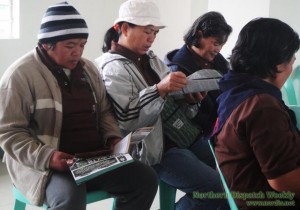
SAGADA FARMERS. These Sagada women attended the Coffee Festival at the municipal town hall to hear from experts tips on how to improve the quality of their coffee products. Photo by Arthur L. Allad-iw
Locally grown and thriving fast due to its climate and soil fertility, the Arabica coffee production is promising for local farmers and entrepreneurs in this tourist-frequented town. “It is one of the reasons on why Sagada is being visited,” explained Dr. Teresita Mangili in the Coffee Festival at the municipal town hall this month.
Coffee Arabica accounts for seventy percent of the world’s coffee production, according to the Highland Agriculture and Resources Research and Development Consortium (HARRDEC). It explains why the berries of coffee Arabica are in demand in the market. And it seems promising in this town as more farmers included, if not totally shifted to coffee farming and production. In fact, the latest festival was not only for the improvement of the quality of their coffee production but for the marketability of their products. Veteran coffee producers attended the festival also to suggest improvements on the brewing and cupping of the locally produced coffee Arabica. Roasted coffee beans were prepared and cooked for cupping for visitors totaste and comment on for their further improvements in the quality.
Present were farmers from the Sagada Coffee Growers and Processors Cooperative, who prepared for the brewed and ground coffee which were subjected to critique from the visitors. They learned tips on how to improve their brewing and cupping for quality products that they sold at the market under the trade name Sagada Gold. The festival is aimed at the farmers to produce more than their harvest by adopting the science and technology interventions that were shared in the said festival.
A decade ago, the farmers had been actively engaged in the Arabica farming. Since 2001 when many took the cudgel for coffee farm expansion, they now are harvesting berries from these newly planted trees to compliment the old trees, said farmer Benita Dogaong. A tree bears fruits once a year where they can gather 3 to 4 kilos per tree. They did not only expand their coffee plantation, they learned the appropriate way of choosing seeds, transplanting, and appropriate spacing, among others.
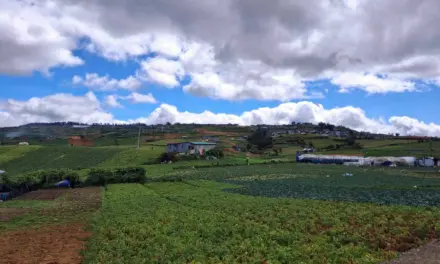
HARRDEC researchers said that coffee Arabica is very appropriate for planting in environs with enough rainfall, fertile soil, temperate climate and sufficient altitude. It added that the Arabica variety grows favorably in cool areas (17 to 24 degrees centigrade) with high elevations of 1,000 to 1,800 meters above sea level like in the Cordillera region. Mountain Province and Benguet were identified as areas appropriate for raising the coffee Arabica.
Sagada town, a small valley, is 5,000 feet (about 1,500 meters) above sea level. Its temperature is also very appropriate for the said coffee variety. “This variety of coffee berries thrives only in mild temperate climate. These coffee trees grow alongside with pine trees that flourished in Sagada,” according to the Sagada Coffee Growers and Processors Cooperative.
Because of its soil fertility, the coffee trees here are more of a higher yield, more robust, and with better fruit yields. Those planted under alnus shades yield better produce; hence coffee trees can be planted in shaded areas.
While their coffee produce supplied to the local market, it is not enough though as it has been known as a backyard crop in the past. There are more than one million coffee trees in Mountain Province, according to the HARRDEC.
Now may be considered as the turning point for coffee growers. “In 2007, there was a drastic increase for planting Arabica coffee trees in Sagada with appropriate skills shared for a better produce,” added Mrs. Dogaong, who has 50 newly bearing trees. These new berry bearing trees in Sagada supplemented those planted centuries ago by their ancestors. And in 2011, there was the support for science and technology based and organic coffee Arabica in the area, explained Sonwright B. Maddul, the consortium director of the HARRDEC.
Sagada Coffee History
The Sagada coffee had been known as Pidlisan coffee as it was raised for a century in the area. It was named after the village of Sagada which first raised and became known for their aroma coffee.
Sagada stories shared that Jaime Masferre, a Spanish adventurer, introduced the coffee Arabica in the area over a century ago. As the coffee is appropriate for the climate of Sagada, it was raised for consumption, primarily. The berries are picked and fermented, washed and dried for two weeks before it will be roasted and milled to give a better taste and aroma in what became popular as Pidlisan coffee.
With the market demands and technological interventions, the coffee Arabica produced in Sagada is fast gaining popular demand among the local and the region’s coffee drinkers. It is fast turning into a Sagada gold. # nordis.net