












Indigenous Peoples, Climate Change and the Right to Self Determination
4 MIN READ
By CORDILLERA PEOPLE’S ALLIANCE-PUBLIC INFORMATION CAMPAIGN
www.nordis.net
Such arrogance to speak of owning the land.
How can you own that which shall outlive you?
 nordis.net
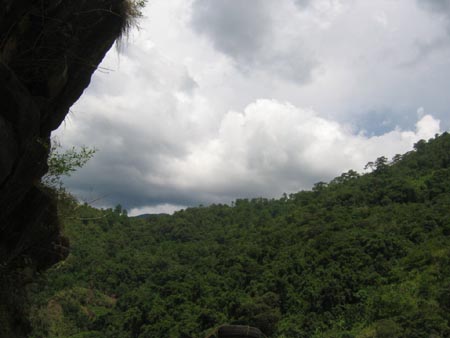
KALINGA COMMUNAL FOREST. Community sustained forests are among those threathened by large-scale-mining applications covering 70% of the Cordillera land area. Nordis file photo
Land is life, What is the most precious thing to man? Life. If life is threatened, what ought a man do? Resist. This he must do, otherwise he is dishonored and that is worse than death.
-Macliing Dulag, Kalinga pangat (elder and leader of the Butbut tribe from Kalinga, Cordillera, Philippines who was slain by State military forces on April 24, 1980 because of his leadership in the successful opposition to the World-Bank funded Chico Dams.
These are the words of the Cordillera martyr Macliing Dulag that sharply articulate the militant tradition of indigenous peoples’ worldview and struggle for land, Mother Earth and life. Integral in the historic Cordillera peoples’ struggle for the defense of land, life and resources is the battle against global warming and climate change in essence.
The world is currently caught in the debate on climate change and its alarming impacts, and mitigation and adaptation strategies have been forwarded. Climate change is a big environmental concern yet there is still a need to elevate the issue of climate change beyond the bounds of environmental issues. It must be understood that in this issue, there are exploiters and there are victims. It must be understood that there is disproportionate vulnerability of the majority and certain populations to the adverse impacts of climate change, of which indigenous peoples are very much included.
The climate crisis is best understood by acknowledging its systemic root causes and the accountability of the world capitalist system driven by the few global elite and imperialist countries and the globally dominated capitalist production and exploitation of the world’s environment and resources. Imperialist and advance capitalist countries have imposed neo-liberal policies in advancing their imperialist agenda and plunder especially in underdeveloped countries, leading to the destruction of the world’s resources for their profit and greed. This greed for profit is responsible for the operation of large-scale extractive industries which is responsible for the large-scale emission of greenhouse gases in some countries like the Philippines, India, Papua New Guinea and Indonesia, to name a few.
In any debate, discussion or policy formulation on climate change, indigenous peoples should be involved because they deserve specific attention being a vulnerable population in this issue. If only government’s and imperialist States heeded indigenous peoples’ world view of the Earth, land and its resources, we may not have reached this alarming state of global warming and climate change. States and capitalists’ viewpoint contradicts with indigenous peoples’ world view of land and the Earth. To indigenous peoples, land is life and must thus be nourished, nurtured and defended. Capitalists on the other hand treat land as a commodity for profit, and nothing else. If the best environmentalists and defenders of the Earth should be named, these are the indigenous peoples as proven by their time-tested practice of sustainable living and culture.
While we welcome mitigation and adaptation measures on climate change, these do not seriously address the root causes of the climate crisis and only serves as temporary relief. Any solution to climate change must be seen not at the expense of indigenous peoples but instead at the framework of indigenous peoples’ right to self determination and people’s sovereignty over their patrimony and resources.
We can come up with as much mitigation and adaptation strategies, but the gravity of the situation dictates an overhaul of the world capitalist system and a stop to the imposition of neo-liberal policies in underdeveloped countries. We must take note that economic and material growth are limited to the Earth’s endowed resources. We must respect the limits of the Earth; the needs of the people and the planet must take precedent over the push for growth and profits.
The climate change crisis, its end-result of catastrophic proportions especially to the least contributors if they are contributors at all, is also a political issue. Addressing it necessitates people’s assertion of their sovereign rights and control over their resources and participation in the processes of local and global response to climate change, where indigenous peoples must be involved. Addressing climate change must recognize and respect indigenous peoples’ right to self determination as enshrined in the United Nations Declaration on the Rights of Indigenous Peoples (UNDRIP).
Thus, people’s struggles and movements for the assertion to land and resources must be strengthened and they must mobilize in their greatest number to put a stop to the capitalist and imperialist activities that worsen climate change. The people themselves can chart their own solutions in overhauling the profit-driven world capitalist system for humanity’s survival, which depends on the Earth’s survival. States and all international financial institutions and international bodies must stop implementing and supporting policies, projects and any other undertaking what is environmentally destructive and worsens global warming and climate change.
They should instead support actions that strengthen sustainable adaptation and mitigation measures including science and technology just as long as these are appropriate and respects indigenous peoples’ rights. All States and governments should also repeal laws and policies that hasten and worsen climate change and its impacts, such as the Mining Act of 1995 in the Philippines and instead formulate and implement laws that protect the environment and indigenous peoples to mitigate climate change.
As rights holders, indigenous peoples must be part of such a movement that shall hold accountable imperialists States and their transnational corporations, because addressing the problem of climate change is also a quest for social justice and self determination. # nordis.net