4 MIN READ(Ed notes: This is a testimony of ML victims in Kalinaga given by Catalina Bongaoen at the symposium, “A Lesson In History: Never Again To Martial Law,” held at the University of Baguio Centennial Hall, on 23 April 2016.)
I am glad that I was invited to this forum to share our experiences during the Chico Dam struggle.
My husband and I were teaching in Tanglag Elementary School, Lubuagan, Kalinga. As a teacher in the barrio, we were informed about the plan of the government to build dams in Bontoc and Kalinga. Our place was one of those that would be submerged if the project was to continue.
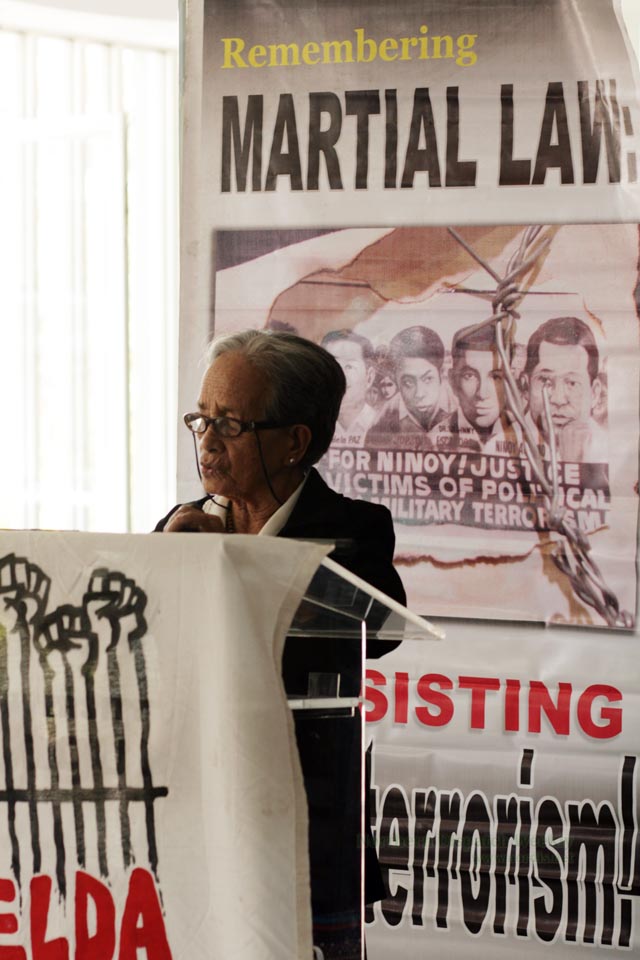
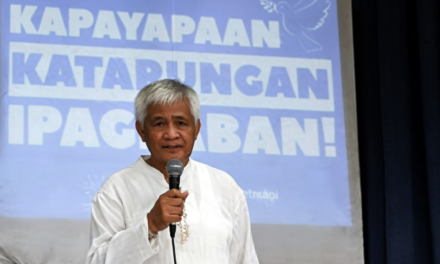
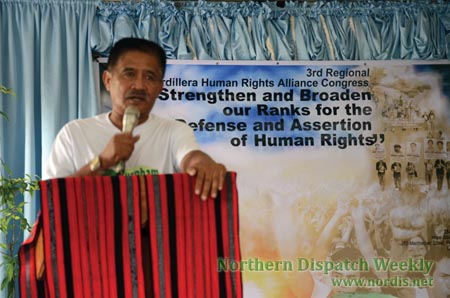
CATALINA BONGAOEN. Photo by Noel Godinez
One day, Secretary Elizalde, the Presidential Assistant on National Minorities or PANAMIN, came with his group to our barrio. I was very happy that the Secretary had come to Tanglag because our village was very poor. But then Elizalde said that our place was a good site for the development of a dam. He came with a Major Jupano. Major Jupano told me to talk to the people and convince the villagers to agree to the development of the dam.
“Are you a teacher, Mrs. Bungaoen?,” asked the Major. “Ma’am, as a teacher, are you not in favor of the dam? When the dam is built, the people will enjoy it because their farms will have more water, Are you not proud to be like a flag standing for your people?,” he added.
“It would be better if we let you flood this village and kill us helplessly rather than leave our forefathers’ lands!,” I retorted.
Elizalde then tried to bribe us with canned goods, biscuits, beads, and (transistor) radios, and showed us some movies. But our people were not convinced. Then Elizalde said, “Don’t you know that it is Martial Law? Whether you like it or not, you have to move to another place for your relocation because the project will continue.”
Secretary Elizalde lost hope convincing our people, so he came to my house and tried to convince me to sign in favor of the dam project and agree to be relocated. He said the people would not sign unless I signed. But I said, “Sir, I don’t want to sign and be relocated. Sir, if the people will be drowned, I will drown with them. If the people will be burned, I will burn with them. If my career and my family will be sacrificed, so be it.”
They used ‘Martial Law’ to try to coerce people into signing, but only seven individuals signed. After a few months, Sgt. Moro and a company of the 55th Infantry Battalion came. Leaders like my brother, Daniel Ngaya-an, teachers like my husband, and our barangay officials were taken and detained in the barracks at Bulanao, (Tabuk, Kalinga). We did not know the nature of the charges made against them. We could only surmise that it had something to do with the constant protests against the construction of the Chico river hydroelectric power dam in our place.
When the arrests were made, some of the people were taken right from the classrooms, where two teachers were seized, and the fields where they were busy harvesting. And so their work was disrupted, and the rice ready for harvest was ruined.
I was lucky the military did not arrest me because I confronted them with a flurry of words, asking why were they arresting us when it was our right to oppose the project that would submerge our community. I overheard one of them say. “Don’t take that woman. She will talk and talk, and create trouble for us.” But they arrested my husband. And so I went to Dagupan in Tabuk, and talked to a priest and then a lawyer, who exposed the mass arrest, and eventually secured the release of the detainees.
The people and the inhabitants of our place were terribly shocked by what happened. There was no warning, and no reason were given whatsoever. Worse, those policemen and soldiers just came and took them. There were no warrants of arrest.
They tortured the youth, they made them do a duck walk and drink carabao manure that they, the soldiers, had soaked in water. That was in November 1976.
It brought untold miseries to barrio life. Children and families were left behind. As said, the arrests were done during the height of the palay harvest. Then came the planting season, and those arrested remained in detention. Many fields were left uncultivated. Women had to assume the work of their husbands. Think of the painfull anxiety of those left behind. There was a growing feeling of animosity, suspicion, and antipathy towards our civil authorities.
Our community was militarized, we could not go out to our farms because they declared some of our land as “No Man’s Land.”
I don’t want this to happen again to our community.
During Martial Law, people who opposed government projects were jailed and executed. I know that it is still happening today. But it will be worse if Martial Law were to be declared again.
I don’t want Martial Law again! Thank you. # nordis.net