When Dissent Becomes ‘Terrorism’
4 MIN READCounter-terrorism frameworks, red-tagging, and preventive designation systems are turning political participation, land struggles, and environmental defense into security risks.







By RICHARD GIYE
www.nordis.net
The soil is being prepared for another rice planting cycle in the province this January. After months of rest, the grasses and weeds grew undeterred on the surface of the dried-up paddies.
Meanwhile, the sunflowers brimmed at the edges, and the rocks that form the walls took on a deep red hue from the scorching sun. The purple buds of summer meadows cover the vacant gardens, and farmers have left their holiday rest to attend weddings, visit their families in the cities, and fix their houses.
Others are content to watch the days pass as they harvest sugarcane, extract the juice, and cook it over fire for many nights until it reduces to muscovado for coffee, chocolately or tinva for the kids, separate juice for the wine mixture or fvayash for the elders.
At the coming of the first-year storm, or when the clouds gathered enough rain, and the nights stay longer, the farmers would need to schedule visiting the source of water, we call in our tongue arac, located in the nearby forest, they return its flow going to the rice paddies and count hours in different directions – the soil will now be toiled.
The smell of the earth, opening with warm heat, awakens the farmers with urgency and delight – one will know that the land is made alive again. Grasses and weeds will be uprooted, then mounted in different spots, laid until dry, and charred to return to the ground. The water will cover a ‘sincong’- a small paddy, and selected seeds will be grown from there. The scion of rice stems will wait a month of growing, we call ‘panar’, as the farmer will continue cleaning the rice paddies.
The harvest moon glowed during these many nights, reflecting its face in the watered paddies. The moon draws far and near in the stark darkness while the farmer dreams of a good harvest.
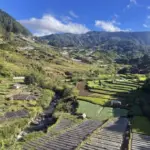
Rock walls or tuping will be restored from small slides we call ‘marwa’, and in the damage of bigger landslides, it would take days for farmers to dig the eroded soil and put the rocks together – this upkeep is made happen in order to preserve the hundred-year-old legacy of rice terraces in Sadanga, Mountain Province.
The back-bending work of rice planting will come at collective works of the farmers, sometimes they sing and throw laughter to ease the heavy toil, the farmers are knee-deep in the rice paddies- synchronize with each other and hands exact with darting the rice stems in the paddies we call in practice ‘erag’.
For the next months, farmers live along the rice paddies, setting up small cabins we call bawi, and they wake up morning and night to water and cultivate the paddies. Others put up scarecrows to drive out birds or set up chimes to warn rats and other pests. Others have air guns too and practice shooting at the birds in the wide field.
When the rice grains start to shape in the stalks, the farmers will offer chickens and eat together, celebrating the abundance of the land. Until the harvest season, the farmers are filled with high hopes of the fruit of the land. The water, soil, and sun are elements farmers knew to worship and contend with each passing day for nature to sustain them with food throughout their lives. The golden grains will be stored in the agamang, or granary, to age longer; others will be pounded to produce the coveted, nourishing rice for the farmers to eat.
Rice planting is a tradition passed down from our ancestors, whose lives revolved around the farm and the community. Their sons and daughters whose living in the city should feel it in their senses that this month calls anew to rekindle this tradition, come home and by any means continue this legacy that ought to sustain our generation. #nordis.net
Editor’s note: The opinions expressed do not reflect the views or positions of Nordis. They are published to encourage open dialogue and diverse perspectives. Nordis reserves the right to edit for clarity and length, but the opinions remain solely those of the author.
4 MIN READCounter-terrorism frameworks, red-tagging, and preventive designation systems are turning political participation, land struggles, and environmental defense into security risks.
3 MIN READBesides opening doors for intricate human stories, this annual showcase of bold and untested works continues to draw acclaimed directors, well-known actors, and diverse, enthusiastic audiences.
2 MIN READKapag ang gamot ay naaagnas sa bodega habang may mga pasyenteng walang malunasan, hindi lamang pera ng bayan ang nasasayang—maging ang tiwala at buhay ng mamamayan ay unti-unting nililibing.
2 MIN READCaution is something the Philippine government should take into account, especially now that the country is preparing for wider AI training, school partnerships, government adoption, and AI-related investments.
