BAGUIO CITY—As the city expands, power outages persist and are becoming more frequent. The area’s rugged terrain and recent extreme weather disturbances have complicated the local utility’s efforts to ensure reliable service, while residents face rising electricity prices that put lives on edge.
Home to 129 barangays and approximately 400,000 residents, the city is no stranger to power outages, especially during the typhoon season. Some communities experienced far worse outcomes than others, according to the Benguet Electric Cooperative (BENECO) annual statistics for 2024 to 2025.
With its mountainous terrain, the city often experiences severe weather, and typhoons are cited as the primary cause of power outages.
However, a closer look at recent data suggests that this explanation may not fully account for the spike in power outages in 2025.
In 2024, the Philippines experienced 18 typhoons in total, 10 of which directly affected the city. These included Carina, Enteng, Gener, Julian, Kristine, Leon, Marce, Nika, Ofel, and Pepito.
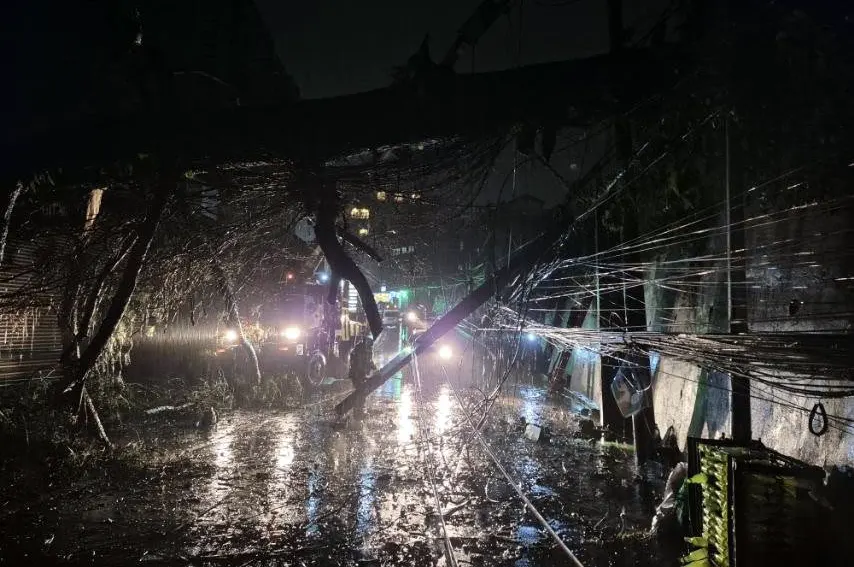
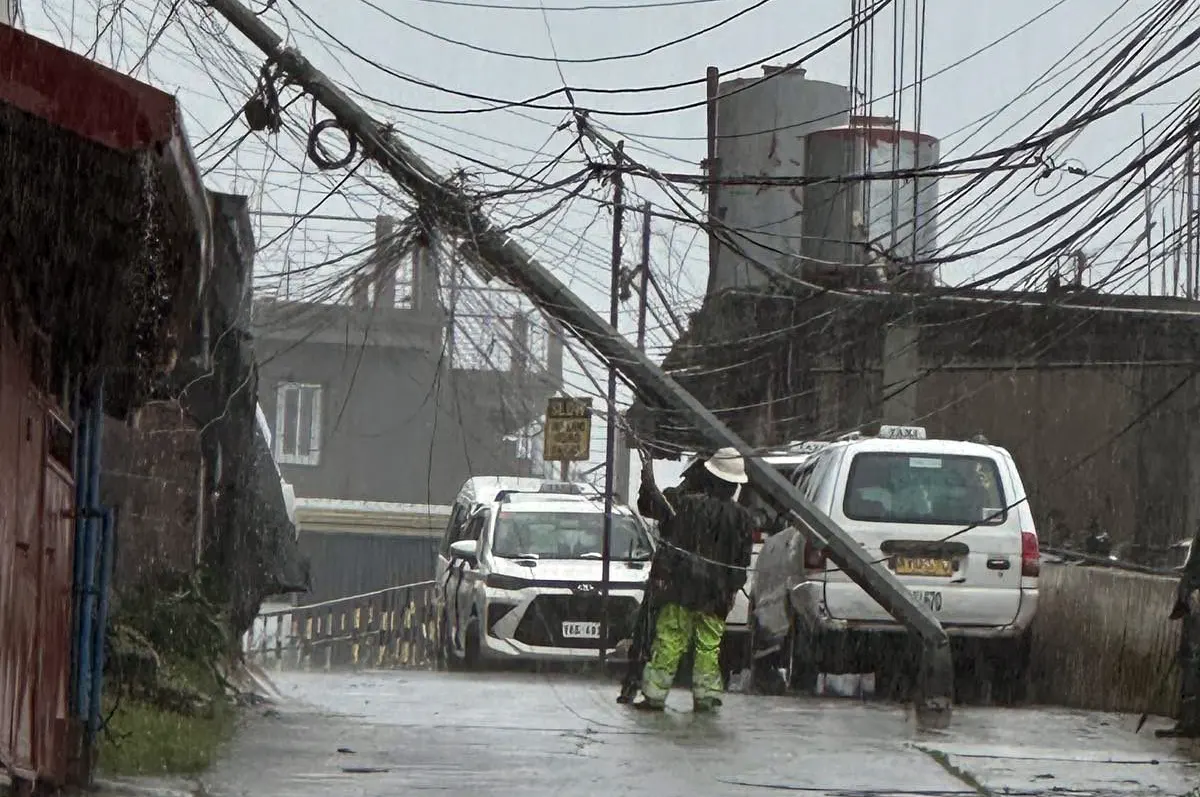
AMID THE STORM. BENECO linemen attend to fix a pole broken by a fallen pine tree along Bonifacio Street in Baguio City as Typhoon Uwan passes through the Philippine Area of Responsibility in November. (BENECO photo)
Given the high number of weather disturbances in the Cordillera Autonomous Region (CAR) last year, power interruptions are closely associated with storm-related damage, including fallen trees, transmission line damage, and adverse weather conditions.
By contrast, in 2025, the country has recorded 16 typhoons to date, but only seven have fully affected Baguio City. These are: Crising, Dante, Emong, Isang, Kiko, Nando, and Paolo.
Despite the continued occurrence of typhoons nationwide, fewer of these weather systems directly affected the city than in the previous year.
This contrast suggests that typhoons may not be the primary driver of the surge in power outages in Baguio City in 2025.
Privatized, fossil-fuel dependent
The sector is governed by Republic Act 9136, or the Electric Power Industry Reform Act of 2001 (EPIRA), which restructured the industry by introducing competition, privatizing state-owned assets, and unbundling electricity services into generation, transmission, and distribution.
The law was supposed to promote a reliable, affordable, and sustainable electricity supply through transparent and competitive markets, with the stated aim of improving efficiency and lowering costs. It established market mechanisms, including the Wholesale Electricity Spot Market and Retail Competition and Open Access, thereby enabling consumer choice.
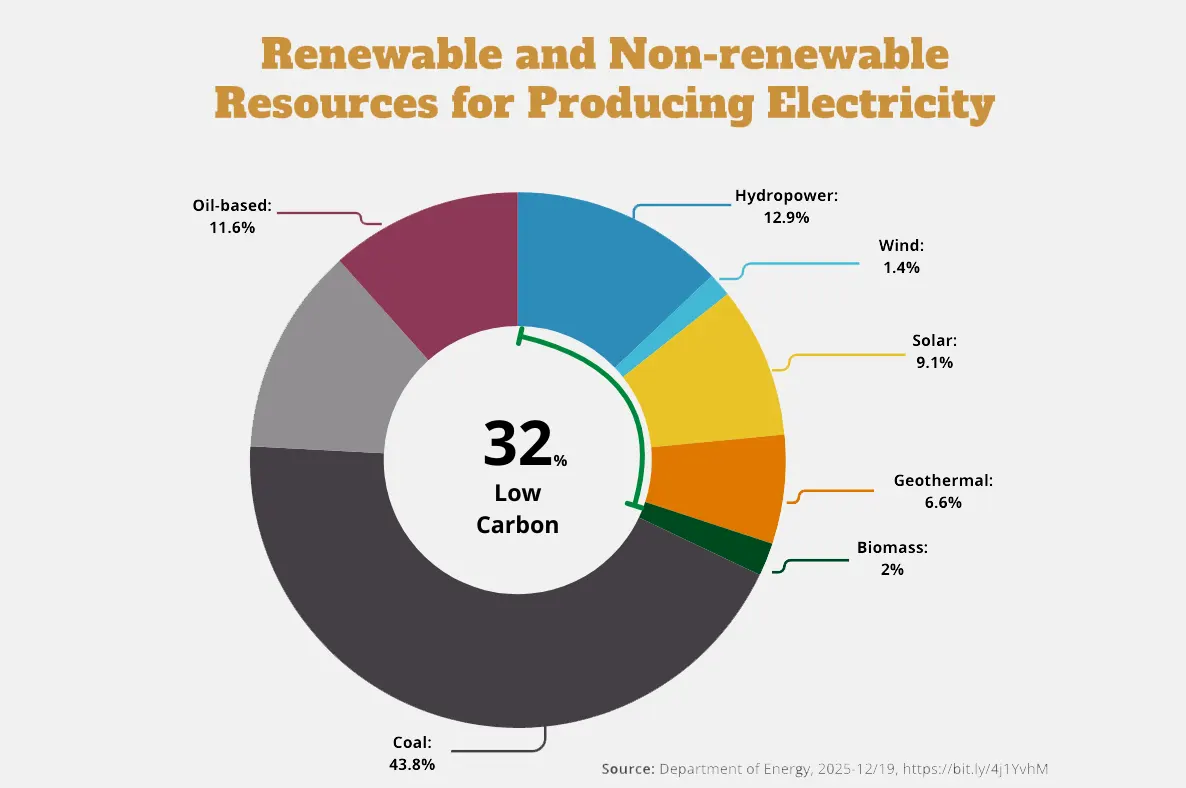
As of 2024 Department of Energy statistics, fossil fuels, particularly coal, remain the primary source, accounting for 11,863 megawatts of dependable capacity, or about 40% of the 29,706 MW total dependable capacity nationwide. Renewable resources such as solar, hydropower, wind, geothermal, and biomass account for around 32% of these.
Coal still dominates the Philippine energy mix based on the 2024 DOE statistics.
BENECO’s Community Relations Officer (CRO), Laarni Ilagan, explained that although coal remains the cheapest option for electric companies in the Philippines.
Despite the operation of 16 commercial hydropower plants in the Cordillera, BENECO and other electric cooperatives in the region remain dependent on fossil fuels, making them vulnerable to changes in the international market or plant shutdowns.
Electricity generated by these power plants flows through transmission lines that have also been privatized under a government concession to the National Grid Corporation of the Philippines (NGCP), which manages the system.
However, these privatizations of power generation and transmission in the Philippines, along with the continued use of coal, failed to deliver lower costs. Studies conducted by the University of the Philippines and Ateneo de Manila University noted a sustained rise in electricity prices, albeit at a decreasing rate.
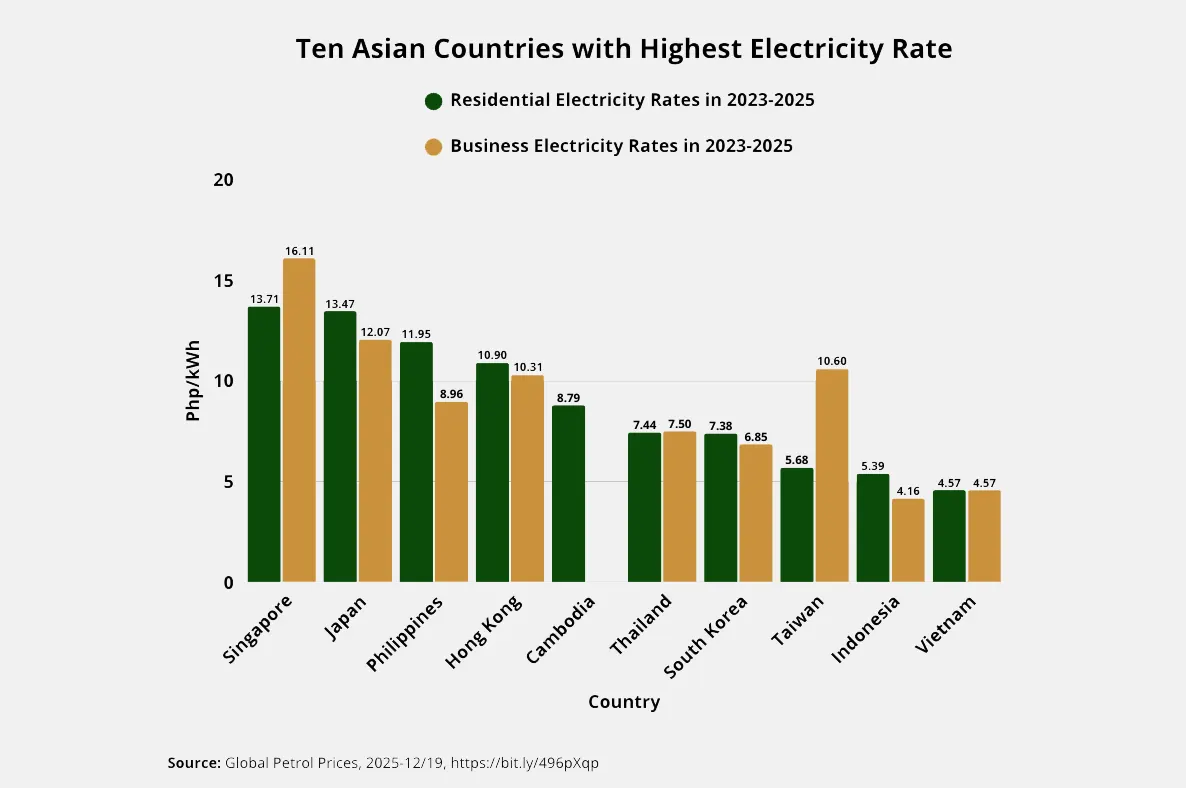
And despite paying among the highest rates in Asia, households continue to experience an average of 28 power interruptions annually, according to a 2024 study by the Philippine Institute for Development Studies.
Challenges and vulnerabilities
“BENECO is still Triple A,” Ilagan said, referring to the performance level of the electric cooperatives.
“Triple A” is the top performance rating given by the National Electrification Administration to an electric cooperative, signifying excellent financial health, strong management, superior technical operations, and compliance with reporting requirements.
While BENECO has consistently earned a top grade and has maintained its electricty rate as among the lowest in the country. But continued growth of its service area–on rugged terrain and intensifying typhoons–mean that the power supply remains fragile, with power disruptions increasing in frequency.
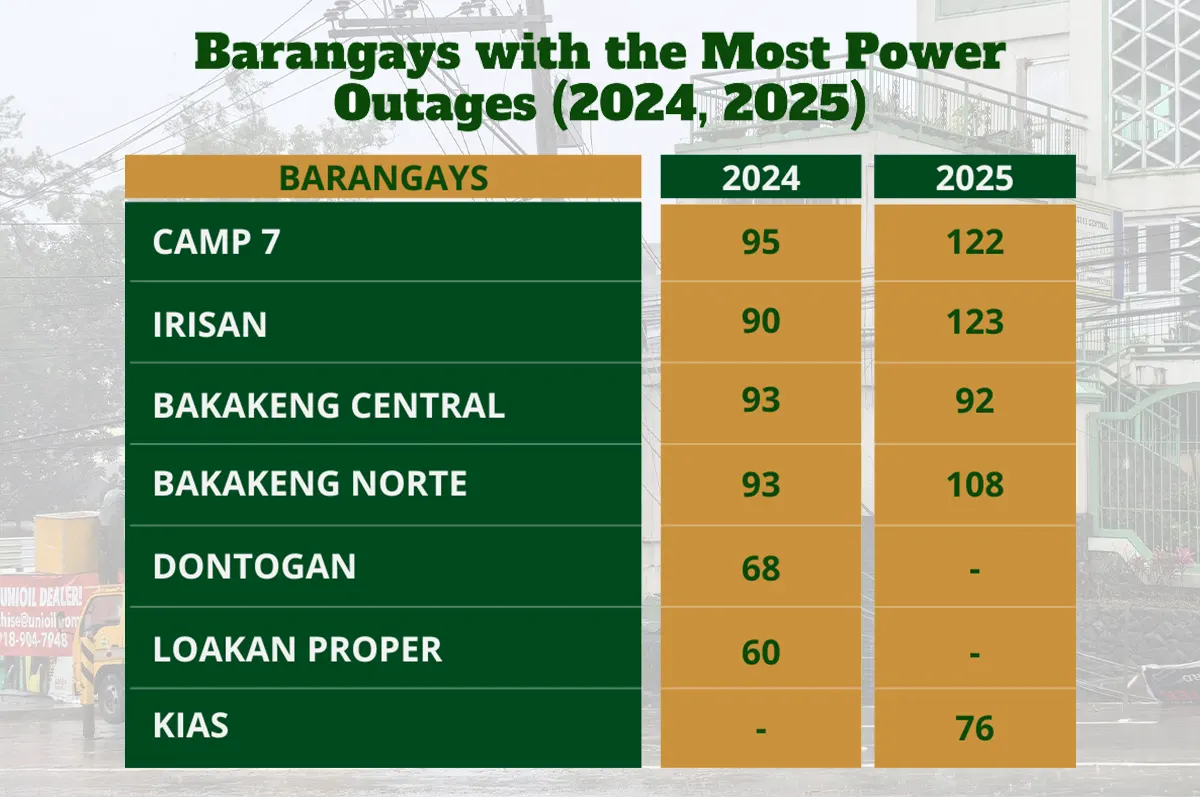
Last year’s data from BENECO’s advisories indicated repeated power interruptions, with Camp 7 experiencing the highest number of outages at 95. In 2025, Irisan recorded the most outages at 123, compared with 90 in 2024. Camp 7 came in second, with 122.
Camp 7’s mountainous terrain worsens vulnerabilities. Based on the topographic elevation map, the place has an average elevation of ~1,238 meters above sea level. According to the city’s hazard map, most of the area is unstable and highly susceptible to landslides.
Collated data of outages based on BENECO advisories on its official Facebook page.
Ilagan explained that most of Camp 7’s feeder sections are remote and ‘last-mile’ lines— when they fail, crews must negotiate landslides and uncleared roads to reach them.
“NGCP has to make sure that there will be no power outage. But there are, of course, force majeure, super typhoon, we also experienced a few days [without power] because NGCP’s power towers were down,” she added.
Living in the dark
Power utilities use two reliability indicators: the System Average Interruption Duration Index (SAIDI), which shows the average outage duration in minutes per year, and the System Average Interruption Frequency Index (SAIFI), which indicates the frequency of outages. These measures help utilities evaluate and improve grid performance.
Although the number of emergency and unscheduled power interruptions remained within the SAIDI and the SAIFI, these disruptions still affect residents’ everyday lives.
For Leissandra Gonzales, a student and Camp 7 resident, power interruptions are first felt as an everyday disruption to academic life and basic access to services.
“Traveling to town to get wifi or power is very much a hassle. We’ll have to ride a jeepney, fall in line, and commute,” Gonzales said.
She said power interruptions last from five to eight hours, significantly affecting students who depend on electricity and internet access for academic work. These outages require students to spend more to remain connected and productive.
“You really need to pay a fee—to go to town and look for cafés with wifi and power,” she added.
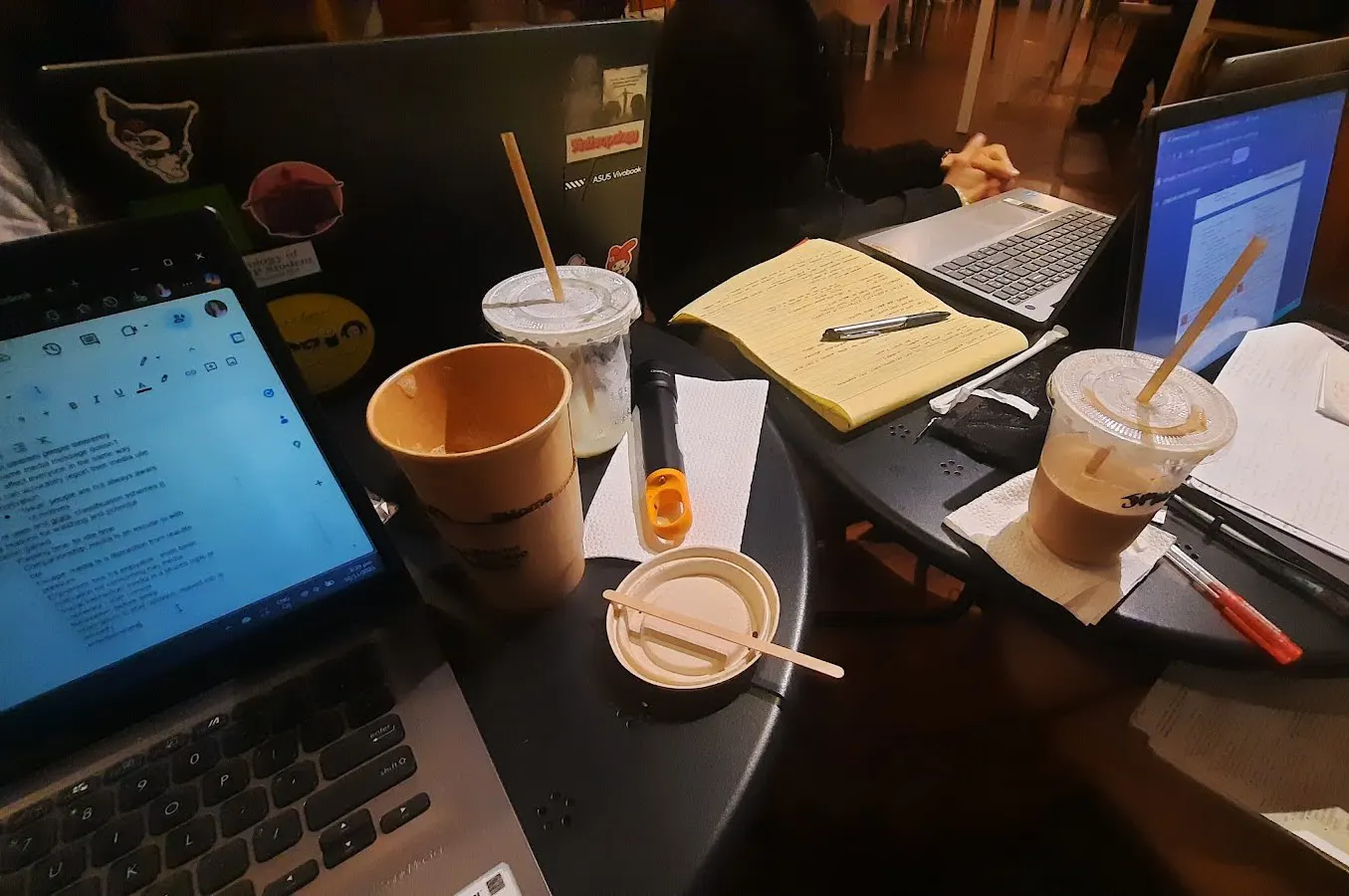
LEARNING HUBS. Cafes serve as study stations for students during typhoons, especially those who require internet access when their dormitories and boarding houses are without electricity. (Mariella Ortega)
Because interruptions are frequent in Camp 7, Gonzales said she and her housemates have learned to anticipate outages by constantly monitoring BENECO’s advisories online.
While students like Gonzales experience the disruptions as logistical and financial burdens, longtime residents perceive broader implications.
For Geraldine Cacho, an activist and resident of Upper Irisan, power interruptions heighten security concerns, particularly as they become more frequent.
“Biggest problem? I’m an activist. So, it (power outages) contributes to the anxiety, the fear that you don’t get to see who’s going in the vicinity of the area, the residence. Because, we set up a… CCTV,” Cacho said, adding that some interruptions occur without prior notice.
During prolonged outages, residents are left with few options. “We only have candles just to have lights at night. No other option,” she said.
REPAIR ON THE WAY. BENECO personnel replace a bent Pole at Purok 24, San Carlos Heights, in Barangay Irisan, Baguio City. (BENECO photo)
Power distribution is a highly technical process that requires constant maintenance, making some interruptions unavoidable, explained Ilagan, while assuring the public that they are continuously improving their service and performing their tasks diligently.
These include their migration from bare to insulated wires, including their primary lines, which they prioritized in 2022, to reduce line tripping in areas with thick, tall vegetation.
“So, that’s one of the solutions we started to implement… Slowly, but surely, we’re implementing it due to [financial] constraints,” Ilagan explained.
Gonzales is also hopeful for more operational improvements. “The response is generally okay. They do reply, but not as fast as we want them to,” she said, noting that unscheduled outages remain a significant concern.
Other refinements to the process, she said, would involve preventive maintenance and earlier warnings to reduce the frequency of unannounced interruptions.
“Deeper issues”
Cacho acknowledges that weather and terrain contribute to power interruptions and believes that BENECO is doing its best to provide its clients with reliable electricity service.
However, she pointed out that recurring outages also expose deeper issues of control, infrastructure, and long-term planning in the power sector—concerns she believes extend beyond the experience of individual households.
She noted that EPIRA’s privatization and liberalization of the power industry have afforded distributors, especially cooperatives like BENECO, limited control over the power supply.
Cacho noted that Benguet hosts major hydropower facilities, including Ambuklao, Binga, and San Roque, yet much of their output is sold outside the province. She believes that utilizing these for local power needs could be a more strategic solution.
This includes restoring the Asin Hydropower Plant to augment the power supply. “That would have been helpful…What the LGU can do is turn over the Asin Hydropower Plant to BENECO as one of the sources of power here,” she added.
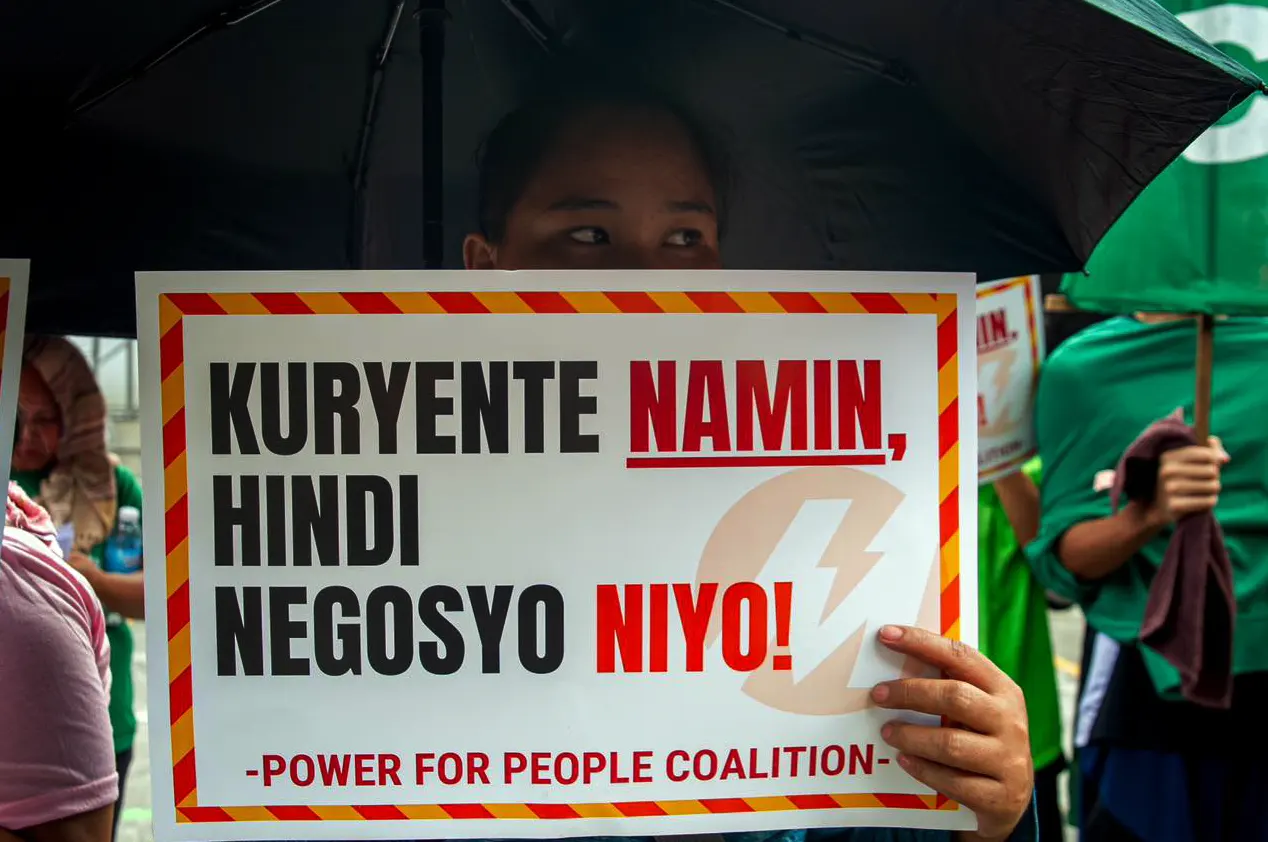
POWER MONOPOLY. The Power for People Coalition protests at Meralco offices in April, criticizing EPIRA for promising competition and lower power rates but, according to groups, has further entrenched control of few corporations in the power sector and high electricity prices in Metro Manila. (Charles Edmon Perez/Pinoy Weekly)
Beyond coping with outages and finding additional sources, consumers are demanding greater structural and policy-level changes to address high costs and recurring power disruptions—a direction that Ibon Foundation has repeatedly recommended.
In its latest EPIRA critique, the think tank argued that the amendment would be ineffective in making electricity cheaper, more reliable, and more sustainable if the sector remains privately driven. The proposal, it noted, is “oblivious to how privatized power is the root cause of high electricity prices, market manipulation, and inadequate infrastructure investment.”
“A much more productive direction is the strategic reclaiming of the power sector in the public interest,” stated IBON Executive Director Sonny Africa. “This will enable the government to fully address the structural failures of EPIRA and take more decisive steps toward energy sovereignty and public interest-driven electricity provision.”
Although BENECO asserts that emergency and unscheduled outages remain within SAIDI and SAIFI standards, disruptions are likely to persist as Baguio’s demand increases, given the challenging terrain and frequent extreme weather conditions. And with an industry hampered by operational challenges and a regulatory system criticized for being private-driven, even a Triple A electric cooperative struggles to ensure reliable and affordable power service.# nordis.net
Editor’s Note: English translations of the Ilocano and Filipino quotes have been provided, with certain parts shortened for clarity and conciseness.