When Dissent Becomes ‘Terrorism’
4 MIN READCounter-terrorism frameworks, red-tagging, and preventive designation systems are turning political participation, land struggles, and environmental defense into security risks.





“Exiting print is an extremely difficult moment for all of us who love the romance of print,” wrote Newsweek Editor-in-Chief Tina Brown in 2012, following the announcement of the magazine’s transition to an all-digital format.
While this is inevitable, there is something entirely more personal in things you can touch, romantic even. From the crumples of a well-read page, your sister’s scribbles of the Sudoku section, and the sound of the radio and the smell of coffee accompanying your father’s morning newspaper all play a part in the romance and intimacy of print.
Brown’s sentiment resonates today, as the Baguio Midland Courier recently closed after seven decades of chronicling local life.
As UP instructor LA Piluden puts it in her article at Mountain Beacon, “The Midland has always been the narrator of the Baguio story. One can only look at the colored spread of cartoons drawn by local cartoonist Jogin Tamayo on the anniversary issues of the Midland and see a microcosm of Baguio visualized on the page[…].This is the romance of print. The local paper is our public square. The notion that a newspaper can turn us into a community — can contribute to the cohesion of society — makes the closure of the Baguio Midland Courier such a heartbreaking affair.”
As a taga-baba, I probably will never fully grasp the community this publication built over the decades. But I understand the weight of watching something deeply woven into your daily life disappear. We’re creatures of habit, after all. We are drawn to the comfort of routines, no matter how mundane.
That’s why former Inquirer Northern Luzon Bureau Chief Sir Rolly Fernandez’s notion of “change or die” feels simple and urgent. When he shared that he had foreseen the Midland Courier‘s decline because they did not want to move beyond its format, which was a “winning formula,” it’s clear how clinging to long-held habits can hinder growth.
And this struck a personal chord. During the pandemic, my family’s only source of income, a small stall selling beauty and home products, was on the verge of shutting down permanently. The only option was to move online, something my parents, then in their 50s and 60s, had no experience with. They were skeptical and hesitant with my suggestion at first, but to save the place my parents had put their lives and blood on, they would do anything. In the same way as journalism and life in general, adapting to change is often necessary, even if it means letting go of what we once knew.
Carolyn Kitch described journalism as “the first draft of memory.” Philippine Daily Inquirer Managing Editor Robert Jaworski Abano builds on this by calling it “the first draft of history.” He emphasized the enduring value of print, which must be accurate enough to withstand historical distortion. Credible journalism must be built to last, whether published in print or online.
While digital formats continue to dominate, Piluden noted that community newspapers like the Baguio Midland Courier are a “keeper of public memory.” Its closure, therefore, is not merely about the shift from print to digital but about the loss of a shared historical thread that once tied a community together.
The romance of print lies in its permanence and intimacy within its community, but sustainability demands change. For journalism in the Philippines to survive, it must keep citizens well-informed, well-empowered, and well-connected. But at what cost? Community journalism is not dead, but its survival hinges on change.# nordis.net
Editor’s note: The opinions expressed do not reflect the views or positions of Nordis. They are published to encourage open dialogue and diverse perspectives. Nordis reserves the right to edit for clarity and length, but the opinions remain solely those of the author.
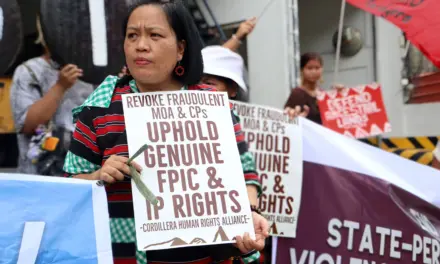
4 MIN READCounter-terrorism frameworks, red-tagging, and preventive designation systems are turning political participation, land struggles, and environmental defense into security risks.
3 MIN READBesides opening doors for intricate human stories, this annual showcase of bold and untested works continues to draw acclaimed directors, well-known actors, and diverse, enthusiastic audiences.
2 MIN READKapag ang gamot ay naaagnas sa bodega habang may mga pasyenteng walang malunasan, hindi lamang pera ng bayan ang nasasayang—maging ang tiwala at buhay ng mamamayan ay unti-unting nililibing.
2 MIN READCaution is something the Philippine government should take into account, especially now that the country is preparing for wider AI training, school partnerships, government adoption, and AI-related investments.
