TABUK CITY – In a dingy eatery just a few meters from the Bulanao Market, 52-year-old farmer Gunnay (not his real name) handed a woman a box of juice in a recyclable bag and a rattan-woven soft broom.
The disguise box was quite too spacious for a small 60-milliliter bottle of dark greenish cannabis oil, one of the two which he cautiously cooked over the week. He said the broom was a gratitude gift for the woman’s patronage.
In exchange, the woman, whom Gunnay claims to be from Tuguegarao City, handed him a big bag of groceries, including an envelope of P5,000 neatly taped on a pack of milk.
After the woman left, he made a similar transaction half an hour later inside a Sports Utility Vehicle outside the establishment with a man from Cabanatuan City, Nueva Ecija.
Since the pandemic travel restrictions eased up in 2021, Gunnay has been making the two-hour motorcycle ride from their village in Tinglayan, Kalinga, to make these transactions every three months.
“Those are the only ones I sell to because I know their personal circumstances,” Gunnay said in Iloco, the lingua franca in the Cordillera. He claims the woman had an epileptic son while the man’s father has cancer.
He said the small bottle takes time to run out because users only take a “toothpick dip” dosage. Also, to ensure the best healing properties are “pure,” he said he only brews marijuana buds.
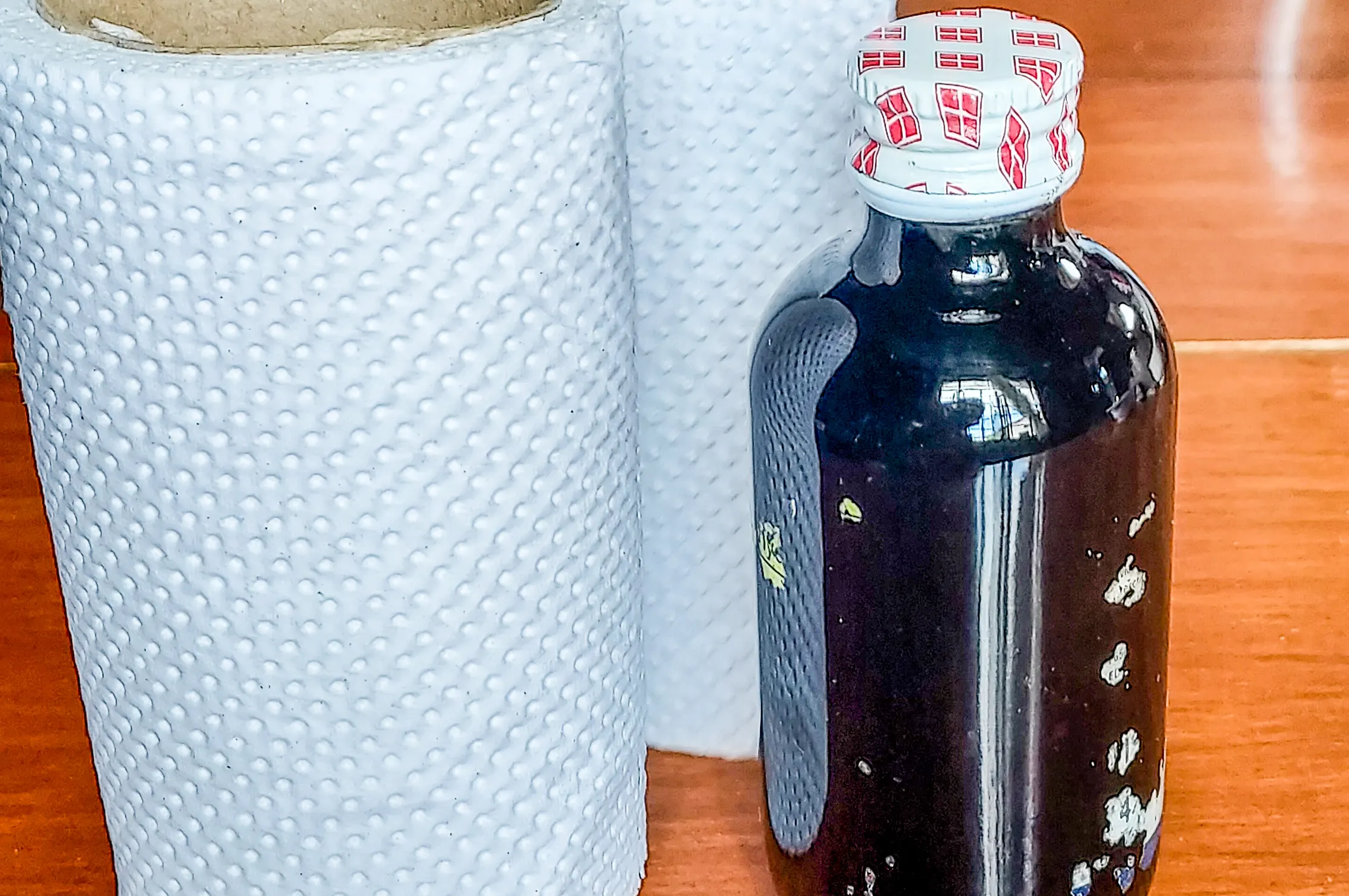
GREEN GOLD. Put in used medicine bottles, a 60-milliliter of cannabis oil can fetch as much as P7,500 in Manila markets. (Karlston Lapniten)
Still banned
Punishable up to life imprisonment, cultivation and possession of cannabis remains prohibited in the Philippines.
The government only allows the use of medical cannabis through a Compassionate Special Permit (CSP) from the Food and Drug Administration (FDA) and the Dangerous Drugs Board (DBB). But in the December 2022 data obtained from DDB, there are still no applications for CSP, while there is only one with the FDA.
Groups advocating for medical cannabis claim the process makes it almost impossible to acquire a CSP. This pushes cannabis supporters to resort to underground traders like Gunnay.
Gunnay, with three of his cousins, started cultivating marijuana in a quarter of a hectare patch on the mountainous portions of Tinglayan in 2012.
In Gunnay’s village and adjacent communities, the underground trade of selling cannabis as oil or dried plants has supplemented the income of many families derived from agriculture and daily labor.
There are unwritten rules among community folks regarding marijuana cultivation, he said.
“Never plant too close to another’s, go further up the mountains if you also wish to plant,” the farmer said.
Surprisingly, even the community is engaged in the trade. Gunnay said when large deals are about to be made, the farmer-seller needs to give a fraction of the sale to the community in the form of a feast or “project.”
In a year, they each rake P50,000 to P75,000 for selling dried leaves in meet-ups with buyers in Tabuk City, in nearby Bontoc, Mountain Province, or as far as Nueva Vizcaya province.
However, when then-President Rodrigo Duterte introduced his “war on drugs” at the onset of his tenure, the authorities busted two of his cousins in a sting operation in Bontoc in 2016.
This prompted him to “lay low” and grow smaller patches for oil production and “herbal self-consumption.”
Based on data from the Philippine Drug Enforcement Agency (PDEA) Cordillera, the first year of the drug war yielded the highest marijuana seizure in the agency’s history.
In total, the authorities destroyed P4.9 billion worth of cannabis in 70 operations across Cordillera by December 2016. The following year saw a start difference with only P59 million seizures.
“People got scared with the arrests and killings, especially the buyers from Manila. Others simply stopped contact, I hope they were not killed,” Gunnay recalled.
Buyers or intermediaries make the most from the illegal trade, selling a kilogram of dried marijuana for as much as P120,000, more than quadruple its original price, according to PDEA.
However, based on the same data, the cannabis trade scare seemed to be temporary. In 2018, PDEA recorded P171-million-worth of marijuana destroyed, and in 2019 and 2020, the annual reports more than doubled at P445 million and P475 million, respectively.
At the height of the pandemic, seizures multiplied to P844 million in 2021 and P818 million in 2022.
“There are a still a lot of people who cultivate marijuana because it is a cash crop, if you don’t get caught,” said Gunnay.
From 2016 to 2023, law enforcers only arrested one cultivator in Benguet.
Initially, Duterte was open to legalizing cannabis during his first year in office, even joking in 2018 about using marijuana to stay awake.
However, he made an about-face in 2019, announcing that he is against legalizing the prohibited plant.
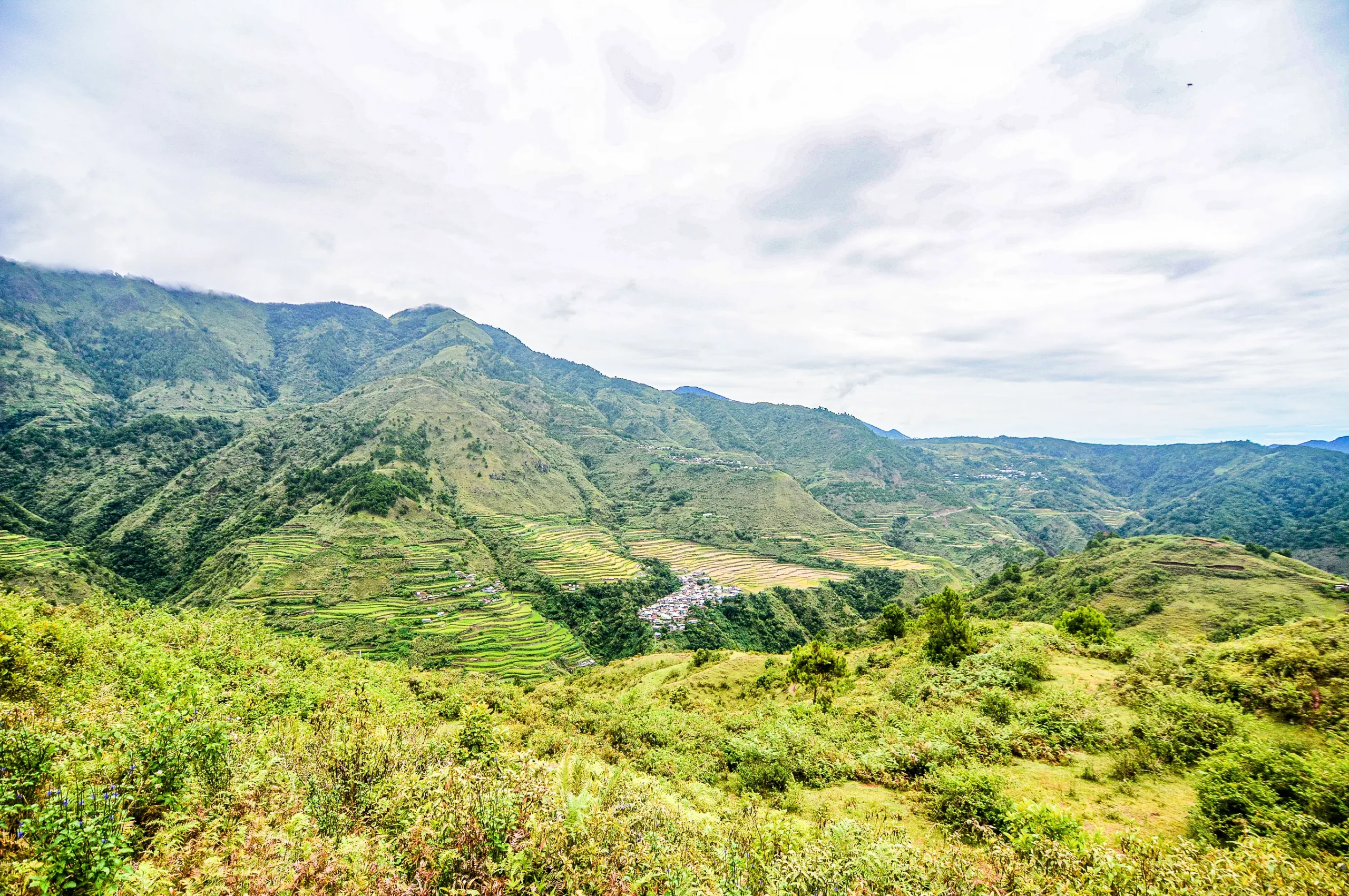
APPROPRIATE CONDITIONS. Most of Kalinga is mountainous like this part of the Butbut territories in the upper part of the Tinglayan town, making it suitable for cannabis cultivation. (Karlston Lapniten)
Billions of economic potential
In recent years, there has been snowballing movement toward legalizing cannabis for medicinal intents in the halls of Congress.
For Kalinga’s top officials, this has the potential to unlock more economic benefits for the Cordilleran province.
Kalinga Vice Governor Jocel Baac revealed there were supposed to be two congressional consultations in Kalinga on the proposed medical marijuana bills earlier this April. However, it was rescheduled due to supervening events.
“We have several propositions so that we could ensure that when the bills will be consolidated and eventually turned into law, it will truly reflect provisions that are beneficial to Kalinga,” said Baac, assuring their attendance in future consultations.
He said strict regulatory measures must be in place to avoid abuses to attain the true purpose of the proposed law.
This also includes measures to ensure the protection of local farmers against large pharmaceutical companies and that these companies pay due taxes and charges to Kalinga, Baac added.
PDEA Cordillera Information Officer Rosel Sarmiento said Kalinga remains the top source of marijuana in the country owing to the combination of geography and climate.
Like Benguet, another top source, the mountainous terrain creates a suitable area to hide marijuana plantations while making it easier for cultivators to evade arrest upon discovery, said Sarmiento.
Citing the economic boom of Thailand, Kalinga Governor James Edduba said it is “high time” for the country to reconsider its stance on the prohibition of cannabis.
According to the University of the Thai Chamber of Commerce, Thailand’s domestic marijuana market may reach $1.27 billion (P71 billion) in 2025. In 2022, the cannabis trade raked up 28.1 billion baht (P45.417 billion).
If cannabis is legalized, Kalinga’s economy will similarly benefit from the trade, said Edduba.
“It goes without saying that the Philippines will, too. I’m quite sure that the variety of cannabis we can grow in Kalinga has huge import-quality potentials,” the governor said.
Apart from economic benefits, he cites among his “personal” reasons for supporting medical cannabis is to declog the jails from arrests related to the marijuana trade.
He reveals that many of his constituents are still in jail due to the possession and trade of marijuana, mostly for medicinal purposes.
Edduba said community folks in Kalinga traditionally use cannabis to treat various illnesses. Indigenous wisdom passed on from generations has prevented its abuse.
But with the passage of laws criminalizing cultivation and possession, he said the people “yielded to the laws.”
In terms of readiness for the legalization of the trade, Edduba maintains that Kalinga is ready for the eventuality, as they have already proven by the volume of reports from PDEA.
“Our people have shown that we can adapt to standard cultivation practices in rice agriculture, and this made Kalinga the rice granary of Cordillera. We can do the same to marijuana cultivation,” added Baac. # nordis.net
(The Drug Policy Reform Initiative provided a grant for the production of this story.)