3 MIN READ
By RUDY D. LIPORADA
www.nordis.net
In 1969, unbeknownst to anyone at that time, the house of Jose Sr. and Josefina Cariño, fronting the Baguio Burnham children’s playground along Kisad Road, would be a hub of a core of activists who would help percolate the downfall of Dictator Ferdinand E. Marcos seventeen years later. The children of the Cariños were part of this core, which was against the tyrannical Marcos regime, much like their Great-grandfather Mateo Cariño who fought the Spanish colonizers during the Philippine Revolution which started in 1896.
On the walls of the house, deep discussions of the activists, often loud, reverberated why the Philippines is not yet free from the US imperialist clutches and why Marcos must be ousted as the dictator lackey of his US imperialist and the local feudal lord masters. These loud discussions could go on deep into the night or even to the wee hours of the morning.
If they were annoyed, often having a hard to time to or awaken from their sleep, the parent Cariños never said a word or grimaced annoyance. Jose Sr. clearly sympathized with the anti-imperialist line because the Americans, who took over the Spanish colonizers, issued military decrees that mandated the confiscation of his Grandfather Mateo’s lands. These lands would include the perimeters of Camp John Hay and practically all of Baguio where Mateo was the patriarch of the Ibaloi community.
Josefina would be dubbed as the Tandang Sora of the movement against Marcos. Like the Katipuneros who had Tandang Sora who provided them refuge, fed them, and tended the wounded, the early Baguio activists had Josefina who, with her husband opened their home for them, fed them, and provided them the venue to enrich their theoretical foundations of the movement.
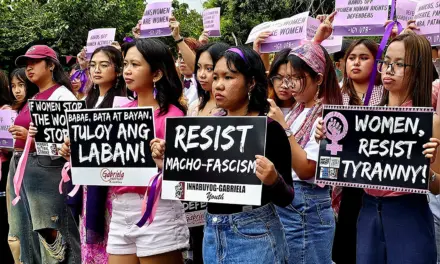
If they were concerned that the activists were venturing dangerously against the law, they smiled it off. If their sala was crowded with as many as twenty activists preparing materials for marches and rallies, they tip-toed around the placards like they were not clutters in their home.
The elder Cariños may not have known how those activists developed into seeds that helped grow the revolution not only in Northern Luzon but in other parts of the Philippines. They may not have known that when they were disturbed in their sleep, those loud theoretical discussions produced more minds to carry on the movement passed on to these days and into the future. Yes, they may not have known how they contributed but they and their home were definitely part of the spiritual force that pushed the movement whose seeds in Baguio City are parts and parcels of how the movement toppled Marcos. They may have not known that among those activists who produced other activists and others to this day are keeping the movement against tyranny.
They may not have known that from that house would emerge as movement heroes the likes of Borais Ocampo, Julius Giron, and their own daughter, Jennifer ‘Jing-jing’ Cariño.
The house is gone now but the spirit spawned from it continues to be in the service of the Filipino people. The spirit that toppled Marcos is the same spirit that continues to swell among the people who would, for sure, topple the likes or worse than Marcos.
Moreover, it would be the same spirit of Mateo Cariño who involved himself in a legal dispute seeking for the voiding of the decrees with which the American colonizers confiscated the lands of the Ibalois in Baguio until his death in 1908. Mateo did have a favorable posthumous legal victory when the US Supreme Court recognized his “native title” over his lands which was established through testimonies that the land was utilized, owned, and occupied by indigenous populations. The recognition, however, had been buried, almost forgotten, and continued to be muddled by the Philippine Government akin to the muddling to of the true state of the Philippines of being a semi-colonial and semi-feudal society where the Filipinos do not fully benefit from the resources of their own country.
Yes, the house is gone now but its reverberations live on the struggle of the Ibalois to reclaim the historical truths about their own vast lands in Baguio and for the Filipino people to reclaim the historical truths about their nation.
And as Marcos had been toppled, so will the current and future tyrants. # nordis.net