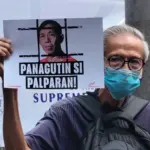
When Dissent Becomes ‘Terrorism’
4 MIN READCounter-terrorism frameworks, red-tagging, and preventive designation systems are turning political participation, land struggles, and environmental defense into security risks.





As we pass the halfway mark for year 2020—surely a global watershed year—it’s a good time as any to look back on the past six months, with eyes wide open, 20/20 hindsight, and goggles set aside.
Like many other countries, the Philippines remains in the middle of the current global crisis. As a self-reminder, this crisis is not just a health crisis caused by COVID-19 but a much wider and complex socio-economic crisis, with political and diplomatic ramifications. Some analysts have begun calling it the Great Lockdown, or the Greater Depression.
Too long have our bleary eyes been glued to TV, computer and mobile phone screens while waiting for the four-month Philippine lockdown to lift. It’s time to look beyond the daily media barrage about rising COVID-19 cases, “stay-home-or-die” advisories, and a million and one Facebook distractions. Everyone seems to be asking, “So what now? Where to go from here?” We need answers to a hundred and one questions.
I don’t have all the answers. This poor clod can’t even list down all the questions in his head. But at least I have a nose for Google. So let’s try to honestly take stock of what the world now knows. Let’s take the time to review the past six months and draw lessons as a people—about the pandemic, the lockdowns, and how to hack our way out of this treacherous jungle we lost ourselves in.
To restate the obvious: COVID-19-19 is a serious global threat. As of this writing, the pandemic has killed around 560,000 and infected more than 12 million. It continues to ravage the world despite a massive global effort to blunt it, and despite high chances of recovery and some degree of immunity for most people.
Again to restate the obvious, humanity is not exactly defenseless against COVID-19. We have scientific theory and growing practical knowhow on our side. Huge advances in the past months show that COVID-19 can be controlled and eventually tamed (if not totally eradicated). Countries have responded most variedly, from China’s “total people’s war vs COVID-19” to Sweden’s and Japan’s laidback no-enforced-lockdown strategy. Many pro-fascist or proto-fascist regimes and big business have used the pandemic for their own narrow ends. However, apart from exceptional cases like China, Taiwan etc., there are other success stories—Vietnam and Cuba are the first to come to mind. So yes, humanity has enough tools to end the pandemic while guarding against new outbreaks.
This personal optimism draws strength from a progressive view of science—about the power of medicine and public health—if managed by the broad masses of people themselves and not just by a few. That’s a big IF, and a huge challenge in our time. Every citizen, every activist, every grassroots organization—all of humanity, in fact—must be empowered to engage public-health policy and follow the underlying science in the COVID-19 era.
Ben Franklin said long ago, “Politics is too important to be left to the politicians.” This is also true of pandemics: people’s health is too important to leave to hospitals and health professionals—or worse, to politicians and generals masquerading as pandemic experts. That’s why I included “people’s power” in the title of this piece. Passivity is lethal, especially during lockdowns—not just in the physical-lifestyle sense, but also in the socio-political sense. Dapat huwag tumigil sa pagkilos. As the popular Pinoy expression says: Galaw-galaw, para huwag pumanaw. (“Keep going, or you die.”)
COVID-19 has become the world’s “common public enemy,” in a certain sense. But it’s not merely a health crisis seeking a medical solution. From country to country, the virus is affecting the various social classes and strata differently. It arrived on waves of social conflicts, crises and problems already afflicting the world. Then, for reasons that not all experts agree with, many states opted for extensive and extended lockdowns in the past months. These lockdowns, which affected one-third of the world, aggravated the said pre-COVID-19 problems in the worst way possible, short of a World War III or an asteroid hit.
Have you noticed that most authorities and media are wont to blame a long litany of problems on Ms. COVID-19, but not on Mr. Lockdown? OFWs stranded in the vicinity of airports? Blame COVID-19. Workers spending long hours on the road trying to find ways to go to work and return home everyday? Blame COVID-19. Truckloads of Benguet vegetables rotting by the roadside while urban folk survive on instant noodles and cheap canned sardines? Blame COVID-19. It is as if Mr. Lockdown is married to Ms. COVID-19, and we have no choice but to regard them as one inseparable tandem.
Truth is, lockdowns are just a recently evolved part of society’s reflex reaction to threats—sort of like the “freeze” part of our body’s instinctive “fight, flee, freeze” response. In some cases, the freeze response is effective in warding off the threat. In the face of COVID-19, some analysts now regard it as a monumental mistake.
But, regardless, the big danger we really face are the basic flaws of global capitalism—the real Public Enemy No. 1—which have become more complex and critical due to COVID-19 and the lockdowns. So now we face a monstrous global social crisis, needing total mass mobilization on all fronts. Fighting and defeating this monster requires people’s power.
However, to understand and confront this monster, we must first delineate the answers to four different questions: (a) Which problems are directly caused by the pandemic? (b), which ones have been caused by states, corporations and other institutions riding on the pandemic? (c) which ones were already preexisting before 2020 and merely aggravated by COVID-19? Finally, (d) how do we hack our way out of the mess, as a people?
Let us start with Question A. COVID-19, most obviously, is a huge problem, much more worrisome than a one-day flu. Millions of people are getting sick—some 20% of them severely or critically ill, and requiring hospitalization. About one-fourth of these will probably spend time in ICU, and a very small fraction (some 1-2% or less) will die —mostly elderly folk and those already weakened by preexisting health problems.
COVID-19 definitely packs a wallop for those who test as positive and fall ill even mildly, in terms of productive days lost, medical costs, weeks of isolation, and post-recovery limitations. And of course every death is a grievous and immeasurable loss to family, friends and the wider community. If mismanaged, the surge of COVID-19 cases may overwhelm the healthcare system.
Nevertheless, we must keep an overall sense of proportion about COVID-19’s direct impacts. According to medical science, 80% or more of people infected with COVID-19 are either asymptomatic or show only mild or moderate symptoms that typically don’t require hospitalization. Of the small proportion of infected children, only a very tiny fraction fall ill.
The emerging COVID-19 demographics is definitely bad news for elderly and sickly people. But it is guardedly optimistic for school-age and young working-age people, who comprise the majority in developing countries.
The COVID-19 pandemic exposed and worsened preexisting weak spots in the healthcare system of many developing countries like the Philippines, and even some advanced countries tightly trapped in neoliberalism—as the case of the US. Healthcare in these countries has been heavily privatized and profit-driven, minimally state-subsidized, misprioritized to serve rich people’s diseases, and heavily dependent on Big Pharma.
The pandemic slammed into these countries like a global tsunami: the dire warnings were broadcast on time, but some countries weren’t listening or didn’t sound the alert until it was too late. Whether early or late in taking action, some public-health systems were robust enough to gear up and redeploy to meet the rapid influx of COVID-19 cases—although costly tradeoffs sacrificed other equally important hospital services. In many countries long burdened with misdevelopment and corruption, decrepit healthcare services soon became overwhelmed, some to the point of collapse.
Here in the Philippines, apart from perennial budget misallocations for public health, we have become all too familiar with acute congestion or lack of COVID-19 dedicated wards, beds, ICUs and equipment, PPEs and other medical supply problems, understaffing and overworked healthcare personnel (HCPs). Working under extreme conditions, an alarming number of HCPs have fallen sick or died of COVID-19. We were clearly caught unprepared.
While much of the world seems to have been blind-sided by COVID-19, this is not the first time that we were hit by a pandemic, even just talking of the 21st century. We had SARS (2003), H1N1 influenza or “swine flu” (2009-10), MERS (2012 onwards), plus the continuing HIV/AIDS pandemic that began in 1981 and has claimed 32 million deaths so far.
Thus, the global health community was not really defenseless when it went into action from January onward. The notion that only a vaccine will save us from COVID-19 is over-pessimistic if not outright false. The experience of dealing with recent pandemics, especially with SARS and MERS—also caused by coronaviruses for which there are still no vaccines—provide countries with a full arsenal of public-health measures for defeating COVID-19.
These measures are all clearly listed in World Health Organization guidelines and often categorized as “pharmaceutical and non-pharmaceutical interventions.” Not too hard to grasp, they can fit into poster-sized infographics that any barangay health worker can explain to any grade-school child. Most countries’ health agencies are implementing them now, differing only in levels of legal enforceability (as against persuasion and voluntarism) and in technical details per country, locality or specific circumstances.
The pharmaceutical interventions include vaccines and anti-virals, which are still in development and trial phases. A potentially wide array of pre-exposure and post-exposure prophylaxis and alternative approaches (e.g. Chinese-style or indigenous-source traditional medicine) are also being tried out. They can also help manage the primary infection, secondary complications, and post-recovery health issues.
This arsenal of options must be fully accessible to national healthcare systems, at no or least cost to ordinary folk, through ample state subsidies, massive training and info dissemination. To be truly mass-based, these treatment options should benefit the broad masses through hospitals, localized (community, workplace, school etc) health facilities and mobile health workers, if not within the home. The key words here are biosafety, effectiveness, least cost to users, ease of storage and use, and mass character. Vaccines and anti-virals must not be monopolized for private profit, as imperialist extortionists will surely attempt to do.
Speaking of vaccines, the point is to strengthen every person’s immune system against infections. Vaccines are one way, but not the only way to immunize. While awaiting a safe and affordable COVID-19 vaccine, people can maximize so many alternative ways (already available and tested) to fortify their immune systems as individuals and families, as communities and entire populations.
The high priests of Western medicine should not so casually scoff at the role of folk remedies, in addition to common-sense nutrition and healthy habits. These alternatives can play distinct roles in the people’s multi-layered defense against COVID-19 and other diseases, especially when employed within the supportive framework of a nationalist, mass-oriented, and scientific healthcare and knowledge system.
Even as the whole world rushes to produce and deploy pharmaceutical weapons vs. COVID-19, we should in the meantime follow the common-sense axiom, “An ounce of prevention is worth a pound of cure.” In WHO guidelines, these fall into the category of “non-pharmaceutical interventions” aka basic health protocols. They include washing of hands, wearing of face masks and other PPEs, physical distancing and avoidance of closely packed crowds, ventilation especially in enclosed spaces, and decontamination especially of frequently used facilities.
Many of these are so practical, so easy to grasp, and so inculcated in people’s minds after months of public reminders (although not always in daily behavior), that I absolutely see no point in using coercive state measures to enforce them with stiff penalties. It’s like whipping schoolchildren for making mistakes in class. Scare-and-shame police tactics, including forcible arrest and mass detention, arbitrary exactions, and medieval-era punishment (such as detention in dog cages), are ultimately self-defeating. They also reek of repulsive militarism and have dubious legality.
In addition to general health protocols for the whole population, WHO guidelines also give high priority to more specialized protocols for zeroing in on actual clusters (“hot spots”) and individual cases of COVID-19 infection. There are standard systems and methods of surveillance (monitoring of broad or population-wide trends), screening (more targeted monitoring, using a battery of tests), diagnostic testing for actual and suspected cases, and several levels of contact-tracing especially since COVID-19 can spread so rapidly and stealthily.
These methods per se cannot treat COVID-19, but are crucial in identifying and diagnosing people who might have been exposed to the contagion, are infected by it, or have already recovered. On that basis, correct action could be promptly undertaken: to quarantine probable cases, isolate and treat actual patients, clear those who were not infected or have recovered, and thus slow the spread to an eventual minimum.
Such public-health responses must and could be done continuously throughout and beyond the pandemic, in all communities, workplaces, schools, and other public-access facilities, to quickly detect and isolate all cases for treatment, and contain new outbreaks. They play a vital role not just in identifying cases, but in tracking the ebbs and flows of COVID-19 (and other public-health threats as well) as they sweep through the population, in order to aid health authorities in policy-making, planning, and public information.
Take note that I have so far avoided the term “mass testing,” and not commented on specific test methods such as RT-PCR and rapid antibody tests. There is no debate about the need for testing on a wide scale. But there are various objectives, approaches, and levels of testing. Using one specific approach does not render other approaches useless, whether for initial screening, clinical diagnostics, or population-wide serology. It’s good for citizens to follow the pros-and-cons, but let’s not turn valid and continuing scientific debates into religious wars or empty nitpicking.
There have been lags and missteps in developing, producing and employing test kits and facilities, and in accurately compiling data and reporting test results. Some of the problems are understandable, given the global scramble to grab ammo and tumble to the trenches. Others clearly could have been avoided or quickly solved. I will have better opportunities to deal with this controversial “mass testing” issue in later column pieces. So where did we go wrong—or are we doing anything right at all—as a COVID-19-hit country? Why are we deeply mired in a crisis that seems to get worse from month to month? If Vietnam and other countries have apparently controlled COVID-19 with minimal or no lockdowns, why is the Philippines—now entering its fifth month of “community quarantine”—still weak, feverish and bed-ridden? Is the lockdown working at all? These questions need to be posed, and answers suggested, in all candor. # nordis.net
Editor’s note: The opinions expressed do not reflect the views or positions of Nordis. They are published to encourage open dialogue and diverse perspectives. Nordis reserves the right to edit for clarity and length, but the opinions remain solely those of the author.
4 MIN READCounter-terrorism frameworks, red-tagging, and preventive designation systems are turning political participation, land struggles, and environmental defense into security risks.
3 MIN READBesides opening doors for intricate human stories, this annual showcase of bold and untested works continues to draw acclaimed directors, well-known actors, and diverse, enthusiastic audiences.
2 MIN READKapag ang gamot ay naaagnas sa bodega habang may mga pasyenteng walang malunasan, hindi lamang pera ng bayan ang nasasayang—maging ang tiwala at buhay ng mamamayan ay unti-unting nililibing.
2 MIN READCaution is something the Philippine government should take into account, especially now that the country is preparing for wider AI training, school partnerships, government adoption, and AI-related investments.
