






NDFP to study Bishop’s proposed framework on local talks
3 MIN READ
By SHERWIN DE VERA
www.nordis.net
BAGUIO CITY — The head of the NDFP negotiating panel expressed their openness to study the proposal made by the head of the Philippine Ecumenical Peace Platform (PEPP) secretariat on how to utilize the local peace talks to advance the over-all peace negotiations.
READ: Local Peace Talks may work if…
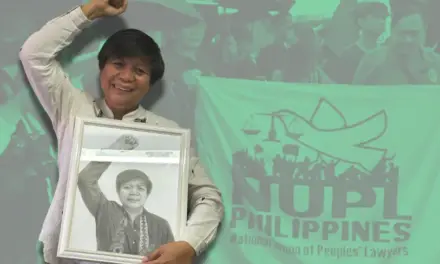
In an online response, National Democratic Front of the Philippines chief negotiator Fidel Agcaoili said “we are open to study Bishop Iñiguez’s proposal.”
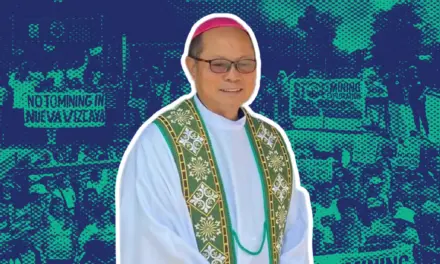
In an interview during a gathering of church leaders in Baguio City last August, Kalookan Bishop Emeritus Deogracias iñiguez suggested that localized talks “must be taken as part of the negotiations at the national level” and use it to “promote and discuss the overall agenda of the talks and the proposals of both parties to the wider public.”
Agcaoili said that in the course of the peace negotiations, the NDFP has always maintained an open mind to proposals of how to speed up the peace effort as long as it is in accordance to the principles set by previous agreements.
Thwarting sabotage
However, the NDFP’s chief negotiator explained that revolutionary forces, under the present circumstances, will not only decline but also thwart efforts of the Duterte government to engage in localized talks.
“It is good that regional party committees and NPA commands are declining localized peace talks especially at a time that Duterte regime has intensified its attacks against the people in all fronts,” he said.
After terminating the peace negotiations in November 2017 through Proclamation No. 360 and tagging the CPP and NPA as ‘terrorist organizations’ with Proclamation No. 347 the following month, Duterte called for the conduct of localized peace engagement with the rebels.
Aside from local talks, the Palace also set other modes of engagement with the local CPP-NPA units, through local peace package and community and confidential dialogues.
The outright rejection of localized peace talks did not only come from the NDFP panel based in Netherlands. Local CPP and NPA leadership have separately expressed their adherence to top-level talks, with the NDFP panel representing the entire revolutionary movement.
Among the first to denounce the government’s proposal are NDFP forces in Northern Luzon under the Cordillera People’s Democratic Front, Chadli Molintas Command-NPA Ilocos-Cordillera and NPA-Venerando Villacillo Command-NPA Nueva Vizcaya-Quirino.
House supports resumption
On Wednesday, September 12, the House Special Committee on Peace, Reconciliation and Unity adopted House Resolution 1803.
Submitted on March 22 and signed by more than 60 lawmakers, the resolution called for the completion of the Comprehensive Agreement on Social and Economic Reforms (CASER).
Committee chair Rep. Ruby Sahali of the lone district of Tawi-Tawi said peace negotiations under President Duterte has gained more momentum compared to previous administrations. She also expressed optimism for the resumption of then peace talks.
The document underscored that continuing the talks will “benefit the Filipino people most of whom are poor peasants and workers” pointing that CASER can “help provide relief for their economic hardships.”
Presidential Adviser on the Peace Process Jesus Dureza, who attended the hearing thanked the committee “for keeping intact its intention which is the same as that of the executive department.”
“We know very well that the President had already cancelled the peace negotiations, but he had said the table for… the door for resumption is still wide open. We did not totally shut this,” said Dureza.
Primarily authored by Bayan Muna Representative Carlos Zarate, it was also supported by some of the Northern Luzon solons: Reps. Deogracias Victor Savellano, Eric Singson of Ilocos Sur, Leopoldo Bataoil of the second district of Pangasinan, Teddy Baguilat, Jr. of Ifugao, and Eleanor Bulut-Begtang of Apayao.
Missed opportunities
It can be recalled that in August 2005, the NDFP put forward the “Concise Agreement for an Immediate Just Peace” (CAIJP) to the Arroyo government or to whoever takes the helm of the next administration.
The 10-point agreement, according to NDFP, “is responsive to the demands of the broad masses of the people for basic reforms” and even declared that “the civil war will cease” at the moment the two parties sign the agreement.
During Aquino III’s presidency, the NDFP again offered to pursue a “special tract” to hasten the negotiations. They forwarded a draft Agreement to Formulate the General Declaration for National Unity and Just Peace in February 2013 that would facilitate the immediate ceasefire.
Both administration did not pursue the proposals.# nordis.net