FEATURE| February 7, 2016
3 MIN READBy JUDE BAGGO
www.nordis.net
There is a saying that “a family that prays together, stays together” but in our community, we have a different one, “a community that eats together, stays together” and in my place, we call this hamul. Hamul is a general term we use to describe the state where community people are invited to join a family gathering. This has been an old practice of my community to share joy, celebrate life and strengthen family and community relationships by sharing food.

HAMUL. In occassions like wedding, all members in the communties in Ifugao villages are invited to attend and partake in the feast. Photo by Jude Baggo
Hamul usually covers weddings, bagol (celebration of a baby’s arrival), honga (celebration of long life), hogop (house warming), kolot (a rite before cutting hair of male son) and other things like graduation and passing a board examination. And of course, hamul comes with the butchering of pig/s, chickens or a carabao to feed the people. And in some occasions, the host family gives wana/pahing (a piece of meat usually cut in similar sizes of a same part of the pig given to those who attended and even families who did not able to attend the affair). So if you are going to one of these occasions, you can always say, etaku maki hamul.
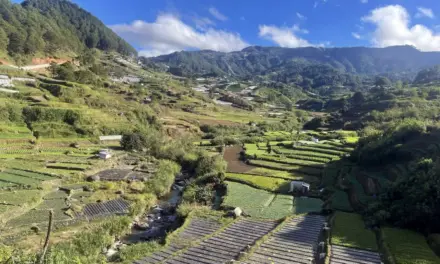
Hamul is also like a holiday for our community folks. If you are not a neighbor to the host family, one needs to walk a distance since houses are scattered over the mountain slopes. In my place, a sitio is usually located either near the top of a mountain ridge, at the bottom of the mountain or over a nearby different ridge. Usually a sitio in our community is composed of 3-9 houses. In some cases, there is only one house in a sitio. So if your house is located at the bottom of the mountain and you heard a hamul at a sitio at the top of the mountain, then you better start walking early to avoid the midday direct heat of the sun especially in the open field of rice terraces.
My community came up also with the saying that nu waday ahuk, waday hamul (if there is smoke, there is hamul). Another one is to show direction, when someone new asks direction to our place, we say, unudon yu nan ahuk ot datngan yu (follow the smoke and you will reach the place).
Aside from the need to attend hamul as a matter of solidarity and cultural obligation, people also say that food especially pork during hamul is better than those bought in the market or those cooked at home. This is maybe true because of the efforts in walking up and down in the mountain just to reach the hamul and maybe because of the presence of everybody. Rice wine and commercial spirits are also served during hamul. If one is not careful enough and consumes more than he needs, then he may sleep or go home and keep falling from the banong (rice paddy dike) or crawl like a grass eater on the way.
Most of all, hamul is also a time to meet and see your uncles, aunties, cousins, and childhood friends. Because even if you all live on the same mountain, you rarely see each other due to the distance from one sitio to another sitio. The practice of hamul also serves as an example of community sharing, solidarity and support system. It is also a venue to learn culture and listen to old stories from the old folks. With this, there is hope that the essence of community life and cooperation can be passed on to the young ones. Etaku makihamul. # nordis.net