GMRC is Integral to Free Speech
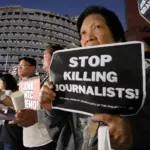
3 MIN READSociety benefits where speech leads to dialogue, not division, where words build bridges, not burn them. Where freedom is exercised with care, not recklessness.





www.nordis.net
Prior to the closure of the US Military Bases in the Philippines in 1990, progressive organizations and individuals had been pushing for an alternative development plan for these prime lands used as bases by the American military. In Baguio City, the Movement for Sovereign Philippines proposed that Camp John Hay be developed under the context of the city’s development needs – particularly open for the enjoyment and utilization of its resident population, and the formal recognition that it is part of the ancestral land of original Ibaloi inhabitants.
Despite the pro-people alternative development plan, the local officials at that time pushed for a contract on 19 conditionalities which paved the way for the development of CJH by the Bases Conversion Development Authority (BCDA), the state agency established to develop areas formerly under the US Military Bases when the treaty (US-RPMB) was not renewed by the Senate on September 16, 1990.
The development of CJH was in the context and primarily for corporate interests and not for the greater Filipino interests. In 1996, BCDA and the Camp John Hay Development Corporation (CJHDevCo), a private corporation, entered into a contract where the area would be developed by the latter. CJHDevCo will pay BCDA an annual rent of P450 million for the first five years and P105 million annually for the succeeding years. From the rental, 75 percent will go to the state’s BCDA while 25 percent shall be remitted to the city. In actual amount the rental is exactly, P 106 million annually for the city for the first five years and P35 million annually for the succeeding years.
The city could have been one of the richest local government units even with that unequal percentage sharing. Since CJHDevCo proceeded with the development, the city has been expecting to be paid its share which would by now be a total amount of P850 million.
However, until now, that amount is still to be realized. As it is also a contract, we wonder what the local officials did so that annual share the city is entitled to would be realized. Did they (city officials) make any concrete steps to collect the city’s share?
Lately, the ping-pong legal struggle between BCDA and CJHDevCo was settled by the Philippine Dispute Resolution Center Inc. (PDRCI). The gist of the ruling: BCDA is not entitled to any accumulated rental payments and arrears, and it ordered BCDA to refund CJHDevCo P 1.4 Billion. On the other hand, CJHDevCo must cede Camp John Hay to the government through the BCDA.
And the same local officials are worried that they cannot collect the P 850 million share of rentals of the city. To these officials, people have marked your words when in the name of the City you assured Baguio of its share in the proceeds and gave the go signal for the CJH development. Prove it now that you did the right thing!
The people of Baguio, Ibaloys, residents and future generations lost what they were entitled to as the officials who facilitated the corporate development of CJH are helpless. For two decades, corporate interests had raked in profits in the development of CJH, and will continue to as it will be returned for BCDA, who surely will push for it with the special economic zone in the area. Such development is clearly corporate and not pro-development for the benefit the City.
Concretely, also, the development of Camp John Hay with impunity continues to transgress the rights of indigenous peoples. It can be recalled that the central area of Camp John Hay, originally called Ypit and Lubas, was reiterated in a US Supreme Court Decision as owned by Mateo Carino by virtue of the concept of “Native Title,” after Carino filed the case for his rights over the land he inherited from his ancestors. The decision was penned by Justice Oliver Wendell Holmes on February 23, 1909, that date declared in 2009 as Ibaloi Day.
Yet, the land is denied its appropriate owners despite the decision by the US Supreme Court.
Presently, the BCDA has filed cases for the nullification of the Certificate of Ancestral Domain Title (CADT) of the Happy Hallow and the Certificate of Ancestral Land Title (CALT) of Ibalois at barangay Dagsian of this city.
This institutionalization of non-recognition of ancestral land rights happens now with the government, through BCDA, as the culprit.
As City residents push for “the Baguio we want”, it is also in the interest of the people of the City to address the following issues: the weak and patronage governance, development in consideration of the local economy, sustainable environment, the recognition of ancestral land rights, among others. Or we can just be complacent about corporate interests dictating the city’s development and squeeze Juan off his hard earned wages? The answer is in the people’s hands! # nordis.net
3 MIN READSociety benefits where speech leads to dialogue, not division, where words build bridges, not burn them. Where freedom is exercised with care, not recklessness.
3 MIN READWithout proper education, awareness, discipline, and responsibility for protecting the environment, having a child would be unfair—both to the environment and to the child.
2 MIN READMore than just a career, journalism is a public trust. While this field is open to anyone with a talent for writing, including those with specific disciplinary expertise, it is vital to ensure that reporters are grounded in the profession’s ethics and techniques.
2 MIN READIn that dim, chaotic living room, surrounded by laughter and flickering lights, I understood something about blackouts, about games, about life: sometimes the battles we fight are not against the world, but against ourselves.
