2 MIN READBy INNABUYOG-GABRIELA
www.nordis.net
FIRST OF TWO PARTS
“If you do not resist, you die anyway; if you resist, you die honorably. I exhort you all, resist”.
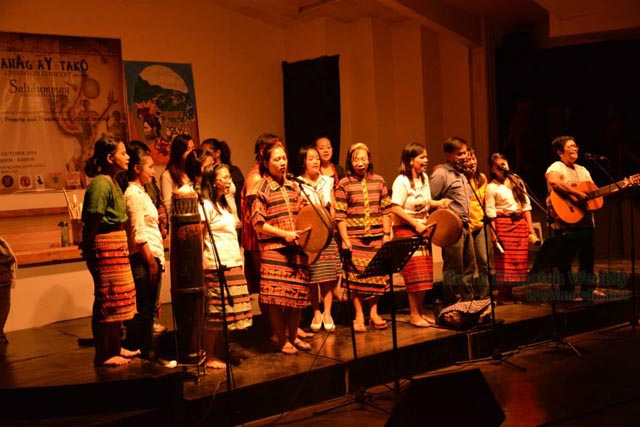
We are beautiful and we are strong. We are stronger because of the struggle we do. I will be sharing what much of the indigenous women’s movement in the Cordillera made over years since Innabuyog, alliance of indigenous women’s organizations in the Cordillera region, Philippines, was born on March 8, 1990.
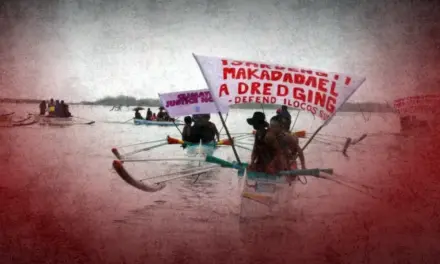
The worsening global crises we face today, the economic, climate crises and wars of aggression, create a fertile ground for indigenous women’s resistance. The heart of indigenous women’s life is our access and control of land and natural resources. Hence, we always say, land is life. This is the heart of development justice for us. In this global moment where the state and corporations eye our land and resources as their means of survival, we find our strength by organizing ourselves to resist.
Our ancestral homelands continue to be regarded as resource base. National economic development plans are always framed on neoliberal policies, allowing extractive industries like mining, logging, energy projects and other forms of development aggression e.g. corporate plantations, in our territories at unprecedented speed. In the Cordillera region alone, 66% of the land area is covered by ongoing and planned mining projects, all major rivers are outlined for hydro projects, several geothermal plants are being enforced on target territories and commercial agriculture is being intensified.
However, indigenous women are defenders of land, resources and life. Learning from the resistance of our foreparents, we will not allow ourselves to be simply victims and eventually perish. Indigenous women’s organizations and movements will continue to grow and new ones will always spring. As this happens, it is expected that government and corporations will always respond with force and repression. The Philippines national internal security plan inspired by the US-led war against terror is basically framed to crush peoples’ resistance. Impunity continues to be tolerated by the Philippine government as extra-judicial killings and enforced disappearances are committed against those who uphold human rights and development justice. Our historical experience tells that acts of state terrorism and militarization is employed in suppressing dynamic women and peoples’ movement. State security forces are also made to secure corporate investments. The trauma and impact is most felt by women and children which they may bear for the rest of their life.
Our experience shows the historical contribution of indigenous women in the defense for land, life and resources in various forms and levels. The role of women however is not that highlighted nor reflected in history books and in mainstream mass media. Our indigenous movement is now trying to fill in this gap to bring these contributions of women to the pages of history, register as public knowledge, and use these contributions of indigenous women in empowering women and in enlightening society.
Building the strength of indigenous women starts from believing that women are important forces of production and powerful agents for social change. As we always say, women compose half of the population and leaving the women behind slows down the process of changing society and in advancing genuine and just development. # nordis.net
This was written by Vernie Yocogan-Diano, the executive director of Cordillera Women’s Education Action Research Center, and presented during the Asia Pacific Feminist Forum held in 31 May 2014, Chiang Mai, Thailand last May 31, 2014. — Ed
Click here for next part