3 MIN READBy JUDE BAGGO
www.nordis.net
For capitalists, rivers are a sure source of profit. But in Tinoc, Ifugao and to most of the communities in the Cordillera, rivers through the centuries are a source of life. It is also with this reason that the most popular Cordillera struggle waged in the early 70’s and 80’s was over the Chico River. As a result of this struggle, it made Chico River flow and continue to provide the needed water for all the communities it passes thru.
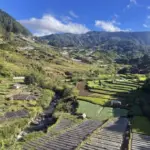
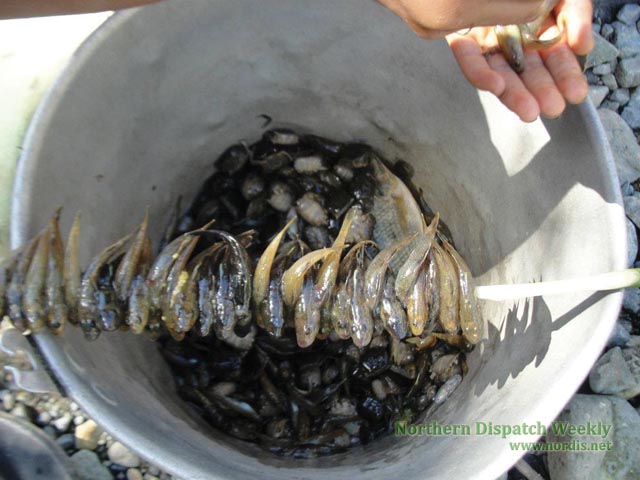
ABUNDANCE COMPLIMENTS OF THE RIVER. Photo by Jude Baggo
In a recent visit to Tinoc, I had the opportunity to imbibe in with community folks stories about rivers. It is in this sharing of stories that the local folks discussed about water systems found in their communities.
In Tinoc, community residents identified three systems of water. First one is the so-called hebheb (spring water) which is abundant in the area because of its thick and forested mountains. These bodies of water are potable, excellent for drinking. It is also used for cooking, washing and cleaning. Some households have their own source of hebheb. In some areas too, hebheb are found on rice fields and therefore, it is an automatic water source for the fields. Hebheb are also used to supply water for fishponds and gardens.
When hebhebs are combined, it forms the hayyukung. This water system is bigger and can be maximized for bigger water needs. The major bulk of water from the hayyukung is used to irrigate rice fields and garden areas. Children can also learn to swim in this kind of water system where it is not too shallow and not too deep (and therefore drowning can be avoided).
Combining hayyukung (creek-like but can also be a small river) will form the wangwang (medium river). It is the biggest water body in Tinoc. Wangwang is a major source of water supply for rice fields through the balal, an irrigation system designed to get water from medium rivers. Wangwang are also sources for sand, gravel and rocks to build houses and other infrastructures.
The rivers also taught people how to fish especially for communities along the rivers. It is here where they conduct binwit for small fish; lawid (the use of fish traps) for eel and bigger fish; eldew, a rattan-made baskets used in fishing during heavy rains when rivers swell; halep is daming a part of a river to drain and then fish can be captured; pituk is another fish trap made of wires and wood formed like a pistol. These fishing practices and devices are done depending on the season and the kind of fish species, it sustains the fish population by not destroying or trapping the next fish generation. Dynamite is forbidden in these communities. In addition, they also mentioned that rivers are places for picnic, recreation and can add beauty to their place.
When asked on what are the kinds of fish and other river-borne species that are still available in their rivers for their consumption, the local folks stated the following: igat (eel), uddingngan (ugadiw), allama (black and orange crab), bayyek, bektel is a shellfish that looks violet and green, which clings to a rock until grows, hayyap is like a worm with six legs that clings to a rock under water, tekdew is a small frog which jumps high and far and can easily find adaptation outside water, tukak is a small frog but moves slow, pelpel another kind of frog with a fat body, big eyes, black in color, kulikli is another kind of frog with green color, bakbak is another frog described with big body and slow to move, yuyu (mudfish), babbaddi is like a caterpillar but clings to a rock under water with like a cloth housing.
Truly, rivers are one of the free resources that can benefit all upstream and downstream communities as a major and sustainable resource of supply to agriculture and for other important needs.
Sadly, rivers are seen as commodity. Capitalists justify this premise by saying that we need development. But the bigger question is it development for whom? Furthermore, these things are not mentioned when these rivers are to be transformed into power plants. The more discussed things are profits using alien terms such as watts, kilowatts, power, energy and all those technical terms.
Let the rivers flow to freedom. # nordis.net
(Diaries from the field are side stories of human rights and development work on the richness of our culture, biodiversity, language and people documented and written during field work based on community interviews and first hand experiences.)