









Lack of data averts wind farm FPIC process
4 MIN READ
By GINA DIZON with reports from GWEN GAONGEN
www.nordis.net
SAGADA, Mountain Province — The lack of information material on studies on the effects of wind turbine construction stalled the free prior and informed consent (FPIC) process for the proposed construction of a windfarm atop Pilaw-Langsayan ridge between Sagada and Besao.
These, aside from the absence of materials or information from hydrogeology and soil tests, financial projections, viability and detailed engineering plans that the participants during the second general assembly of the FPIC process on May 20-24 wanted to know.
The meeting was conducted by the National Commission On Indigenous Peoples (NCIP) in the barangays of Kiniway, Lacmaan, Padangaan, Besao West, Besao East, Suquib, Gueday, Agawa of Besao; and northern barangays Bangaan, Pide, Aguid, Fidelisan, and Tanulong, and central Poblacion, Dagdag and Demang of Sagada who noted the absence of technical and detailed information to guide affected folks in the said areas to come up with an informed decision.
It is a project proposed by Philcarbon Inc., to construct a 15 megawatt windfarm here.
Bangaan Todyog from Bangaan barangay voiced out his hesitation on the installation of wind turbines which might hit water sources and may divert water to either adjoining Besao or Sagada and may trigger conflict between the two tribes.
Philcarbon consultant Marijo Macaldo from Apercu Consultants and Philcarbon director Leonides Natera said steps shall be done not to hit water sources on the construction of the windmill turbines but they were not able to provide studies or technical plans to indicate or assure the water systems shall not be hit.
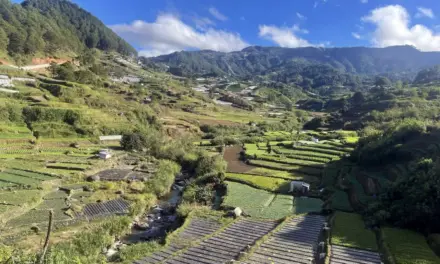
The Pilaw-Langsayan ridge sits on a critical watershed where hundreds of villagers from identified barangays cited above as the source of their domestic and irrigation water to nearby rice fields and vegetable patches.
As agenda for a second general assembly of the FPIC process, the applicant Philcarbon is supposed to present their engineering work plan and feasibility studies, and other relevant information to inform affected folks of the company’s proposed windfarm project .
Noting the lack of these necessary information on the proposed windfarm, community leader Henry Aquino from Besao said the people of the affected barangays should be informed and fully appraised of what the project is all about so that they are guided in their decision of whether to allow the windfarm or not.
Indigenous Peoples representative to the Sangguniang Bayan of Besao, Ben Marrero also noted that environmental impact studies have not yet reached the legislative body of the community.
Woman leader Janet Otinggey from Besao is fearful that the weight of the turbine might someday give way and cause a landslide.
There is no soil or hydrogeology tests done by the proponent, though Natera and Macaldo said studies shall be done later. The environmental impact assessment conducted by Philcarbon was reported to have been submitted to the Department of Environment And Natural Resources (DENR). They also did a vegetative, water resource, and bird path assessment on the proposed windfarm.
FPIC guidelines provide for at least 2 months decision period following the second general assembly of the FPIC process.
Affected folks in Besao asked for an extension for decision making pending the needed information from Philcarbon.
Though barangay captain of Fidelisan James Duyog said his village constituents have already decided that they do not want the project and so with affected folks from Agawa, who indicated the possible source of threats for landslidesbshould the project proceed.
Community leader and former kagawad Langbay Suyon from Aguid further noted that people do not want the project and urged the people to state their negative position to the proposed project.
Community leader Bernabe Dekdeken of Barangay Agawa, Besao was doubtful of the surface studies conducted by Philcarbon on the distance of water springs from the proposed turbine and stated his negative stand on proposed windfarm.
In the midst of environmental questions on the proposed windfarm, Engr Ronaldo Angeles of the Department of Energy said “there is yet no detailed study on wind energy” in the country. With the full blown implementation of the Renewable Energy Act of 2008, there are 33 wind-based energy projects in the Philippines currently on their exploration stage. Should the Sagada-Besao windfarm proceed, this shall be the first windfarm built on a watershed in the country.
It shall be recalled that Philcarbon assured the public during the May consultation 2012 that they shall undergo an environmental impact assessment, a requirement before the Environmental Clearance Certificate (ECC) shall be issued by the Department of Environment and Natural Resources.
An ECC was issued November 12, 2012 to Philcarbon by the Environmental Management Bureau detailing the conditions and requirements of conducting the proposed windfarm based on the environmental impact assessment submitted by Philcarbon and instructed further submission of permits prior to operation and conduct of monitoring activities during the operational stage.
Angeles said the necessary permit and clearances as those needed from the concerned local governments units and agencies as the DENR, including a land use permit and an FPIC from the NCIP has to be submitted to DOE before any construction shall be done.
The granting of the service contract by DOE to Philcarbon is not an automatic permit to start operations, Angeles said. He also told the audience that if the people do not want the project as manifested in a no-consent certification then the DOE cannot issue a notice to construct said project.
There are 10 proposed turbines spanning 4-5 kilometers along the Langsayan-Pilaw Ridge covering a 648 hectare application to DOE, and an 8 kilometer transmission route from the ridge to sitio Pegew to connect to the national electrical grid.
The first community assembly validated findings of the field based investigations taking note of the extent of the ancestral domain and the indigenous peoples who are going to be affected including the proposed sites.
Negotiation and a memorandum of agreement follows should an FPIC be granted, otherwise, no MOA shall be done. # nordis.net