FEATURE| October 28, 2012
2 MIN READBy ARTHUR L. ALLAD-IW
www.nordis.net
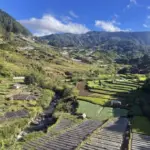
I got the chance to visit the natural beauties of Ilocos Norte and Ilocos Sur last year. It was a visit that deepened my appreciation for these natural areas, complimented by historical sites such as the Spanish built colonial churches.
I appreciated most the Ilocos beaches, particularly in Pagudpud, the white sand, blue and crystal clear water. But I was so saddened by the sight of these beaches being threatened by magnetite mining activities of both foreign and local corporations. The people, and progressive lawmakers, petitioned the Supreme Court for a writ of Kalikasan to stop these mining activities, particularly by the Altamina Exploration Resources Inc. and the government from implementing the latter’s questionably issued Financial and Technical Assistance Agreement (FTAA).
The writ is a legal remedy that it is available to people whose constitutional rights to a balanced and healthful ecology are violated, or threatened with violation by an unlawful act or omission of a public official or employee, or private individual or entity, involving environmental damage of such magnitude as to prejudice the life, health or property of inhabitants.
The writ filed was directed to Altamina’s FTAA which covers 9,588.2398 hectares in the Ilocos coastal areas. The writ was among those first issued by the Supreme Court in May this year in favor of the environmental right of the people in the area. It is a treasured legal victory complimented by the support of the people’s movement for the preservation of their ecology.
Among the issues actually raised was based on the constitutionality of the issued FTAA. It was not only a dubious issuance but the power of the issuing authority was absent, as it is only done by the Secretary of the DENR and not by the president as mandated by the Constitution.
But the best reasons for the people’s petition were their rights to their environment and their livelihood which will be altered by the magnetite mining if done in a full scale. Residents pointed out that magnetite mining would also threaten the supply of fish and other aquatic produce on which most of them depend on for their livelihood. The people were backed by scientists and environmentalists who pointed out that: The extraction of black sand from the river or ocean bed disturbs the habitat of the benthic organism – one of the key elements of aquatic life.
The writ of Kalikasan issued by the Supreme Court against Altamina is considered to be timely as climate change is an urgent worldwide concern. It also showed that the said remedy can work in favor of the environment and the people’s livelihood. It is a long way however to go as the implementation and observation of the writ is another stage of the people’s struggle. And the people must militantly monitor or watch the concerned agencies to ensure that the writ be observed without reservation.
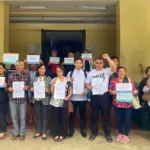
And the Amianan Salakniban, a peoples environmental alliance in the Northern Luzon area, must be supported in its noble move of protecting the environment against large scale magnetite mining. Since it is the people that will suffer from the mining policy of the government, the people must exert its sovereign will to organize and act for the protection of its environment. They are worth supporting! # nordis.net