2 MIN READwww.nordis.net
Last year came to a close with the Sendong disaster on the top of the news. Moving on to the beginning of this year with “another environmental nightmare that experts had warned of” in Diat Uno and Diat Palo sub-villages of Pantukan, Compostela Valley, Davao in Mindanao.
According to the Department of Environment and Natural Resources Campostela Valley, on the Diwata mountain range is the richest source of gold in the Philippines.
ComVal, for short, has been on and off the news since the dark years of Martial Law for being highly militarized and the site of mass evacuations of Lumad villages, land grabbing and cruel human rights violations because of its gold resource.
Three major landslides swept off Diat Palo, and Diat Uno — crashing on the private tunnels, shanties, homes and burying the sleeping mining community of barangay Napnapan before dawn — killing at least 25 people, injuring fifteen people while dozens are still missing.
Thirteen miners were killed in a similar landslide on Good Friday last year in Kingking, a community adjacent to gold-mining barangays Napnapan and Pantukan.
The national government has in the meantime reacted to the emergency with the appearances of its press and information officers explaining that due warning was given that disaster was waiting to happen. Short of blaming the victims outright.
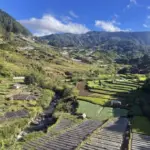
Looking at the aerial coverage of the disaster area, the mountains and river could have been Padcal down to Ansagan or Taknian, or maybe Virac, Camp 3 and Kias, in Benguet where landslides and cave-ins has happened and taken lives too.
Large scale as well as small scale mining is practiced in these areas relate to each other in undermining the integrity of any mountain or range where the mine is located.
An environmentalist once revealed, “Currently, the country has 228 key biodiversity areas. Ninety two of these are major forest areas found in mountainous parts of the country. If you compare the areas covered by existing mining permits with the areas classified as key biodiversity areas, you will see that four Financial Technical Assistance Agreements (FTAA), 174 Mineral Processing Sharing Agreements (MPSA), and 50 Exploration Permits (EP), or a total of 228 mining permits operate within and affect 58 out of the 92 forest biodiveristy areas.”
“Forests and key biodiversity areas are interlinked and interrelated systems. Forest ecosystems support biodiversity; any massive interference in these ecosystems— such as mining — adversely affects not only trees, but also the balance of living and non-living species…”
Just because that ComVal disaster did not happen here does not mean these life changing threats or disasters cannot affect us. Under the circumstances where the country is on the top list of disaster prone countries of the world and mining is a major economic activity here, it is urgent to make a stand for the genuine conservation and protection of our natural forests in the whole country. # nordis.net