FEATURE| November 15, 2009
2 MIN READwith reports from JENELYN S. TABANGCURA
www.nordis.net
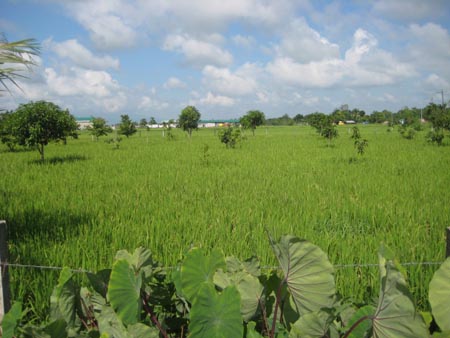
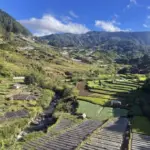
Ricefields. By Arthur Lapaan Allad-iw
LA TRINIDAD – The traditional rice-based ecosystem of Kapangan is threatened by modern technologies in rice farming and the pressure on population. This came as a result of an altered land use and diversification of commercial crops.
This was according to a study done by Junalynne B. Ingosan, Jane Rachelle S. Labaro and Judith Ann L. Sally, Bachelor in Environmental Science students of BSU major in Resource Management and their adviser, Dr. Romeo A. Gomez, Jr.
The study titled, “Agri-Ecological Appraisal of Traditional Rice-Based Ecosystem: The Kapangan Experience,” characterized the soil fertility, level of crop productivity, floral diversity assessment, indigenous knowledge system and traditional rice farming practices in Sitio Gadang Proper, Gadang and Sitio Malagyao, Cuba in Kapangan.
These areas are considered two of the few remaining traditional rice-based ecosystems in Kapangan.
The study revealed that in terms of soil fertility; Sitio Gadang Proper and Sitio Malagyao had acidic soil.
According to the researchers, this could be attributed to the application of chemical inputs like fertilizers and pesticides which go along with the introduction of Hybrid Varieties of rice and vegetables as an effect of crop diversification.
It was found out that Sitio Gadang Proper has higher organic matter content compared to Sitio Malagyao. The researchers attributed this to the practice of traditional rice production and many farmers still adhere to organic fertilization like incorporation of rice straw and weeds into the soil.
As cited in the research, the decline in soil fertility and soil productivity is associated to lessened content of organic matter in the soil. High organic matter is likewise associated with the long term fertility and productivity of the soil.
The research encourages that traditional rice farming practices be restored like the incorporation of rice straw, weeds, compost and green manure into the soil. When straw is decomposed, it releases nitrogen that is needed by young plants.
Also, documented were indigenous farming practices in the area. The traditional organic farming practices that is completely without the use of synthetic pesticides, herbicides or chemical fertilizers. The traditional principles of soil replenishment, biodiversity and ecological balance.
Another factor seen to affect productivity of the soil is the change in cropping patterns of farmers. An elder said that before only traditional rice varieties was planted, today only 66% of the farmers are planting rice. The rice harvest is often followed by sowing of vegetables which consume a larger quantity of soil nutrients.
The different indigenous farming practices such as butchering of pig or chicken before planting is disappearing with the introduction of Christian Religion and the present formal education system. Some farming practices such as ‘man-alado’ (plowing with the carabao or cow) is waning with modern technology of fuel-driven machines.
The conclusions and implications of the study read, “Over-all, these directions seem to lead, albeit slowly, to the future loss of traditional rice-based ecosystem, which is very fragile by nature. Something should be done to preserve this rich showcase of human and environment dynamics, before they are forever gone.”# nordis.net