












Kalinga farmers hit spread of hybrid seeds
2 MIN READ
TABUK CITY, Kalinga (Nov. 6) — Farmers in this rice-producing province hit the introduction of hybrid varieties of rice here, saying the rise in genetically modified organism (GMO’s) has been taking its toll on them and their families.
Particularly addressing their question to the Department of Agriculture, the farmers said the agency has been promoting hybrid seeds, instead of traditional varieties, at the expense of the farmers and the environment.
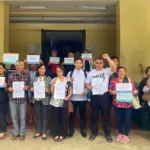
Representing DA in the dialog during the fourth general assembly of the Tignayan dagiti Mannalon iti Kalinga (TMK), where some 250 farmers gathered, Dr. Julie Aclam said the department has to promote the planting of hybrid seeds because the government has poured millions of pesos for the said program.
The promotion of GMO’s is an initiative by multinational companies that spend millions to come up with hybrid seeds of rice, corn and other crops, and register the patents as their own., according to Fernando Bagyan of the Alyansa dagiti Pesante iti Taeng Kordilyera (Apit Tako).
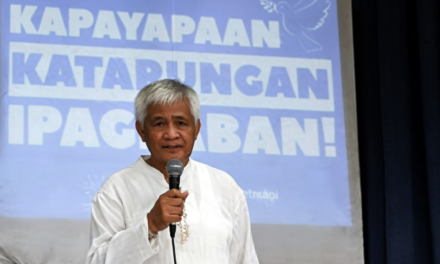
In his keynote address, Rev. Fr. Denver Marrero of the Epioscopal Diocese of Northern Luzon-Philippines, who since his youth is also a farmer, stressed these GMO seeds cannot be re-planted for the next cropping, and that farmers have to buy new seeds every cropping, thus bringing in more profits to the multinational companies.
“Worst is the excessive use of chemicals that go with these GMO seeds, which is destructive to the environment and to humans as well,” added Marrero.
Meanwhile, Kilusang Magbubukid ng Pilipinas (KMP) Secretary-General Danilo Ramos told the Cordillera farmers the Japan-Philippines Economic Partnership Agreement (JPEPA) and the RP-China Agricultural Agreement would take away at least two million hectares of agricultural lands, one-half of which would be devoted to hybrid crops.
Ramos said seven out of 10 farmers do not own the land they till, as he hit the government’s claim that it has distributed lands to more than 2 million farmers.
“Poverty and exploitation has worsened through the US-Macapagal Arroyo policies of deregulation, privatization and liberalization,” Ramos told the farmers, saying these are imposed by the International Monetary Fund-World Bank (IMF-WB) and the World Trade Organization (WTO).
Bagyan also questioned the government’s sincerity in addressing the plight of Cordillera farmers, citing the aggressive mining investment campaign of the GMA administration that opens up the whole region to local and foreign mining exploitation.
Malapiat farmers raised the delayed government response to the Rizal land issue, which has claimed several lives in demolition attempts sanctioned by local government. # Virgie Dammay for NORDIS